As men age, their bodies undergo various changes, but few are as common—or as bothersome—as those affecting the prostate. If you find yourself waking up multiple times a night to visit the bathroom or waiting for what feels like an eternity for your urine stream to start, you are likely facing a condition that affects millions of men worldwide. This condition is an enlarged prostate, medically known as Benign Prostatic Hyperplasia (BPH).
While the topic often causes embarrassment, ignoring it only leads to worsening health and disrupted sleep. It is not just a part of aging that you must simply "live with." Modern medicine offers effective ways to manage and treat this growing problem. This article explores exactly what happens to your prostate, why it grows, and the advanced solutions available to restore your quality of life.
What is an Enlarged Prostate?
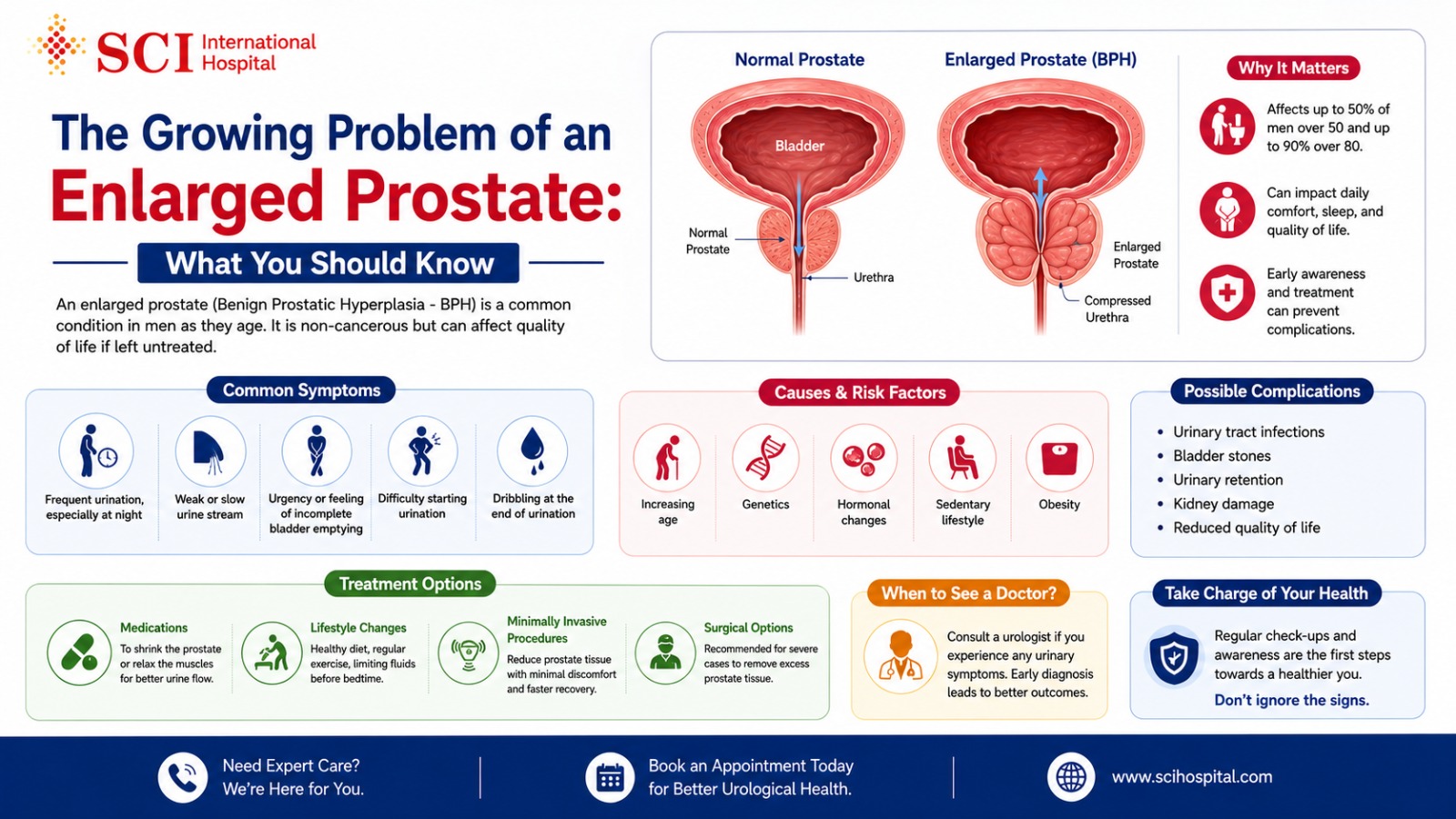
To understand the problem, you must first understand the anatomy. The prostate is a walnut-sized gland that sits directly below the bladder and in front of the rectum. Its primary job involves producing the fluid that nourishes and transports sperm (seminal fluid).
The urethra—the tube that carries urine from the bladder out of the body—passes directly through the center of the prostate. Think of the prostate as a donut and the urethra as the hole in the middle.
Benign Prostatic Hyperplasia (BPH) occurs when the prostate gland grows larger than its normal size. As the gland enlarges, it squeezes the urethra, much like a clamp on a garden hose. This pressure narrows the channel, forcing the bladder to work harder to push urine out. Over time, the bladder muscles become thick and weak, eventually losing the ability to empty completely.
It is crucial to note that "Benign" means non-cancerous. An enlarged prostate is not prostate cancer, and having BPH does not increase your risk of developing cancer. However, the two conditions can exist simultaneously.
Causes of Enlarged Prostate
Why does the prostate grow? Researchers do not fully understand the exact trigger, but they know that aging and hormonal changes play the leading roles.
- The Aging Factor
The prostate continues to grow throughout a man's life. For many men, this growth continues until the gland becomes large enough to cause symptoms. Studies show that BPH rarely causes symptoms in men younger than 40. However, by age 60, more than 50% of men experience some signs of BPH. By age 85, that number jumps to nearly 90%. - Hormonal Changes
- Testosterone and Estrogen Balance: Throughout their lives, men produce testosterone (a male hormone) and small amounts of estrogen (a female hormone). As men age, the amount of active testosterone in the blood decreases, leaving a higher proportion of estrogen. Scientists believe this "estrogen dominance" triggers prostate cells to multiply.
- Dihydrotestosterone (DHT): This is a male hormone that plays a key role in prostate development and growth. Some research suggests that even as testosterone levels drop, high levels of DHT accumulate in the prostate, encouraging cells to continue growing.
- Family History
Genetics play a significant part. If your father or brother experienced prostate problems, your risk of developing BPH increases significantly.
Symptoms of Enlarged Prostate
The severity of symptoms varies from person to person. Interestingly, the size of the prostate does not always predict the severity of the symptoms. Some men with slightly enlarged prostates suffer greatly, while others with very large prostates feel minor annoyance.
Common symptoms include:
- Frequency: You feel the need to urinate eight or more times a day.
- Nocturia: You wake up multiple times during the night to urinate, which disrupts your sleep cycle and leads to daytime fatigue.
- Urgency: A sudden, compelling need to urinate that you cannot delay.
- Hesitancy: You have trouble starting a urine stream. You might have to strain or wait for the flow to begin.
- Weak Stream: The flow of urine feels weak, slow, or stops and starts several times.
- Dribbling: You experience dribbling at the end of urination.
- Incomplete Emptying: You feel as though your bladder is not completely empty even after you finish.
If you ignore these symptoms, BPH can lead to serious complications, such as urinary tract infections (UTIs), bladder stones, and even kidney damage due to back-pressure from the retained urine.
Diagnosis of Enlarged Prostate
When you visit a specialist, they act as a detective to confirm BPH and rule out other conditions like cancer or strictures.
- Digital Rectal Exam (DRE)
The doctor inserts a gloved, lubricated finger into the rectum to feel the prostate. This allows them to estimate the size of the gland and check for any hard lumps that might indicate cancer. - Prostate-Specific Antigen (PSA) Blood Test
The prostate produces a protein called PSA. High levels can indicate an enlarged prostate, but they can also signal prostate cancer or infection. This test helps the doctor decide if further screening is necessary. - Urine Tests
A simple urinalysis rules out an infection that might cause similar symptoms. - Uroflowmetry
You urinate into a machine that measures the speed and strength of your urine flow. This helps determine the degree of blockage. - Ultrasound
A transrectal ultrasound provides a clear image of the prostate, allowing the doctor to measure its exact size.
Treatment Options for Enlarged Prostate
Doctors determine the best treatment based on your age, the size of your prostate, and how much the symptoms affect your daily life.
1. Lifestyle Modifications
For mild symptoms, doctors often recommend a "watchful waiting" approach combined with lifestyle changes.
- Limit Fluids at Night: Stop drinking liquids an hour or two before bedtime to reduce night trips to the bathroom.
- Avoid Irritants: Caffeine and alcohol act as diuretics (making you pee more) and irritate the bladder. Reducing your intake can calm symptoms.
- Bladder Training: Practice holding your urine for longer periods to stretch the bladder and reduce frequency.
- Double Voiding: After you finish urinating, wait a moment and try again. This helps empty the bladder more completely.
2. Medications
If lifestyle changes fail, medication acts as the next line of defense.
- Alpha-Blockers: These drugs (such as Tamsulosin) relax the muscles in the bladder neck and the prostate. This makes it easier to urinate. They work quickly, often within a few days.
- 5-Alpha Reductase Inhibitors: These medications (such as Finasteride) prevent hormonal changes that cause prostate growth. Over time, they actually shrink the prostate. However, they may take up to six months to show results.
- Combination Therapy: For severe cases, doctors prescribe both types of medication together.
3. Minimally Invasive Procedures
If medication does not provide relief, several less invasive procedures offer a middle ground between drugs and major surgery.
- Transurethral Microwave Thermotherapy (TUMT): Doctors use a specialized catheter to deliver microwave heat to the prostate, destroying the excess tissue.
- Water Vapor Therapy (Rezum): This newer technique injects steam into the prostate to kill excess cells.
- Prostatic Urethral Lift (UroLift): The doctor places tiny implants that lift and hold the enlarged prostate tissue away from the urethra, instantly opening the channel without removing tissue.
4. Prostate Surgery
For severe symptoms or very large prostates, surgery remains the gold standard.
- Transurethral Resection of the Prostate (TURP): The surgeon inserts a lighted scope into the urethra and removes all but the outer part of the prostate. This provides the strongest long-term symptom relief.
- Laser Surgery (HoLEP): A high-energy laser vaporizes or cuts the excess prostate tissue. This method causes less bleeding than traditional TURP and allows for a quicker recovery.
Prevention of Enlarged Prostate
While you cannot stop aging or change your genetics, you can adopt habits that support prostate health and potentially slow BPH progression.
- Diet Matters: A diet rich in fruits, vegetables, and healthy fats protects the prostate. Focus on tomatoes (rich in lycopene), berries, and fatty fish like salmon.
- Exercise Regularly: Research links obesity to prostate growth. maintaining a healthy weight and staying active regulates hormone levels and reduces inflammation.
- Control Blood Sugar: Diabetes correlates with BPH. Managing your blood sugar levels protects your nerves and blood vessels, which support bladder function.
Know the Best Urologist at SCI Hospitals
When dealing with a sensitive and complex issue like an enlarged prostate, the expertise of your doctor makes all the difference. SCI Hospitals hosts some of the finest urology specialists in India.
Our team does not just treat the condition; we treat the person. The Best Urologist at SCI Hospitals brings years of experience in both medical management and advanced surgical interventions. Whether you require a simple consultation, advanced laser surgery (like HoLEP), or a TURP procedure, our specialists utilize state-of-the-art technology to ensure precision and safety.
We prioritize minimally invasive techniques that reduce recovery time, allowing you to return to your normal routine faster. From the initial diagnosis to post-surgical care, SCI Hospitals provides a compassionate, patient-centric environment where your comfort comes first.
Conclusion
An enlarged prostate is a growing problem, but it is a solvable one. The days of suffering in silence, fearing long car rides, or dreading bedtime are over. By recognizing the symptoms early and understanding the causes, you empower yourself to seek help.
Whether you manage the condition through lifestyle changes, medication, or advanced procedures at SCI Hospitals, the goal remains the same: restoring your freedom and quality of life. Do not let an enlarged prostate dictate your schedule. Consult a specialist today and take the first step toward better urinary health.