Low blood pressure, medically known as hypotension, occurs when the force of blood flowing through the arteries is lower than normal, reducing the supply of oxygen and nutrients to vital organs. While low blood pressure without symptoms is often harmless, persistent or symptomatic hypotension can impact daily life and should not be ignored.
At SCI Hospitals, we focus on patient education and early intervention. This blog explains the causes, symptoms, effective home remedies, and when to seek medical care for low blood pressure.
What Is Low Blood Pressure?
Blood pressure is measured using two numbers:
- Systolic pressure: Pressure when the heart contracts
- Diastolic pressure: Pressure when the heart relaxes
A reading below 90/60 mm Hg is generally considered low. Hypotension becomes a concern mainly when it causes noticeable symptoms or affects organ function.
Common Causes of Low Blood Pressure
Low blood pressure can occur due to several underlying reasons, including:
- Dehydration: Loss of fluids from sweating, diarrhea, vomiting, or inadequate water intake
- Heart conditions: Slow heart rate, heart valve problems, or heart failure
- Blood loss: Injury or internal bleeding leading to reduced blood volume
- Hormonal imbalance: Thyroid disorders, adrenal insufficiency, or low blood sugar
- Pregnancy: Hormonal changes and increased circulation demands
- Severe allergic reactions: Sudden drops in blood pressure due to anaphylaxis
Symptoms of Low Blood Pressure
Many people with low blood pressure experience no symptoms. However, when symptoms do occur, they may include:
- Dizziness or light-headedness
- Fainting or near-fainting episodes
- Fatigue and weakness
- Blurred vision
- Nausea
- Cold, clammy skin
Top Home Remedies for Low Blood Pressure
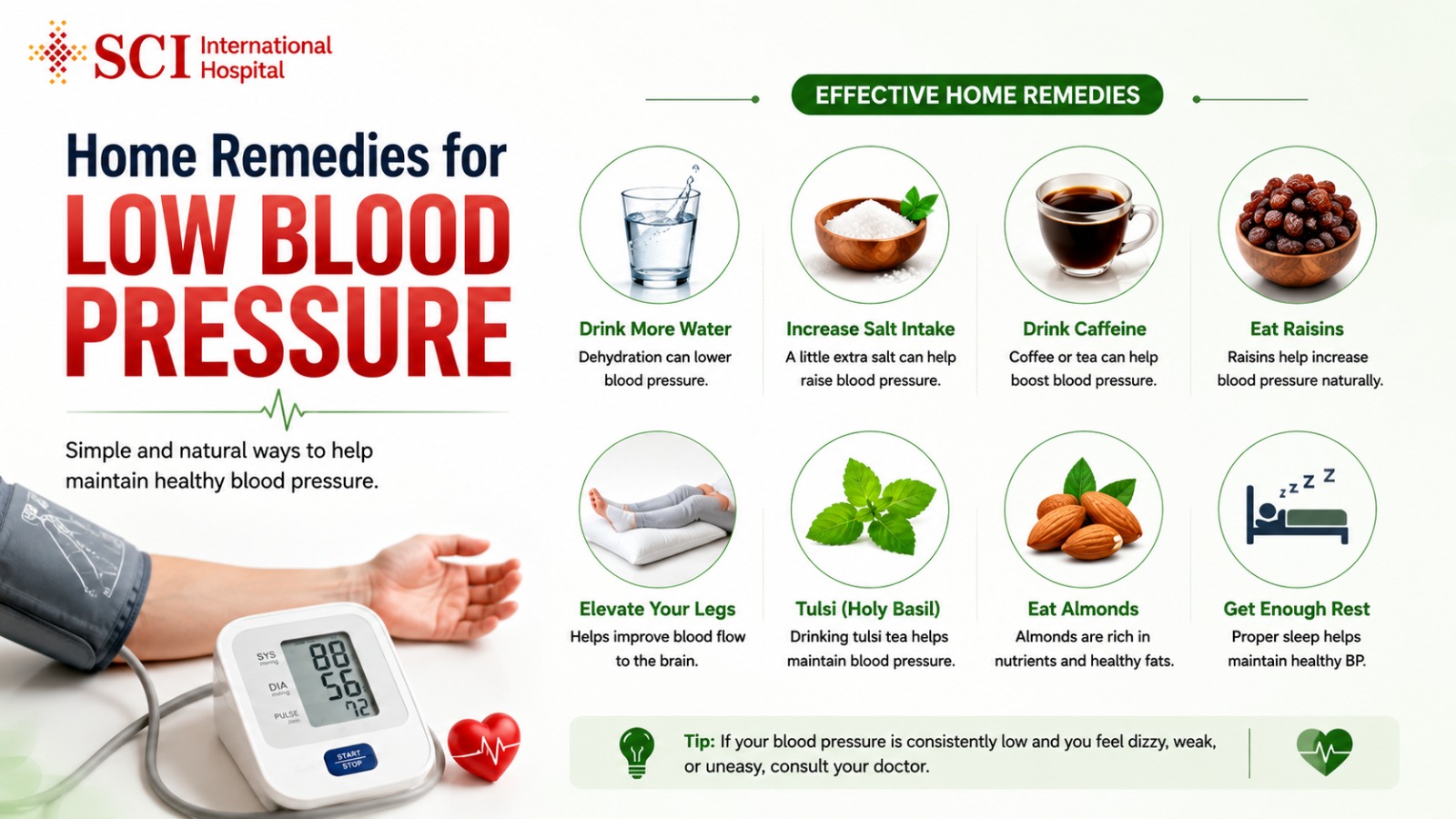
The following home remedies can help manage mild hypotension and support overall cardiovascular health. If symptoms are severe or persistent, medical evaluation is essential.
1. Stay Well Hydrated
Why it helps: Dehydration lowers blood volume, which can directly reduce blood pressure.
What to do: Drink sufficient water throughout the day. During hot weather, illness, or heavy physical activity, include oral rehydration solutions, coconut water, or electrolyte drinks.
2. Change Positions Slowly
Why it helps: Standing up suddenly can cause a sudden drop in blood pressure, known as orthostatic hypotension.
What to do: Move slowly from lying down to sitting and from sitting to standing. Pause briefly before walking.
3. Eat Small, Frequent Meals
Why it helps: Large meals divert blood to the digestive system, leading to postprandial hypotension.
What to do: Eat smaller, balanced meals at regular intervals instead of large portions.
4. Include Electrolyte-Rich Foods
Why it helps: Electrolytes such as sodium, potassium, and magnesium help regulate fluid balance and blood pressure.
What to do: Include foods like bananas, spinach, potatoes, and lightly salted snacks in moderation. Electrolyte drinks can be helpful after sweating or exertion.
5. Wear Compression Stockings
Why it helps: Compression stockings prevent blood pooling in the legs and improve blood flow back to the heart.
What to do: Use compression stockings if you frequently experience dizziness on standing, especially if you sit or stand for long periods.
6. Tulsi (Holy Basil)
Why it helps: Tulsi contains essential minerals that support cardiovascular function.
What to do: Consume 4–5 fresh tulsi leaves daily or drink tulsi tea as part of a healthy routine.
7. Almonds and Healthy Fats
Why it helps: Almonds provide healthy fats, vitamins, and minerals that support vascular health.
What to do: Eat a small handful of almonds daily as a nutritious snack.
Lifestyle Changes to Support Healthy Blood Pressure
- Regular physical activity: Light exercise such as walking or yoga improves circulation
- Balanced diet: Focus on fruits, vegetables, whole grains, and lean proteins
- Moderate salt intake: Sodium can raise blood pressure, but excess should be avoided
- Stress management: Meditation and breathing exercises support heart health
- Adequate sleep: Proper rest helps regulate blood pressure naturally
When to See a Doctor
Consult a healthcare professional at SCI Hospitals if you experience:
- Frequent dizziness or fainting
- Sudden drops in blood pressure
- Symptoms that disrupt daily activities
- Low blood pressure along with other medical conditions
- Persistent symptoms during pregnancy
Conclusion
Low blood pressure can often be managed effectively with simple home remedies and healthy lifestyle choices. Staying hydrated, eating balanced meals, and listening to your body are key steps in maintaining stable blood pressure. However, persistent or severe symptoms require timely medical evaluation.
At SCI Hospitals, our specialists are committed to providing expert care and personalized treatment plans to support your cardiovascular health and overall well-being.