Summary
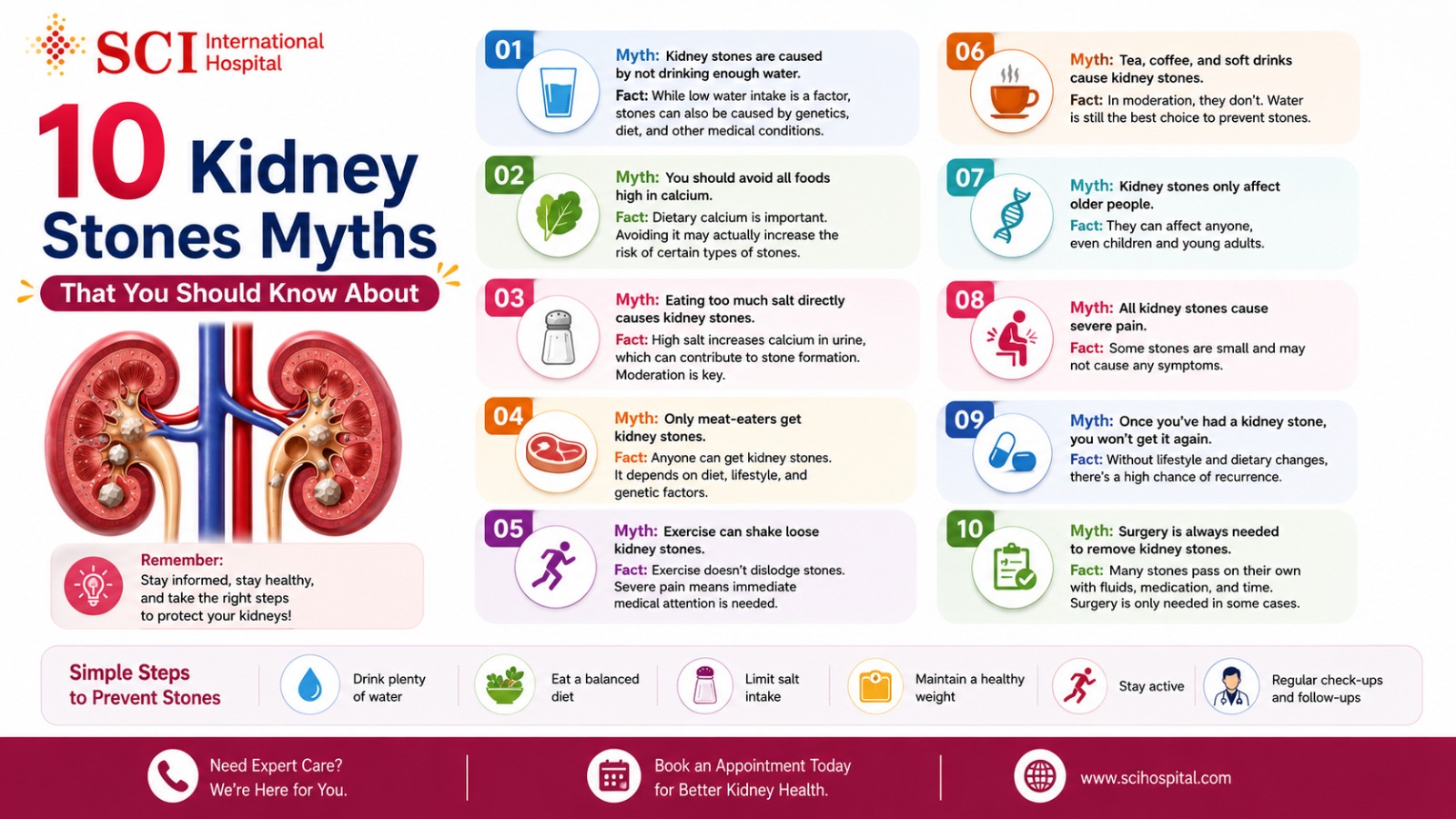
If you have ever experienced the excruciating pain of a kidney stone, you know you will do almost anything to prevent it from happening again. Unfortunately, the world is flooded with "grandma’s remedies" and outdated advice that can actually make your condition worse. From drinking beer to cutting out calcium, misinformation spreads faster than the stones themselves.
In 2025, the management of kidney stones has evolved significantly. We now understand that preventing stones requires more than just drinking water; it demands specific metabolic balances. This article debunks the top 10 myths associated with kidney stones, backing the truth with clinical facts to help you make informed decisions about your health.
Top 10 Myths Associated with Kidney Stones
Kidney stones are hard deposits made of minerals and salts that form inside your kidneys. They have many causes, including diet, excess body weight, specific medical conditions, and certain supplements. Let's separate fact from fiction.
Myth 1: You Should Avoid Calcium to Prevent Stones
The Myth: Since most kidney stones consist of calcium oxalate, people logically assume they should stop eating calcium to "starve" the stone.
The Reality: Eliminating calcium from your diet is one of the worst things you can do for stone prevention.
Calcium acts as a crucial defense mechanism in your gut. When you consume calcium-rich foods (like milk, yogurt, or cheese), the calcium binds with oxalates in your stomach and intestines. This binding process prevents the oxalates from entering your bloodstream and traveling to your kidneys. If you cut out calcium, the oxalates have nothing to bind to, so they head straight for your kidneys to form stones. Current medical guidelines recommend a daily calcium intake of 1,000–1,200 mg. However, you should obtain this from food, not supplements, as taking supplements without food can increase stone risk.
Myth 2: Cranberry Juice Flushes Out Kidney Stones
The Myth: Because cranberry juice helps fight urinary tract infections (UTIs), people assume it also dissolves or flushes out kidney stones.
The Reality: Cranberry juice can actually cause kidney stones.
While cranberry juice prevents bacteria from sticking to the bladder wall (helping with UTIs), it contains high levels of oxalates. Since calcium-oxalate stones are the most common type, drinking high-oxalate beverages like cranberry juice acts like adding fuel to the fire. It increases the concentration of oxalate in your urine. A far better alternative is lemon water. Lemons contain citrate, a natural chemical that prevents calcium molecules from clumping together.
Myth 3: Drinking Beer Helps Pass a Stone
The Myth: The diuretic effect of beer makes you urinate more, which flushes out the stone faster. Furthermore, people believe alcohol dulls the pain.
The Reality: Alcohol dehydrates you, which is the root cause of stone formation.
While beer does increase urine output temporarily, it ultimately dehydrates your body. Dehydration concentrates your urine, making it easier for new stones to form or existing ones to grow larger. Additionally, beer contains high levels of purines. Your body breaks purines down into uric acid, which can lead to the formation of uric acid stones. Using medical expulsion therapy (prescribed medications) combined with water is a far safer and more effective way to pass a stone than drinking alcohol.
Myth 4: Kidney Stones Are an "Old Man's Disease"
The Myth: Only middle-aged or elderly men get kidney stones.
The Reality: Kidney stones affect younger people and women at alarming rates.
Over the last decade, the gender gap has closed significantly. Today, women develop stones almost as frequently as men. Even more concerning is the rise in pediatric cases. Teenagers and even young children now frequently present with stones, largely due to high-salt diets and the excessive consumption of sugary, processed foods. If you have a family history of stones, your risk increases regardless of your age or gender.
Myth 5: Stone Pain Is Always in the Back
The Myth: If your back doesn't hurt, you do not have a kidney stone.
The Reality: The location of the pain shifts as the stone moves through your body.
While a stone sitting stationary in the kidney often causes a dull ache in the back (flank), the pain changes dramatically once the stone enters the ureter (the tube connecting the kidney to the bladder). As the stone travels down, the pain often radiates to the side, the lower abdomen, and eventually the groin. In men, pain can radiate to the tip of the penis; in women, it can be felt in the labia. Groin pain accompanied by nausea, vomiting, or blood in the urine serves as a classic sign of a moving stone.
Myth 6: "I Passed the Stone, So I’m Cured"
The Myth: Once the stone leaves your body, you can go back to your normal habits.
The Reality: Passing a stone is a warning shot, not a cure.
Kidney stone disease is a chronic condition for many people. If you have had one stone, statistics show you have a 50% chance of developing another one within 5 to 7 years if you do not change your lifestyle. After you pass a stone, you should try to save it so a lab can analyze its composition. Knowing whether you have calcium, uric acid, struvite, or cystine stones tells you exactly which dietary changes you need to make to prevent a recurrence.
Myth 7: All Kidney Stones Require Surgery
The Myth: A diagnosis of kidney stones means you are inevitably headed for the operating room.
The Reality: The vast majority of stones pass on their own.
Stones smaller than 4mm have about an 80% chance of passing spontaneously without surgical intervention. Doctors typically prescribe aggressive hydration and pain management for these cases. They reserve surgery for stones that are too large to pass (typically larger than 6mm), block urine flow, or cause infection and uncontrollable pain.
Myth 8: You Must Cut Out Spinach and Tomatoes Entirely
The Myth: Healthy foods like spinach and tomatoes are high in oxalates, so you must ban them from your diet to prevent stones.
The Reality: You can still eat these foods if you pair them correctly.
While spinach, rhubarb, and almonds contain high levels of oxalates, they also provide essential nutrients. Instead of banning them, eat them alongside calcium-rich foods. For example, put cheese on your spinach salad or yogurt in your smoothie. The calcium binds the oxalate in your gut, neutralizing the threat before it reaches your kidneys. Unless you are an extremely high-risk stone former, "pairing" offers a better solution than elimination.
Myth 9: Drinking "Any" Fluid Is Good for Stones
The Myth: Coffee, tea, and soda count toward your daily fluid intake goals.
The Reality: Not all fluids are created equal; some promote stone formation.
Dark colas often contain phosphoric acid, which promotes stone formation. Sweetened iced tea is often a "double trouble" drink because it is high in sugar and high in oxalates. While coffee acts as a diuretic, excessive caffeine can increase the amount of calcium your kidneys excrete into the urine. Water remains the only fluid that effectively dilutes urine without adding other risk factors. Aim for 2.5 to 3 liters of water daily.
Myth 10: Ultrasound and X-Rays Always Find Stones
The Myth: If the X-ray comes back clear, you do not have a stone.
The Reality: Some stones are invisible to standard X-rays.
Calcium stones show up clearly as white spots on X-rays. However, uric acid stones are "radiolucent," meaning X-rays pass right through them, making them invisible on the film. If your doctor suspects a stone but the X-ray is negative, a CT scan is the gold standard. A CT scan captures 3D images and can detect all types of stones, regardless of their composition or size.
Conclusion
Kidney stones are painful, but they are also preventable. The biggest danger lies in misinformation. Believing that beer helps or that calcium harms can lead to a lifetime of recurring pain.
Prevention is personalized. What works for a calcium stone former might not work for a uric acid stone former. Do not rely on myths or general internet advice. If you suspect you have a stone, consult a urologist. Get a metabolic evaluation to determine the type of stone you produce, and create a personalized prevention plan based on scientific research. Your kidneys will thank you.