The process of losing weight and maintaining it is not easy for all. Sometimes, diet or exercise, as well as medications, aren't enough, particularly when obesity has already been affecting the health of an individual. In these cases, the possibility of bariatric surgery is considered.
There are many kinds of weight-loss surgery for bariatric patients, and they do not all perform in the same manner. Some shrink stomachs, while others alter the way food is moved through the digestive tract, and some weight loss procedures don't require surgery in any way. The most appropriate option depends on the individual's weight and health, along with medical conditions and treatment history.
What Are the Different Types of Bariatric Surgery?
Bariatric surgery alters the digestive system or stomach to aid in weight loss.
The most common types are:
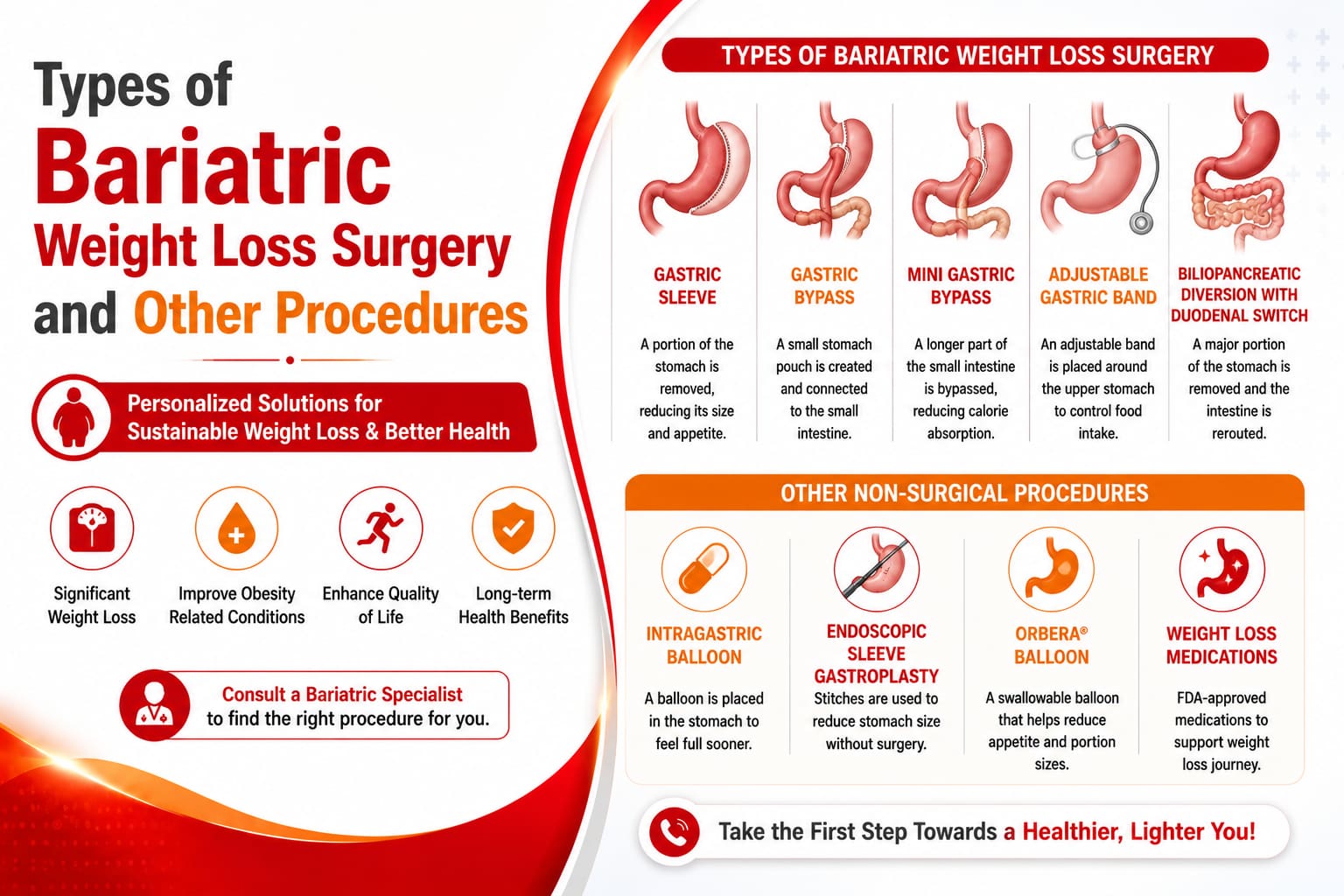
1. Sleeve Gastrectomy
Sleeve gastrectomy is among the most frequently used weight loss procedures. The procedure involves removing an extensive portion of stomach tissue and leaving a smaller stomach, which is like a sleeve.
Because stomachs are smaller, it is easier to feel full when eating less food. Also, it can decrease hunger for certain people.
The intestines do not change during this procedure. However, the area of the stomach that's removed can't be replaced; therefore, sleeve gastrectomy is an ongoing procedure. If you suffer from acid reflux, you might need to talk about other alternatives to their physician.
2. Gastric Bypass
Gastric bypass, sometimes referred to as Roux-en Y gastric bypass, alters the size as well as the route food travels through the small intestine.
The surgeon creates a tiny pouch from the upper region of the stomach. This pouch is then connected to the small intestine. Food is then able to bypass most of the stomach as well as part of the small intestinal tract.
This allows you to consume less food and reduces the number of calories that your body absorbs. Gastric bypass is also able to alleviate some health issues associated with obesity, like type 2 diabetes and high blood pressure.
The digestive system is altered more than a sleeve does; patients require regular check-ups and may require vitamin and mineral supplements. You can also read more about gastric bypass surgery at SCI Hospital.
3. Adjustable Gastric Band
In the adjustable gastric band procedure, the band is positioned over the upper part of your stomach. It makes a pouch, which makes you feel fuller even with smaller portions of food.
In the stomach, the intestines and stomach can't be taken out or cut. The band may also be adjusted in the future and be removed in the event of need.
But gastric banding is not as commonly used as it was in the past. The weight loss could be lower than that of other bariatric surgeries for bariatrics, and some patients might require another procedure due to issues with the band.
4. Biliopancreatic Diversion With Duodenal Switch (BPD/DS)
BPD/DS is an even more intricate kind of weight-loss procedure. It involves an enlargement of the stomach and significant changes in the method by which food moves through the small intestinal tract.
It could lead to substantial weight loss since you consume less food and absorb fewer calories. It is a possibility for those with extreme obesity in specific circumstances.
There's a downside, however. Since the surgery alters the absorption of nutrients Vitamin and mineral deficiencies could be a problem. It is crucial to follow up for a long time.
5. SADI-S
SADI-S is the acronym for single-anastomosis duodenal bypass using a sleeve for gastrectomy.
The procedure begins with a sleeve gastrectomy and alters the way food passes through the small intestine. This decreases the absorption of calories and may result in substantial weight reduction.
SADI-S isn't suited for all. Your surgeon will look at your weight, any medical issues, and nutritional requirements before recommending the procedure.
Are There Weight Loss Procedures That Do Not Involve Surgery?
Yes. Certain procedures can be performed without the traditional abdominal surgery. These procedures are useful for certain patients who may not require or desire an operation that is a major bariatric one.
1. Endoscopic Sleeve Gastroplasty
ESG, also known as Endoscopic Sleeve Gastroplasty also known as ESG is performed with an endoscope inserted through the mouth. There are no cuts or cuts to the abdomen.
The doctor will place stitches in the stomach to shrink it. Since stomachs hold much fewer calories, one might get fuller faster and consume smaller portions.
Contrary to sleeve gastrectomy, there is no stomach part that is removed.
2. Intragastric Balloon
A gastric balloon is inserted into the stomach and can take up space. It can make you feel fuller faster and decrease the amount you eat.
The balloon will last for a short time and doesn't require the removal of parts of your stomach.
SCI Hospital offers the Allurion Balloon, an option for weight loss that doesn't require surgery and is swallowed as a capsule. Once it's in the stomach, it gets filled with air and stays there for a short time before deflating naturally and passing.
3. Transoral Outlet Reduction (TORe)
It is most commonly used by those who have had gastric bypass but then gain weight.
The procedure is performed using an endoscope. The space between the stomach pouch and the small intestine is narrowed in order to let food pass out more slowly. This could help the person feel fuller for longer.
This is why it differs from other procedures like gastric bypass or sleeve, since it is typically employed as a cure for prior bariatric surgery.
What Is Revisional Bariatric Surgery?
Sometimes the first weight loss procedure doesn't produce the desired outcome or, if it does, a problem arises afterward. The patient may also gain some weight.
In these cases, a different procedure for bariatrics could be considered. This is referred to as revisional surgery for bariatrics.
For instance, gastric bands can be removed and later changed to a different type of surgery. A sleeve gastrectomy could be changed to a gastric bypass for some patients.
Revisional surgery is a process that requires careful planning since the surgeon must consider the procedure performed in the initial procedure and how the digestive system has changed.
Which Bariatric Surgery Is Right for You?
There is no specific surgical treatment that suits all patients equally.
The surgeon may consider your body mass index, diabetes, hypertension, sleep apnea, heartburn, dieting, other surgeries, and general health status before suggesting any treatment modality.
One may require a sleeve, whereas a person with another health condition might be advised to undergo gastric bypass surgery. Those who have undergone a previous bariatric surgery may need an entirely new treatment plan.
Therefore, it is recommended to avoid making a choice solely based on how well the surgical treatment worked for others. The same treatment may not work for another patient.
What Happens After Bariatric Surgery?
The surgery is only the beginning. Your eating pattern will need to change after the procedure.
You will usually start with liquids and then slowly move to soft foods and regular foods as your stomach heals. The exact diet depends on the type of surgery and your doctor's advice.
Regular follow-up is also important. Some bariatric procedures can make it harder for the body to absorb certain vitamins and minerals, so supplements and blood tests may be needed.
Weight loss also depends on what happens after surgery. Healthy eating, physical activity, and regular follow-up all help with long-term results.
SCI Hospital's bariatric surgery information also explains the different procedures, recovery, and the health conditions for which bariatric surgery may be considered.
What Are the Risks of Bariatric Surgery?
Bariatric surgery is usually performed safely by skilled surgeons; however, it's still a serious medical procedure and comes with some dangers.
This can result in bleeding or infections, blood clots, and leakage. Patients may also experience acid reflux, nutritional deficiencies, and bowel issues, as well as other complications, depending on the kind of operation.
The risks aren't the same for each procedure. An operation that is more intricate and alters the intestine could come with distinct risks compared to the gastric band.
This is the reason your surgeon must explain potential benefits and risks prior to your making your decision.
Conclusion
There are several types of bariatric weight loss surgery, including sleeve gastrectomy, gastric bypass, adjustable gastric band, BPD/DS, and SADI-S. There are also options such as endoscopic sleeve gastroplasty and gastric balloons that do not involve traditional surgery. The right choice depends on your weight, health problems, previous treatment, and what is suitable for your body. At SCI International Hospital, a multispecialist hospital, Dr. Sumeet Shah, a General, Laparoscopic, and Bariatric Surgeon with 30 years of experience, can evaluate your condition and help you understand which weight-loss procedure may be suitable for you.
FAQs
Q- What are the types of bariatric surgery?
Ans- The types include sleeve gastrectomy, gastric bypass, adjustable gastric band, BPD/DS, and SADI-S. Since each method of weight loss differs, it means that the decision must be based on the patient's overall health and weight loss goals.
Q- What kind of bariatric surgery is done frequently?
Ans- The bariatric surgeries that are usually done frequently include sleeve gastrectomy and gastric bypass. Your surgeon will determine which type is best for you based on the analysis of your overall health.
Q- Is sleeve gastrectomy reversible?
Ans- No. Sleeve gastrectomy involves the removal of a considerable portion of the stomach, making the process a permanent one.
Q- Is gastric bypass different from sleeve surgery?
Ans- Yes. The two methods differ in that while the latter involves reduction of the size of the stomach, the former entails creation of a new stomach pouch and alteration in the pathway of food within the small intestine.
Q- Is gastric balloon surgery?
Ans- No. A gastric balloon is not a surgery but a way to induce weight loss. The gastric balloon occupies space in the stomach and is eventually passed out through the anus.