Joint pain, morning stiffness, or swelling in the fingers can make everyday activities difficult. You may notice knee pain while climbing stairs, stiffness in your hands after waking up, or discomfort when holding everyday objects. These symptoms may be associated with arthritis. However, not all types of arthritis affect the joints in the same way.
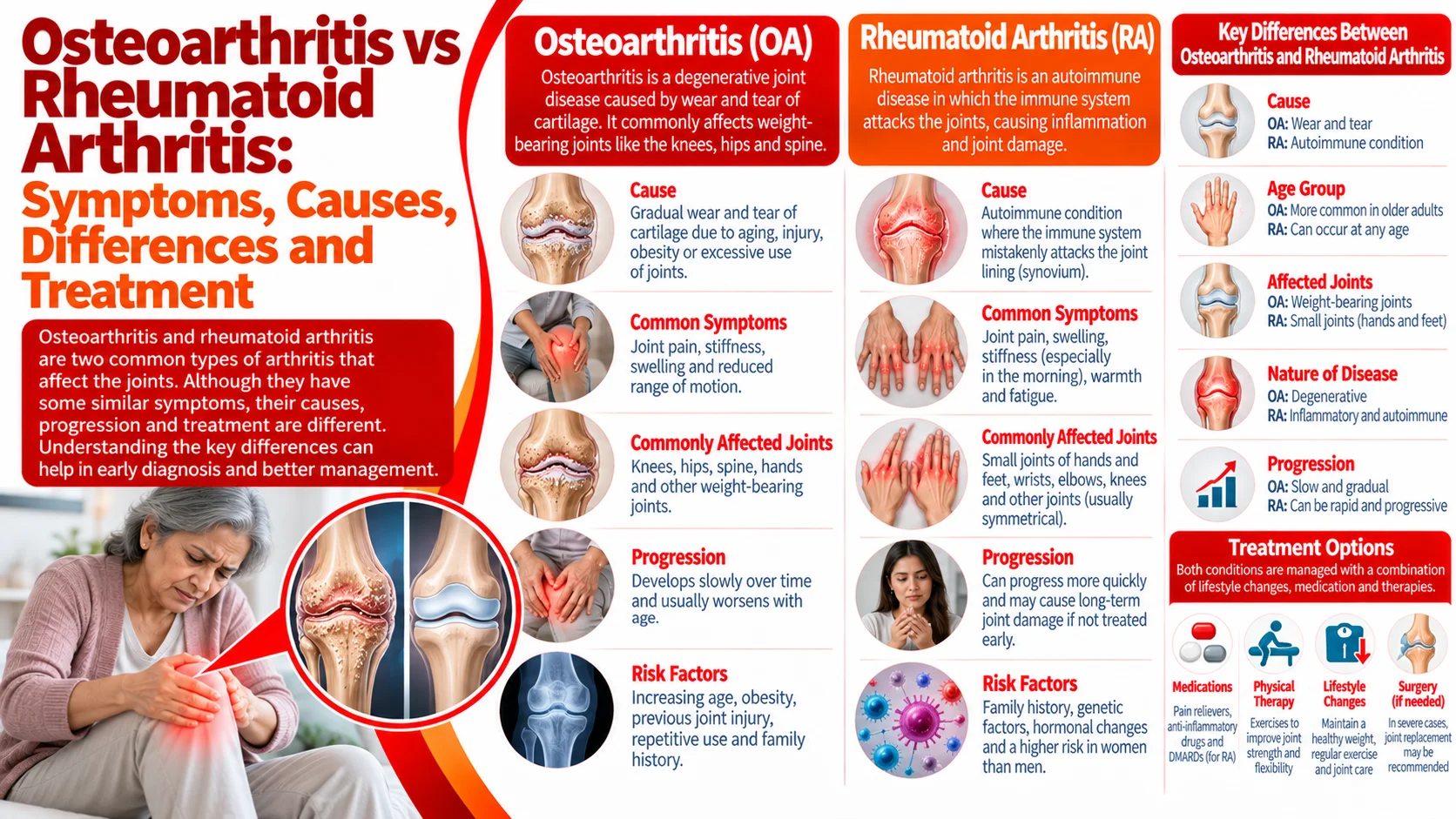
Two common types are osteoarthritis (OA) and rheumatoid arthritis (RA). Osteoarthritis is associated with changes and damage in the joint, including the breakdown of protective cartilage. Rheumatoid arthritis is an autoimmune condition in which the immune system attacks the lining of the joints, causing inflammation.
Although both conditions can cause joint pain, stiffness, and reduced movement, their causes, diagnosis, and treatment approaches are different. Understanding the difference between osteoarthritis and rheumatoid arthritis can help you recognise warning signs and seek appropriate medical care.
What Is Osteoarthritis?
Osteoarthritis is a degenerative joint condition commonly described as wear-and-tear arthritis. It develops when the protective cartilage covering the ends of bones gradually breaks down. Cartilage helps bones move smoothly against each other. As it becomes damaged, the joint may become painful, stiff, and less flexible.
Osteoarthritis commonly affects:
-
Knees
-
Hips
-
Fingers and hands
-
Spine
Age is an important risk factor, but osteoarthritis is not limited to older adults. Previous joint injuries, repetitive stress, excess body weight, and other factors can also increase the risk.
Common Symptoms of Osteoarthritis
Osteoarthritis usually develops gradually. Initially, a person may experience mild knee pain after walking or exercising. As the condition progresses, discomfort may occur during routine activities.
Common symptoms include:
-
Joint pain during or after physical activity.
-
Stiffness after sitting or resting for a while.
-
Pain while bending or straightening the affected joint.
-
Swelling around the joint.
-
A grinding or crackling sensation during movement.
-
Reduced flexibility and joint movement.
-
Difficulty walking, climbing stairs, or standing for long periods.
Morning stiffness can occur in osteoarthritis, but it is generally shorter in duration than the stiffness associated with rheumatoid arthritis. Pain may improve with rest, although prolonged inactivity can make the joint feel stiff again.
What Is Rheumatoid Arthritis?
Rheumatoid arthritis is a chronic autoimmune disease. It develops when the immune system mistakenly attacks the synovium, the lining surrounding the joints. This causes inflammation, swelling, pain, and stiffness. Over time, persistent inflammation can damage cartilage, bones, and other structures around the joints.
Rheumatoid arthritis can affect people of different age groups. It commonly starts in smaller joints, particularly the hands, wrists, and feet. One characteristic feature is that it often affects corresponding joints on both sides of the body. For example, both wrists or both hands may become painful and swollen.
Common Symptoms of Rheumatoid Arthritis
Rheumatoid arthritis may develop gradually, and symptoms can vary over time. Some people experience periods when symptoms become more active, followed by periods when they improve.
Common symptoms include:
-
Swollen and tender joints.
-
Morning stiffness that often lasts 30 minutes or longer.
-
Difficulty making a fist or gripping objects.
-
Pain and swelling in similar joints on both sides of the body.
-
Fatigue or unusual tiredness.
-
Reduced joint movement.
-
Reduced appetite or mild fever in some cases.
If your fingers, wrists, or feet remain swollen and stiff for several weeks, do not assume that the symptoms are simply related to ageing or daily activities. Early medical assessment can help identify rheumatoid arthritis and reduce the risk of lasting joint damage.
Osteoarthritis vs Rheumatoid Arthritis: Main Differences
Although osteoarthritis and rheumatoid arthritis can cause similar symptoms, they differ in their underlying causes and patterns of joint involvement.
These are common patterns rather than strict rules. Symptoms can overlap, and a medical examination is needed to determine the type of arthritis.
What Are the Symptoms of Osteoarthritis?
Osteoarthritis generally progresses slowly. The first sign may be discomfort in the knee after a long walk or pain while climbing stairs. Over time, symptoms may become more noticeable and start interfering with everyday activities.
You may experience:
-
Pain after activity: The affected joint may hurt during or after walking, standing, or exercising.
-
Stiffness after resting: The joint may feel stiff after sitting for a long time or getting out of bed.
-
Joint swelling: The affected area may become swollen or tender.
-
Grinding sensation: You may notice a crackling or grinding feeling when moving the joint.
-
Reduced flexibility: Bending or straightening the affected joint may become difficult.
-
Difficulty with daily activities: Walking, climbing stairs, or standing for long periods may become challenging.
The symptoms depend on which joints are affected and how much the condition interferes with their normal movement.
What Are the Symptoms of Rheumatoid Arthritis?
Rheumatoid arthritis can affect multiple joints at the same time. Unlike osteoarthritis, it is driven by an immune response that causes ongoing inflammation.
Common symptoms include:
-
Swollen and tender joints: The affected joints may feel painful, warm, or swollen.
-
Morning stiffness: Stiffness may continue for 30 minutes or longer after waking up.
-
Difficulty gripping objects: Making a fist, holding a toothbrush, or opening containers may become difficult.
-
Symmetrical joint symptoms: Similar joints on both sides of the body may be affected.
-
Persistent fatigue: Inflammation can cause tiredness that affects normal activities.
-
Other symptoms: Some people may experience reduced appetite or a mild fever.
If joint swelling and morning stiffness continue for weeks, consult a doctor. Early diagnosis and treatment are important because uncontrolled inflammation can cause permanent joint damage.
How Are Osteoarthritis and Rheumatoid Arthritis Diagnosed?
The diagnosis begins with a review of your symptoms and medical history, followed by a physical examination.
Your doctor may ask:
-
When did the joint pain begin?
-
Which joints are affected?
-
Is the pain worse during activity or while resting?
-
How long does morning stiffness last?
-
Do you experience swelling, fatigue, or fever?
-
Are similar joints affected on both sides of your body?
The doctor will examine the affected joints for tenderness, swelling, warmth, and restricted movement.
Depending on the suspected condition, additional investigations may be recommended.
Tests for Osteoarthritis
X-ray: An X-ray may help identify changes such as reduced space between bones, bone spurs, and other signs of joint damage. However, not everyone with suspected osteoarthritis needs an X-ray. The diagnosis can often be made based on symptoms and physical examination findings.
Tests for Rheumatoid Arthritis
Rheumatoid factor (RF): This blood test looks for an antibody that may be present in people with rheumatoid arthritis. However, a positive result does not automatically confirm the condition because rheumatoid factor can also be present in people without rheumatoid arthritis.
Anti-CCP antibody test: This test looks for antibodies associated with rheumatoid arthritis. It can support the diagnosis when considered alongside symptoms and examination findings.
Inflammation markers: Blood tests such as ESR and CRP may help assess inflammation in the body.
Imaging tests: X-rays or ultrasound may help identify joint inflammation and structural changes.
No single blood test can definitively confirm or rule out rheumatoid arthritis. A rheumatologist can interpret the test results alongside the patient's symptoms and examination.
How Is Osteoarthritis Treated?
Osteoarthritis treatment aims to reduce pain, improve joint movement, and help patients maintain their daily activities. The treatment plan depends on the affected joint, severity of symptoms, mobility, and overall health.
1. Exercise and Physiotherapy
Physiotherapy can help strengthen the muscles surrounding the affected joint and improve flexibility.
A suitable exercise programme may include:
-
Strengthening exercises.
-
Gentle stretching.
-
Range-of-motion exercises.
-
Low-impact activities such as walking or swimming, when appropriate.
The exercise plan should be adjusted according to the patient's pain and mobility.
2. Weight Management
Excess body weight can increase pressure on weight-bearing joints, particularly the knees and hips. Maintaining a healthy weight may help reduce stress on these joints and improve symptoms.
3. Medicines
Doctors may recommend medicines to manage pain and inflammation. The choice depends on the patient's medical history, affected joints, and other health conditions.
Do not start long-term pain medication without medical advice.
4. Joint Replacement Surgery
If osteoarthritis becomes severe and other treatments do not provide sufficient relief, joint replacement surgery may be considered. For advanced knee osteoarthritis, total knee replacement surgery may be an option after an orthopaedic assessment.
How Is Rheumatoid Arthritis Treated?
Rheumatoid arthritis requires a different treatment approach because the immune system causes ongoing inflammation. Painkillers may help relieve discomfort, but they do not stop the disease process or prevent joint damage on their own.
1. Disease-Modifying Antirheumatic Drugs (DMARDs)
Doctors commonly prescribe disease-modifying antirheumatic drugs, known as DMARDs, to control rheumatoid arthritis. Methotrexate is one medicine frequently used for this condition. The choice of medication depends on disease activity, overall health, and individual treatment needs.
2. Regular Monitoring
People receiving rheumatoid arthritis treatment may need regular follow-up appointments. Blood tests may be recommended to monitor treatment response and check for possible medication side effects.
3. Exercise and Physiotherapy
Appropriate exercise and physiotherapy can help maintain joint movement, flexibility, and muscle strength. When a joint is particularly swollen or painful, the activity plan may need to be adjusted until inflammation improves.
4. Rheumatologist Consultation
A rheumatologist specialises in diagnosing and managing autoimmune and inflammatory joint conditions. Consultation with a rheumatologist is particularly important when rheumatoid arthritis is newly diagnosed, symptoms are not controlled, or the diagnosis is uncertain.
Can Osteoarthritis and Rheumatoid Arthritis Be Prevented?
Neither condition can always be prevented. However, taking care of your joints and addressing risk factors may help reduce the impact of joint problems.
Some useful measures include:
-
Stay physically active: Regular, appropriate exercise helps maintain muscle strength and joint movement.
-
Maintain a healthy weight: This can reduce unnecessary pressure on weight-bearing joints.
-
Take care of joint injuries: Seek appropriate medical attention for injuries rather than ignoring persistent pain or swelling.
-
Follow a balanced lifestyle: Regular physical activity and healthy habits support overall joint health.
-
Do not ignore persistent symptoms: Ongoing swelling, pain, or morning stiffness should be assessed by a doctor.
Rheumatoid arthritis is an autoimmune condition, not simply the result of joint wear and tear. It cannot reliably be prevented through exercise or weight management alone. Recognising symptoms and seeking early assessment remain important.
When Should You See a Doctor?
Make an appointment with a doctor if:
-
Joint pain keeps returning.
-
Swelling does not settle.
-
Morning stiffness begins affecting daily activities.
-
Your fingers are difficult to bend after waking up.
-
Several joints become painful or swollen.
-
Walking, climbing stairs, or holding objects becomes increasingly difficult.
Seek urgent medical attention if a joint suddenly becomes very painful, hot, and swollen, particularly when accompanied by fever. These symptoms may indicate a joint infection rather than arthritis and require prompt evaluation.
Orthopaedic Care for Joint Pain at SCI International Hospital
Persistent joint pain and stiffness can affect mobility, independence, and quality of life. However, the right treatment depends on identifying the underlying cause. At SCI International Hospital, patients can receive an assessment for joint pain and guidance on suitable treatment based on their symptoms, mobility, and medical condition.
The hospital's orthopaedic services include evaluation and treatment for different joint and musculoskeletal conditions. Patients with advanced knee problems may also be assessed for surgical options when conservative treatment is not sufficient. Explore the Orthopaedic Department at SCI International Hospital to learn more about available services.
Frequently Asked Questions About Osteoarthritis vs Rheumatoid Arthritis
1. Can a person have osteoarthritis and rheumatoid arthritis at the same time?
Yes. A person can have both osteoarthritis and rheumatoid arthritis. A doctor will evaluate the symptoms, physical examination findings, and relevant investigations to identify the conditions affecting the joints.
2. Which is more painful: osteoarthritis or rheumatoid arthritis?
Neither condition is always more painful than the other. Severe osteoarthritis can cause significant pain due to joint damage, while rheumatoid arthritis can cause considerable pain and swelling because of inflammation. The level of discomfort varies from person to person.
3. Does rheumatoid arthritis affect both hands or both legs?
Rheumatoid arthritis often affects corresponding joints on both sides of the body. For example, both wrists, hands, or feet may become swollen and painful. However, the pattern can vary between individuals.
4. Can osteoarthritis be cured?
There is currently no treatment that completely reverses osteoarthritis-related joint damage. However, exercise, physiotherapy, weight management, medicines, and other treatments can help manage pain and maintain mobility. Joint replacement may be considered in selected advanced cases.
5. Is rheumatoid arthritis a serious disease?
Rheumatoid arthritis can become serious if it is not appropriately managed. Persistent inflammation may cause permanent joint damage and can also affect other parts of the body. Early diagnosis and treatment help control inflammation and reduce the risk of complications.
6. How long does morning stiffness last in osteoarthritis and rheumatoid arthritis?
Morning stiffness in osteoarthritis is generally shorter and often lasts less than 30 minutes. In rheumatoid arthritis, it commonly lasts 30 minutes or longer. However, stiffness duration alone cannot establish a diagnosis.
7. Which doctor should I consult for arthritis?
An orthopaedic specialist can evaluate joint pain, mobility problems, and degenerative joint conditions such as osteoarthritis. A rheumatologist specialises in autoimmune and inflammatory conditions such as rheumatoid arthritis. The appropriate specialist depends on your symptoms and suspected diagnosis.