Having regular periods does not always mean that your hormones and ovulation are completely normal. Some women with polycystic ovary syndrome (PCOS) have menstrual cycles that appear regular but still experience symptoms such as persistent acne, unwanted facial hair, scalp hair thinning, or difficulty getting pregnant.
PCOS is a hormonal and metabolic condition that can affect women differently. While irregular periods are a common sign, they are not present in every case. Some women discover they have PCOS only when they seek medical advice for skin changes or fertility concerns. Understanding the possible symptoms and how PCOS is diagnosed can help you decide when to consult a gynaecologist.
Can You Have PCOS With Regular Periods?
Yes, you can have PCOS even if your periods arrive every month. PCOS can affect ovulation, androgen levels, and how the body responds to insulin. Some women experience irregular or absent periods, while others report regular menstrual cycles.
However, regular periods do not always confirm that ovulation is occurring consistently. Some women may have menstrual bleeding without releasing an egg during every cycle.
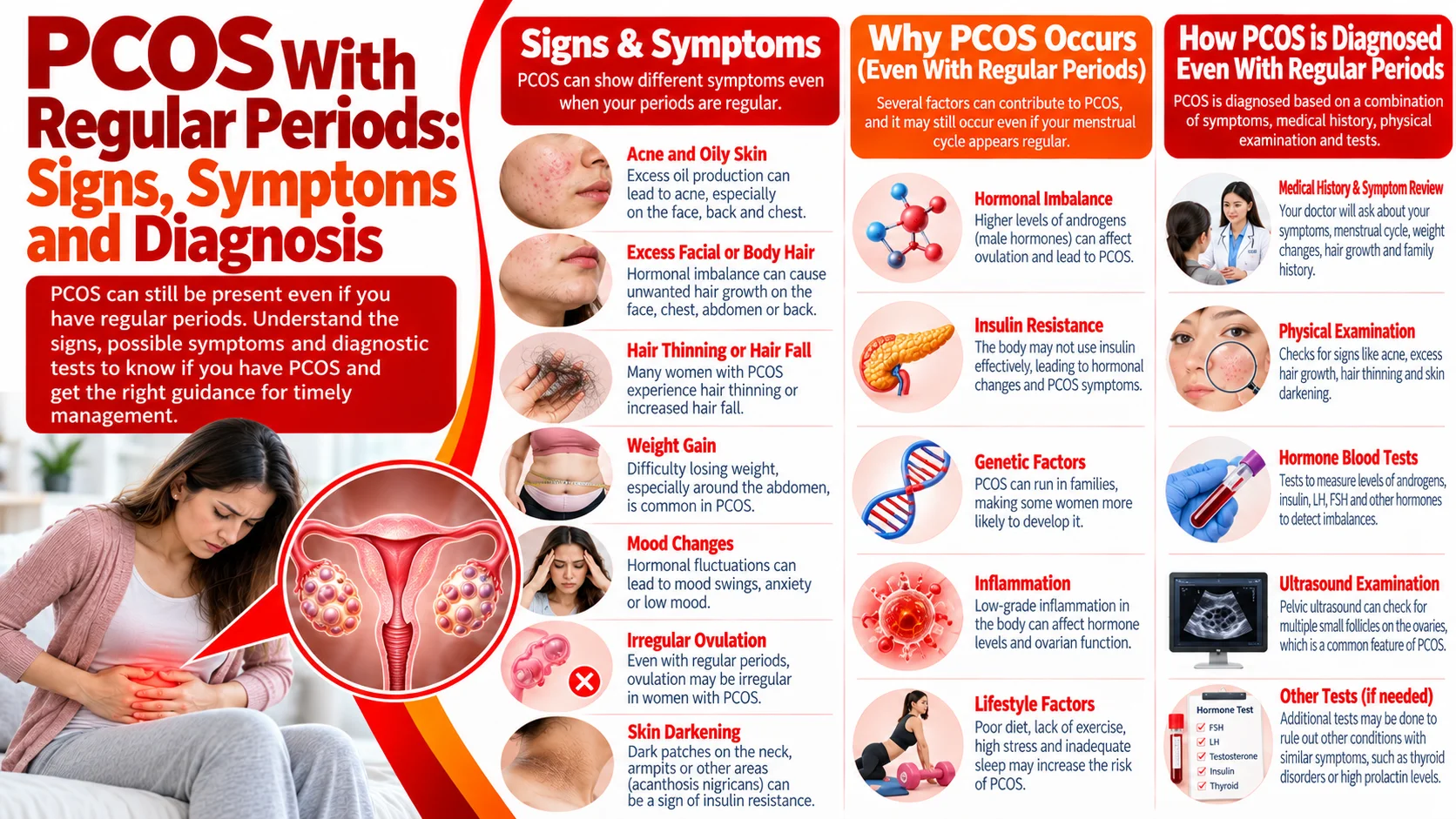
PCOS may also cause symptoms related to higher androgen levels, including unwanted facial hair, persistent acne, and thinning hair on the scalp. These symptoms can occur even when periods seem normal. If you notice several of these symptoms, a medical assessment can help determine whether PCOS or another condition may be responsible.
What Are the Signs of PCOS With Regular Periods?
PCOS symptoms vary from one woman to another. Some women experience several noticeable changes, while others have only one or two symptoms.
1. Unwanted Facial or Body Hair
The growth of coarse, dark hair on the chin, upper lip, chest, abdomen, or other areas can be associated with increased androgen levels. This condition is called hirsutism. Androgens are hormones that are present in women as well as men, although the levels and effects differ.
Unwanted facial or body hair does not automatically mean you have PCOS. However, new or increasing hair growth, particularly when accompanied by persistent acne or scalp hair thinning, may warrant a hormonal evaluation.
2. Persistent or Recurrent Acne
Acne is common and can develop for many reasons, including hormonal changes, genetics, and certain skincare products. However, persistent acne that continues into adulthood or repeatedly returns may sometimes be associated with hormonal factors.
Acne around the chin and jawline can occur with hormonal acne, but its location alone cannot confirm PCOS. If acne occurs alongside unwanted facial hair or scalp hair thinning, consider discussing these symptoms with a healthcare professional.
3. Hair Thinning on the Scalp
Some women with PCOS notice gradual thinning of hair, a widening parting, or reduced hair density around the crown of the scalp. This can be associated with androgen sensitivity or elevated androgen levels.
However, scalp hair loss has several possible causes, including thyroid disorders, iron deficiency, nutritional deficiencies, and other medical conditions. A clinician can help identify the likely cause and determine whether hormone testing is appropriate.
4. Weight Gain or Difficulty Losing Weight
Some women with PCOS experience weight gain or find weight management challenging. Others have PCOS without being overweight. Insulin resistance, in which the body's cells respond less effectively to insulin, is common in PCOS and can contribute to metabolic changes.
However, weight gain alone is not a reliable sign of PCOS, and being slim does not rule it out. PCOS can occur across different body sizes.
5. Dark or Thickened Patches of Skin
Dark, thickened, velvety patches around the neck, armpits, or groin may indicate a skin condition called acanthosis nigricans. This condition can be associated with insulin resistance, which is also common in PCOS.
These patches do not confirm PCOS by themselves. If you notice these skin changes, consult a healthcare professional to assess the possible causes and whether metabolic testing is needed.
6. Difficulty Getting Pregnant
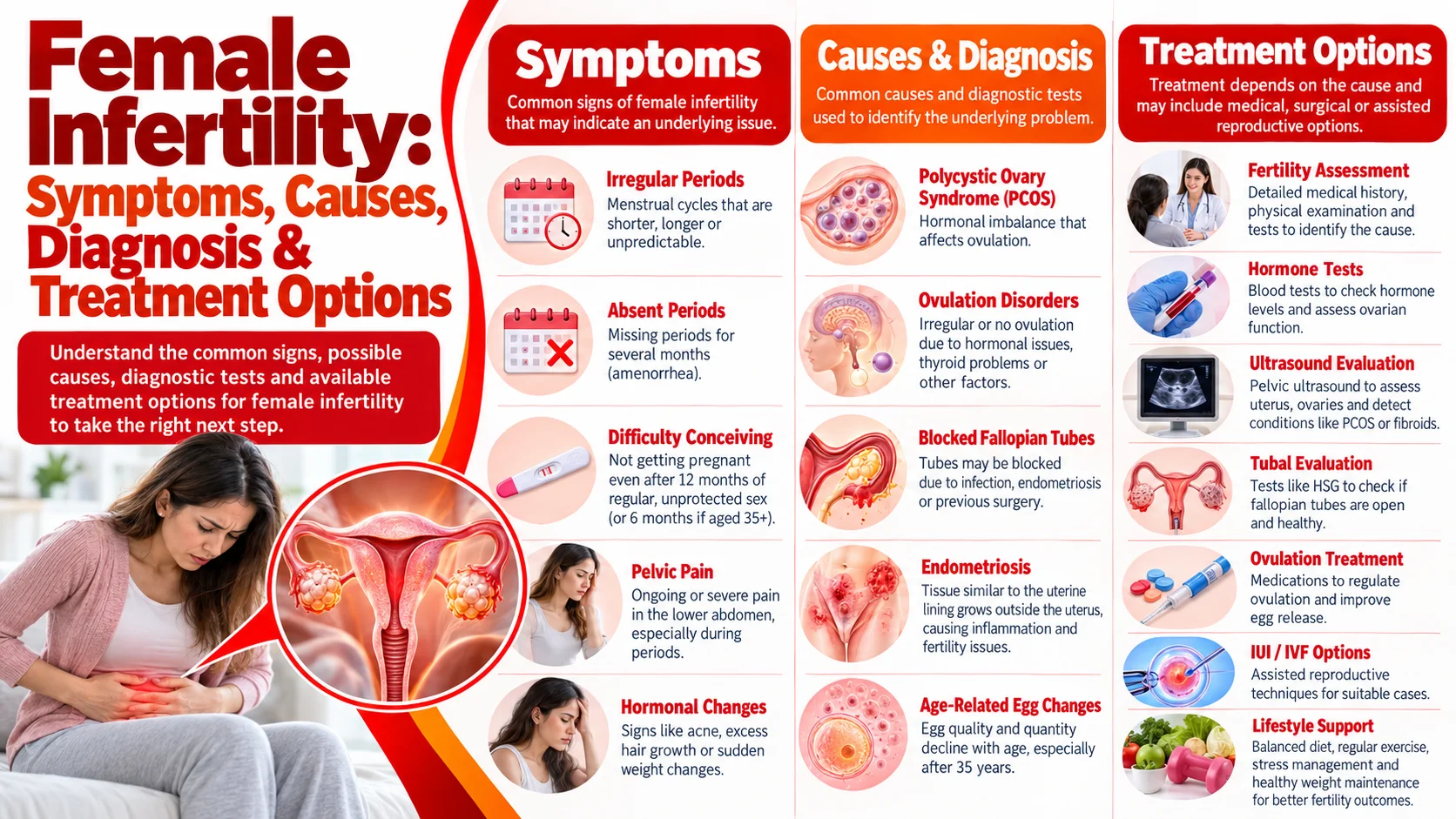
Some women discover they have PCOS when they begin trying to conceive. PCOS can interfere with ovulation, making it more difficult to predict the fertile window or conceive. Even women who experience regular periods may occasionally have ovulatory problems.
However, PCOS is only one possible cause of fertility difficulties. Ovulation, sperm health, fallopian tube function, age, and other factors may also affect conception. If you are experiencing difficulty getting pregnant, a fertility specialist can assess your circumstances and recommend appropriate investigations.
Signs That May Be Associated With PCOS
Important: None of these symptoms confirms PCOS on its own. Diagnosis requires an assessment of your symptoms, medical history, examination findings, and relevant investigations.
How Is PCOS Diagnosed If Your Periods Are Regular?
There is no single test that confirms PCOS in every woman. A gynaecologist considers the overall clinical picture and rules out other conditions that can cause similar symptoms.
In adults, PCOS is generally diagnosed when at least two of the following three features are present, after other relevant causes have been excluded:
-
Clinical or biochemical evidence of increased androgen levels.
-
Ovulatory dysfunction.
-
Polycystic ovarian morphology on ultrasound or, in appropriate adults, an elevated anti-Müllerian hormone (AMH) level used as an alternative to ultrasound for this diagnostic feature.
Irregular periods are not required in every case. A woman with regular menstrual cycles may still meet the diagnostic criteria if other features are present.
1. Medical History and Physical Examination
Your doctor may ask about:
-
The frequency and regularity of your menstrual cycles.
-
Unwanted facial or body hair.
-
Persistent acne or scalp hair thinning.
-
Changes in weight.
-
Previous pregnancies or difficulty conceiving.
-
Family history of PCOS, diabetes, or related metabolic conditions.
A physical examination may include checking blood pressure and assessing signs of increased androgen activity or insulin resistance. Your doctor will use these findings to decide which investigations are appropriate.
2. Blood Tests for Hormones
Blood tests may help assess androgen levels, including total or free testosterone, depending on the clinical situation. Your doctor may also recommend tests to rule out other conditions that can resemble PCOS, such as thyroid disorders or elevated prolactin levels. Additional hormone tests may be appropriate in selected cases.
Not every woman needs the same tests. The choice depends on symptoms, medical history, examination findings, and the possibility of other conditions. A normal result on one hormone test does not automatically rule out PCOS. The results must be interpreted alongside the other diagnostic criteria.
3. Checking Whether Ovulation Is Occurring
If your doctor suspects that ovulation may not be occurring consistently, they may recommend a blood test to measure progesterone. Progesterone levels rise after ovulation. Measuring this hormone at the appropriate time can help assess whether ovulation has occurred during a particular cycle.
The test must be timed according to your cycle and the reason for testing. It is not always appropriate to schedule it on the same fixed day for every woman. Regular periods can be a useful indicator of ovulatory function, but they do not guarantee that ovulation occurs in every cycle.
4. Pelvic Ultrasound
A pelvic ultrasound can help examine the ovaries and assess their appearance. In some women, the scan may show an increased number of small follicles or increased ovarian volume consistent with polycystic ovarian morphology.
However, polycystic-appearing ovaries on ultrasound do not automatically mean that you have PCOS. Some women without PCOS have this ovarian appearance, while some women with PCOS do not show it.
An ultrasound is not always necessary for diagnosis in adults. If the other required diagnostic criteria are already met, your doctor may not need to order one specifically to confirm PCOS. Your doctor will decide whether an ultrasound is useful based on your symptoms and other findings.
5. Blood Sugar and Cholesterol Tests
PCOS is associated with an increased risk of metabolic problems, including impaired glucose regulation and type 2 diabetes. Depending on your individual risk factors, your doctor may recommend tests to assess blood sugar and cholesterol levels.
These investigations help evaluate metabolic health; they do not independently diagnose PCOS. Your healthcare professional can advise which tests are appropriate and whether follow-up monitoring is needed.
Can You Have PCOS if Your Hormone Tests Are Normal?
Yes, it is possible, depending on which hormones were tested and whether other diagnostic features are present. PCOS is not diagnosed using a single hormone result. Some women may have testosterone levels within the laboratory's reference range but still meet the diagnostic criteria through other findings.
The interpretation also depends on the quality and type of test used. A doctor may consider your symptoms, ovulatory function, ultrasound findings when appropriate, and investigations to rule out other conditions. If your symptoms persist despite normal initial test results, discuss the findings with your gynaecologist rather than assuming that PCOS has been ruled out or confirmed.
Does PCOS With Regular Periods Affect Pregnancy?
PCOS can affect fertility, but having PCOS does not mean you cannot become pregnant. Some women with PCOS ovulate regularly and conceive without difficulty. Others may ovulate less frequently or experience ovulatory dysfunction despite having apparently regular periods. If you are trying to conceive and pregnancy is taking longer than expected, your doctor may assess ovulation and investigate other possible fertility factors.
Depending on your medical history, an evaluation may include hormonal testing, assessment of the reproductive organs, and a semen analysis for your partner. Women with PCOS can conceive and have healthy pregnancies. The appropriate care depends on individual fertility needs and overall health. For more information about available fertility options, explore IVF treatment in India and discuss your circumstances with a qualified fertility specialist.
When Should You See a Gynaecologist?
You do not need to wait for your periods to become irregular before seeking medical advice.
Consider booking an appointment if you experience:
-
Increasing or unwanted facial or body hair.
-
Persistent acne alongside other possible hormonal symptoms.
-
Noticeable thinning of scalp hair.
-
Dark, thickened patches of skin.
-
Difficulty getting pregnant.
-
Symptoms that are new, worsening, or affecting your well-being.
These symptoms can have several possible causes. A proper assessment can help identify the reason and determine whether PCOS testing is appropriate.
Avoid starting hormonal medicines or supplements without medical advice. Treatment depends on your symptoms, medical history, metabolic health, and whether you are planning a pregnancy.
PCOS Evaluation and Care at SCI IVF
If you suspect PCOS despite having regular periods, a gynaecological assessment can help clarify your symptoms and determine whether further testing is needed.
At SCI IVF, Dr. Shivani Sachdev Gour is an experienced fertility specialist. The appropriate evaluation and treatment plan will depend on your symptoms, diagnostic findings, and reproductive goals. You can also learn more about PCOS and its symptoms to understand the condition and the ways it may affect reproductive health.
Frequently Asked Questions About PCOS With Regular Periods
1. Is it possible to have PCOS if my periods are regular?
Yes. Some women with PCOS have regular menstrual cycles. Diagnosis depends on other features, such as increased androgen activity, ovulatory dysfunction, or polycystic ovarian morphology, after other relevant conditions have been excluded.
2. Does having a period every month guarantee ovulation?
No. Regular menstrual bleeding does not guarantee that ovulation occurs in every cycle. If your doctor suspects ovulatory dysfunction, they may recommend further assessment, such as a properly timed progesterone blood test.
3. Is an ultrasound necessary to diagnose PCOS?
Not always. In adults, an ultrasound may not be necessary if the other required diagnostic criteria are already met. Your doctor will decide whether imaging is appropriate for your situation.
4. Can PCOS cause acne even when periods are normal?
Yes. PCOS-related androgen activity may contribute to acne, even in women with regular periods. However, acne has many possible causes and cannot confirm PCOS by itself.
5. Can I have PCOS if my hormone tests are normal?
Yes, it may be possible. A normal result on one hormone test does not automatically rule out PCOS. Your doctor will consider the complete clinical picture and the specific tests performed.
6. Can I get pregnant naturally if I have PCOS and regular periods?
Yes. Many women with PCOS conceive naturally. However, some experience ovulatory dysfunction or other fertility concerns. If you are having difficulty conceiving, a fertility specialist can help assess the possible causes.
7. Does PCOS always cause weight gain?
No. PCOS can occur in women of different body sizes. Weight gain is not required for diagnosis, and being slim does not rule out the condition.
8. Should I get tested for PCOS if I only have facial hair or acne?
Not everyone with facial hair or acne has PCOS. However, if the symptoms are new, persistent, or worsening, a healthcare professional can assess the possible causes and decide whether hormonal testing is appropriate.