Finding out that your pregnancy is considered high-risk can be stressful. You may immediately start worrying about your baby's health, the possibility of complications, whether you will need a C-section, and what additional treatment may be required.
A high-risk pregnancy means that the mother, the baby, or both may need closer medical attention than during an uncomplicated pregnancy. It does not mean that something will definitely go wrong or that you cannot have a healthy baby.
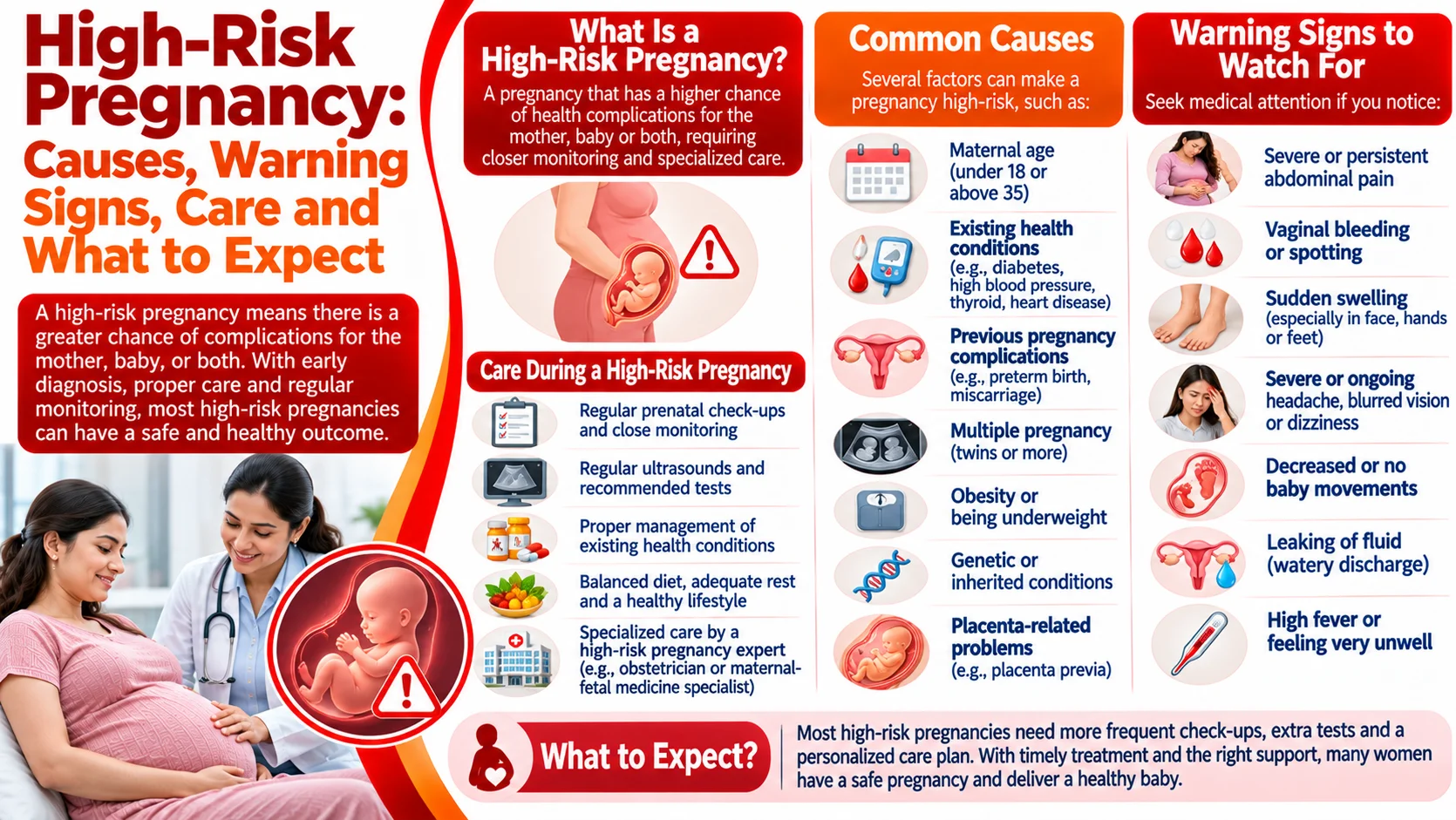
Some women have medical conditions before becoming pregnant, while others develop complications during pregnancy. Multiple pregnancy, high blood pressure, gestational diabetes, and certain placental problems are some reasons why additional monitoring may be recommended. With regular antenatal check-ups, timely investigations, and appropriate medical care, many women with high-risk pregnancies deliver healthy babies.
What Is a High-Risk Pregnancy?
A high-risk pregnancy is one in which certain medical, pregnancy-related, or obstetric factors increase the possibility of complications for the mother or baby before, during, or after childbirth. For example, a woman with diabetes or high blood pressure may need more frequent check-ups to monitor her health and the baby's development. Similarly, a woman expecting twins may require additional ultrasound scans to assess the growth and well-being of both babies.
Sometimes, a pregnancy is uncomplicated during the early months but becomes high-risk later because of conditions such as gestational diabetes, pregnancy-related high blood pressure, or problems involving the placenta. Being classified as high-risk does not mean that complications are unavoidable. It means that your pregnancy needs an individualised care plan and closer medical supervision.
What Makes a Pregnancy High-Risk?
There are several reasons why a pregnancy may require additional attention. The level of risk depends on the woman's health, pregnancy history, and the specific condition involved.
1. Mother's Age
Age can influence pregnancy risk, particularly in teenage pregnancies and pregnancies after the age of 35. Teenage pregnancies, especially at younger ages, may be associated with a higher likelihood of certain complications, including anaemia and premature birth.
Women who become pregnant after 35 may have a higher chance of developing conditions such as gestational diabetes, high blood pressure, and chromosomal abnormalities. The likelihood of some pregnancy complications also increases with advancing maternal age.
However, age alone does not determine the outcome. Many women below 20 or above 35 have healthy pregnancies with appropriate antenatal care.
2. Health Problems Before Pregnancy
Some women have existing medical conditions before becoming pregnant. These conditions may require closer monitoring, medication adjustments, or specialist consultations throughout pregnancy.
Common examples include:
-
Diabetes.
-
High blood pressure.
-
Thyroid disorders.
-
Heart disease.
-
Kidney disease.
-
Epilepsy.
-
Autoimmune disorders.
-
Obesity.
The doctor may review your existing medicines to check whether they are suitable during pregnancy. Some medications may need adjustment, but do not stop or change prescribed medicines without medical advice.
If you are planning a pregnancy and already have a medical condition, a pre-pregnancy consultation can help identify potential risks and prepare an appropriate care plan.
3. Problems That Develop During Pregnancy
A woman may be healthy before becoming pregnant but develop a medical complication during pregnancy. Some of these conditions require additional monitoring and treatment.
Gestational diabetes: Gestational diabetes occurs when blood sugar levels become higher than normal during pregnancy. It can increase the risk of certain complications for both the mother and baby if not properly managed. Doctors may recommend blood sugar monitoring, dietary changes, physical activity, and medication when required.
Pre-eclampsia: Pre-eclampsia is a pregnancy complication involving high blood pressure, usually developing after 20 weeks of pregnancy. It may also affect organs such as the kidneys and liver.
Symptoms can include severe headache, visual disturbances, pain in the upper abdomen, and sudden swelling. However, some women may initially have no noticeable symptoms, which is why regular blood pressure checks are important.
Placental problems: Conditions such as placenta previa occur when the placenta lies unusually low in the uterus and may partially or completely cover the cervix. This can increase the risk of bleeding during pregnancy or delivery.
Other placental complications may also affect the baby's growth or require closer monitoring.
4. Twin or Multiple Pregnancy
Pregnancy with twins, triplets, or more babies generally requires closer medical supervision than a pregnancy with one baby. Multiple pregnancies have a higher likelihood of certain complications, including:
-
Premature birth.
-
Low birth weight.
-
Differences in the growth of the babies.
-
Pregnancy-related high blood pressure.
-
Gestational diabetes.
-
Complications involving the placenta, depending on the type of twin pregnancy.
Your doctor may recommend additional ultrasound scans to monitor the growth, development, and well-being of each baby.
5. Problems in an Earlier Pregnancy
Your previous pregnancy history is an important part of assessing risk during a new pregnancy.
Certain previous complications may increase the likelihood of similar problems occurring again. These include:
-
Previous preterm birth.
-
Previous pre-eclampsia.
-
Stillbirth or certain pregnancy losses.
-
Previous pregnancy involving serious maternal complications.
-
Previous C-section or complicated delivery.
-
Previous baby with certain congenital conditions.
However, having experienced a miscarriage does not automatically mean that your next pregnancy will be high-risk. Your doctor will consider the reason for the previous loss, your medical history, and other relevant factors before deciding what additional care is needed.
What Happens During High-Risk Pregnancy Care?
The main difference between routine and high-risk pregnancy care is the level of monitoring. Your doctor may recommend more frequent appointments, additional investigations, or specialist consultations depending on your condition.
The purpose is to identify potential complications early and manage them before they become more serious. Depending on your medical history and pregnancy stage, your doctor may recommend:
Not every woman needs all these tests. The type and frequency of investigations depend on the pregnancy, the mother's medical history, and the doctor's assessment. Some women may need additional monitoring in the third trimester, while others may require treatment or specialist care much earlier.
Will You Need a High-Risk Pregnancy Specialist?
Not necessarily. Many high-risk pregnancies can be managed by an experienced obstetrician and gynaecologist, depending on the nature and severity of the condition. However, if a woman has a complicated medical history, a serious pregnancy complication, or a baby who requires specialised assessment, the obstetrician may involve a maternal-fetal medicine (MFM) specialist.
Maternal-fetal medicine specialists have additional expertise in managing complicated pregnancies. They may work alongside the regular obstetrician to plan investigations, treatment, monitoring, and delivery. Other specialists may also be involved when required. For example, a woman with diabetes or heart disease may need advice from an endocrinologist or cardiologist. The aim is to coordinate care according to the specific needs of the mother and baby.
Does High-Risk Pregnancy Mean Bed Rest?
No. A high-risk pregnancy does not automatically mean that you need to remain in bed throughout the day. Some women may need to reduce certain physical activities because of a specific medical complication. Others may be able to continue their usual daily activities with a few modifications.
Routine bed rest is not recommended for every high-risk pregnancy. Prolonged inactivity can increase the risk of blood clots, muscle weakness, and other health problems. Your doctor may recommend activity restrictions in specific circumstances. Always ask which activities are safe for your condition rather than stopping all movement or exercise on your own.
Which Symptoms Should You Not Ignore During a High-Risk Pregnancy?
Knowing the warning signs of pregnancy complications is important. If you experience an unusual or concerning symptom, contact your maternity team rather than waiting for your next scheduled appointment.
Seek immediate medical attention if you notice:
-
Severe or persistent headache.
-
Blurred vision, flashing lights, or other sudden visual changes.
-
Vaginal bleeding.
-
Fluid leaking from the vagina, particularly if your water may have broken.
-
Severe or persistent pain in the abdomen, especially in the upper abdomen.
-
Sudden swelling of the face or hands, particularly with headache or visual symptoms.
-
Baby moving noticeably less than usual once you have started feeling regular movements.
-
Difficulty breathing, chest pain, or fainting.
-
Seizures or loss of consciousness.
-
High fever or feeling severely unwell.
Reduced fetal movement should not be ignored. If your baby's movements are noticeably less than usual, contact your maternity unit immediately and follow their advice. Do not wait until the next day.
Some of these symptoms may indicate serious complications such as pre-eclampsia, placental problems, or other pregnancy emergencies. Prompt assessment is important.
How Can You Take Care of Yourself During a High-Risk Pregnancy?
You may not be able to prevent every pregnancy complication, but following your medical care plan can help manage known risks and support your health.
Some important steps include:
1. Attend regular antenatal appointments
Do not skip scheduled check-ups. These visits allow your doctor to monitor blood pressure, blood sugar, the baby's growth, and other pregnancy-related changes.
2. Take medicines as prescribed
If you have diabetes, high blood pressure, thyroid problems, or another medical condition, follow your treatment plan. Never stop or change prescribed medicines without discussing it with your doctor.
3. Follow a balanced diet
Eat a varied, nutritious diet that provides the energy and nutrients needed during pregnancy. Follow any specific dietary recommendations given for conditions such as gestational diabetes.
4. Get adequate rest
Sleep and rest are important during pregnancy. Follow your doctor's advice about activity levels, especially if you have a medical complication.
5. Avoid smoking and alcohol
Avoid tobacco, smoking, and alcohol during pregnancy. Discuss any medicines, supplements, or herbal products with your doctor before using them.
6. Exercise only as advised
Physical activity may be appropriate for many pregnant women, but the type and intensity should depend on your medical condition. Ask your obstetrician before starting or continuing an exercise routine if your pregnancy is high-risk.
7. Report new symptoms promptly
Do not ignore new pain, bleeding, unusual swelling, fluid leakage, or changes in your baby's movements. Contact your doctor or maternity unit when something concerns you.
Does High-Risk Pregnancy Always Require a C-Section?
No. A high-risk pregnancy does not automatically mean that a C-section is necessary. Some women with high-risk pregnancies can have a vaginal delivery if the mother and baby are medically stable and there are no conditions that make vaginal birth unsafe.
A C-section may be recommended when there is a medical reason, such as certain placental problems, fetal distress, an unsuitable baby position, or other complications affecting the safety of delivery.
The timing and mode of delivery are decided by the obstetrician after considering the mother's condition, the baby's well-being, and the progress of pregnancy. The priority is always a safe delivery for both mother and baby, rather than choosing a particular delivery method in advance.
High-Risk Pregnancy Management at SCI International Hospital
High-risk pregnancy care requires individual assessment, regular monitoring, and a coordinated treatment plan. Choosing a maternity hospital with experienced obstetricians and appropriate maternity facilities is an important part of pregnancy planning.
SCI International Hospital provides obstetrics and gynaecology services, including high-risk pregnancy management, antenatal monitoring, normal delivery, and C-section care. Dr. Ruchi Tandon, Obstetrician and Gynaecologist, provides pregnancy-related consultations and women's healthcare services at SCI International Hospital. Her clinical experience includes the management of high-risk pregnancies and other obstetric and gynaecological conditions.
The maternity team evaluates each pregnancy individually and recommends investigations, monitoring, and treatment according to the mother's health and the baby's development.
For more information, visit the Obstetrics and Gynaecology Department at SCI International Hospital, explore maternity care services
Frequently Asked Questions About High Risk Pregancy
1. Can a woman with a high-risk pregnancy have a normal delivery?
Yes. A high-risk pregnancy does not automatically require a C-section. Vaginal delivery may be possible if the mother's health, the baby's condition, and the progress of labour make it medically appropriate.
2. What age is considered high-risk for pregnancy?
Pregnancy during the teenage years, particularly at younger ages, and pregnancy after 35 may involve additional risks. However, age alone does not determine the outcome. The mother's overall health and pregnancy history are also important.
3. Do all high-risk pregnancies require a C-section?
No. Some women with high-risk pregnancies can deliver vaginally. A C-section is recommended when there is a medical reason to make surgical delivery safer for the mother or baby.
4. Do I need additional ultrasounds during a high-risk pregnancy?
You may need additional ultrasound scans to monitor the baby's growth, development, placental position, or other pregnancy-related concerns. The number and timing of scans depend on your medical condition and your doctor's recommendations.
5. Can a high-risk pregnancy become a normal pregnancy?
Some pregnancy-related conditions can be controlled or improve with treatment, while others may require monitoring until delivery. Even if a complication improves, your doctor may continue to classify the pregnancy as high-risk based on your medical history and remaining risk factors.
6. Is bed rest necessary during a high-risk pregnancy?
No. Bed rest is not routinely required for every high-risk pregnancy. Activity restrictions are recommended only in selected situations based on the mother's condition. Follow your obstetrician's individual advice.
7. How often should I visit the doctor during a high-risk pregnancy?
The frequency of appointments depends on the condition causing the increased risk, the stage of pregnancy, and the mother's and baby's health. Some women need more frequent visits or additional monitoring than others.
8. What are the warning signs of complications during a high-risk pregnancy?
Warning signs include vaginal bleeding, severe headache, blurred vision, severe abdominal pain, fluid leakage, reduced fetal movement, difficulty breathing, chest pain, or seizures. These symptoms require prompt medical assessment, and some need emergency care.