Pain in the upper abdomen after eating can make you wonder whether you are experiencing acidity, indigestion, or a problem with your gallbladder. Since both gastric conditions and gallbladder stones can cause discomfort in a similar area, it is not always easy to identify the cause based on symptoms alone.
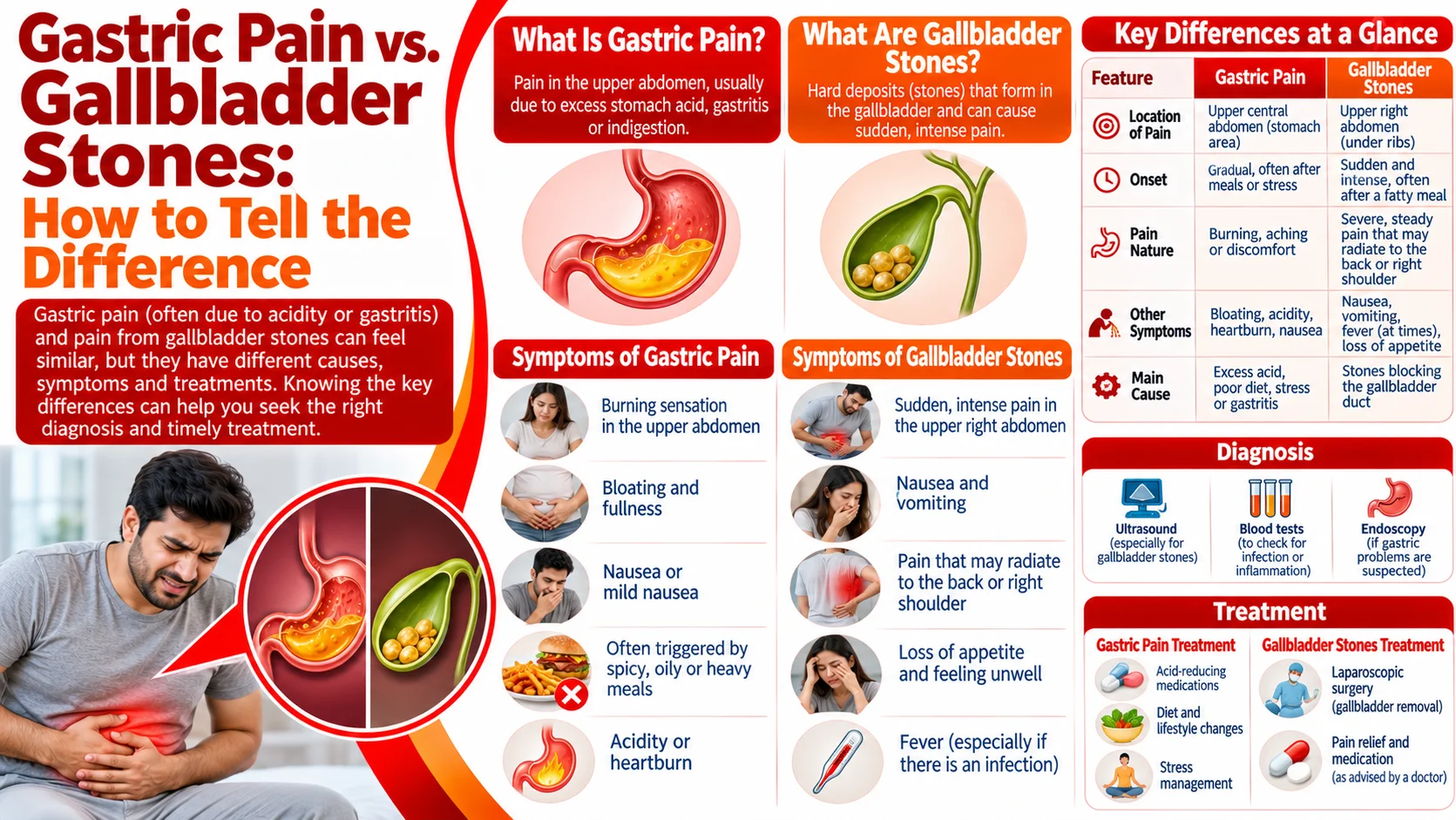
Gastric problems may cause a burning sensation, bloating, frequent burping, or a feeling of fullness in the upper abdomen. Gallbladder stones, on the other hand, can cause steady and sometimes severe pain below the right ribs or in the upper middle abdomen. The pain may also spread towards the back or right shoulder.
Understanding the differences between gastric pain and gallbladder stone pain can help you recognise warning signs and know when to consult a doctor.
What Is Gastric Pain?
Gastric pain is a commonly used term for discomfort in the upper abdomen. It may be associated with conditions such as acidity, indigestion, gastritis (inflammation of the stomach lining), or acid reflux. Depending on the underlying cause, you may experience:
-
Burning or discomfort in the upper abdomen.
-
Bloating or excessive gas after meals.
-
Frequent burping.
-
A heavy or uncomfortable feeling in the stomach.
-
Nausea or early fullness.
-
Discomfort after eating certain foods.
Symptoms may become worse after consuming spicy or fatty foods, coffee, or large meals. Some people also experience discomfort when their stomach is empty.
The symptoms and their duration depend on the underlying digestive condition. Antacids may provide relief in some cases of acidity, but persistent or recurring pain should not automatically be assumed to be a gastric problem.
What Are Gallbladder Stones?
Gallbladder stones, medically known as gallstones, are hardened deposits that form inside the gallbladder. They develop when substances in bile, such as cholesterol or bilirubin, become concentrated and form solid particles. The gallbladder is a small organ located beneath the liver. It stores bile, a digestive fluid that helps the body break down fats.
Many people have gallstones without experiencing any symptoms. However, problems can occur when a stone blocks the normal flow of bile through the gallbladder or bile ducts.
This may cause a gallbladder attack, also known as biliary colic. Common symptoms include:
-
Steady pain below the right ribs.
-
Pain in the upper middle abdomen.
-
Discomfort that may spread towards the back or right shoulder.
-
Nausea or vomiting.
-
Pain that may begin after eating, particularly following a fatty meal.
A gallbladder attack can last from around 30 minutes to several hours. If a stone causes inflammation or blocks a bile duct, additional complications may develop and require prompt medical attention.
Gastric Pain vs. Gallbladder Stone Pain: Key Differences
Although both conditions can cause upper abdominal discomfort, the location, nature, and duration of pain may provide useful clues.
These are common symptom patterns, not definite diagnostic rules. Gastric conditions and gallstones can produce overlapping symptoms, so medical evaluation may be necessary to identify the actual cause.
How Can You Tell Where the Pain Is Coming From?
The location and nature of abdominal pain can provide useful information, but they cannot confirm a diagnosis on their own.
Gastric Pain
Gastric discomfort is commonly felt in the upper middle abdomen, just below the breastbone. You may experience:
-
A burning sensation.
-
Acidity or sour burps.
-
Bloating and trapped gas.
-
A feeling of fullness after meals.
Some acid-related symptoms may improve after taking an antacid. However, not all gastric conditions respond to antacids, and recurring pain should be evaluated.
Gallbladder Pain
Gallbladder pain commonly develops below the right rib cage. It may also occur in the upper middle abdomen. The pain is often steady rather than a burning sensation. It may spread towards the right shoulder blade or back and can be severe enough to interrupt normal activities.
One important difference is that antacids generally do not relieve pain caused by a gallbladder attack because the underlying problem is related to the gallbladder rather than stomach acid. If the pain is severe, recurring, or associated with other warning signs, consult a doctor rather than trying to identify the cause through medication response alone.
When Should You Worry About the Pain?
Do not assume that severe or persistent upper abdominal pain is simply gas or acidity. Seek prompt medical attention if abdominal pain is accompanied by:
-
Fever or chills: These may indicate inflammation or infection involving the gallbladder or bile ducts.
-
Yellowing of the eyes or skin: This may suggest jaundice caused by a problem with bile flow.
-
Dark urine or pale-coloured stools: These can occur when bile flow is obstructed.
-
Repeated vomiting: Persistent vomiting may indicate a more serious problem.
-
Severe or prolonged pain: Pain that continues for several hours, particularly below the right ribs, needs medical assessment.
These symptoms may indicate gallbladder inflammation, a blocked bile duct, or another abdominal condition that requires urgent treatment.
How Are Gastric Problems and Gallstones Diagnosed?
The doctor will ask about your symptoms, eating habits, medical history, and the location and duration of your pain. A physical examination may also be performed.
The investigations depend on the suspected cause.
Tests for Gastric Problems
Depending on your symptoms, the doctor may recommend:
1. H. pylori Test: This test checks for Helicobacter pylori, a bacterium associated with certain stomach conditions, including gastritis and peptic ulcers.
2. Upper GI Endoscopy: An upper gastrointestinal endoscopy allows the doctor to examine the oesophagus, stomach, and upper part of the small intestine using a flexible camera. It may be recommended when symptoms are persistent or when there is a clinical reason to examine the upper digestive tract.
Tests for Gallbladder Stones
1. Abdominal Ultrasound: An abdominal ultrasound is generally the first imaging test used to identify gallstones. It can help determine whether stones are present in the gallbladder and may also show signs of gallbladder inflammation.
2. Blood Tests: Blood tests may be recommended to check liver function and look for signs of inflammation or infection. If a bile duct blockage or another complication is suspected, additional imaging investigations may be needed. Your doctor will select the appropriate tests based on your symptoms and examination findings.
What Is the Treatment for Gastric Problems and Gallstones?
Treatment depends on the underlying condition, its severity, and whether complications are present.
Treatment for Gastric Problems
Treatment varies according to the cause of the symptoms.
It may include:
-
Acid-reducing medicines: These may be prescribed to manage certain acid-related conditions.
-
Antacids: These can provide temporary relief from some acidity symptoms.
-
H. pylori treatment: If an H. pylori infection is confirmed, a combination of specific antibiotics and acid-suppressing medicines may be prescribed.
-
Dietary changes: Identifying and reducing foods that trigger symptoms may help manage discomfort.
-
Lifestyle changes: Eating appropriate portions and avoiding meals close to bedtime may help with certain digestive symptoms.
Persistent gastric pain should be evaluated rather than managed repeatedly with over-the-counter medicines.
Treatment for Gallbladder Stones
Treatment depends on whether the gallstones are causing symptoms or complications.
1. Observation for Asymptomatic Gallstones
Gallstones that do not cause symptoms may not require immediate treatment. The doctor may recommend observation depending on the patient's individual risk factors and clinical condition.
2. Laparoscopic Cholecystectomy
For people experiencing recurrent symptoms or gallstone-related complications, surgical removal of the gallbladder may be recommended. The procedure is called laparoscopic cholecystectomy. It involves removing the gallbladder through small incisions using a camera and specialised instruments.
3. Treatment for Bile Duct Stones
If a gallstone blocks the common bile duct, additional treatment may be required. In selected cases, a procedure called ERCP (endoscopic retrograde cholangiopancreatography) may be used to remove stones from the bile duct. If a blockage is associated with infection, urgent medical treatment is essential.
Learn more about Gallbladder Stone Surgery at SCI International Hospital.
Conclusion
Gastric pain and gallbladder stones can both cause discomfort in the upper abdomen, but their underlying causes and treatment approaches are different. Burning sensations, burping, and bloating may be associated with gastric problems, while steady pain below the right ribs that spreads towards the back or right shoulder may suggest gallbladder stones.
However, symptoms can overlap, and not every case follows the same pattern. Recurring, severe, or persistent abdominal pain should be properly evaluated rather than automatically treated as acidity or gas.
At SCI International Hospital, patients can consult Dr. Asif Umar, Senior Consultant, General, Advanced Laparoscopic and Bariatric Surgeon, who has more than 15 years of experience. The surgical team evaluates gallbladder conditions and advises patients on suitable treatment options based on their diagnosis and overall health.
Frequently Asked Questions About Gastric Pain and Gallbladder Stones
1. Do gallbladder stones cause gas or bloating?
Yes. Some people with gallstones experience bloating, nausea, and indigestion. However, these symptoms are not specific to gallstones and can also occur with other digestive conditions. Medical evaluation and appropriate investigations are needed to identify the cause.
2. Does gallbladder pain disappear after taking an antacid?
Usually, no. Antacids may relieve discomfort associated with certain acid-related conditions, but they do not remove gallstones or resolve a bile duct obstruction. Persistent or severe abdominal pain should be medically evaluated.
3. Can gallbladder pain occur in the middle of the stomach?
Yes. Gallbladder pain can occur in the upper middle abdomen or below the right ribs. It may also spread towards the back or right shoulder blade.
4. Which test can detect gallbladder stones?
An abdominal ultrasound is generally the first test recommended to detect gallstones. Blood tests may also be performed to assess liver function and check for signs of complications.
5. Do all gallstones require surgery?
No. Gallstones that do not cause symptoms may not require immediate treatment. However, when gallstones cause repeated pain, inflammation, or other complications, surgery may be recommended after medical assessment.
6. How long does gallbladder stone pain last?
A typical gallbladder attack may last from approximately 30 minutes to several hours. Pain that persists for several hours, becomes severe, or occurs with fever, vomiting, or jaundice needs prompt medical assessment.
7. Can gallbladder stones be treated without surgery?
Some people with asymptomatic gallstones do not need immediate treatment. However, for symptomatic gallstones, laparoscopic gallbladder removal is commonly recommended. The appropriate approach depends on the patient's condition and the presence of complications.