A high-risk pregnancy is a pregnancy in which the mother, baby, or both may have a higher risk of health complications and therefore require closer monitoring or specialised medical care.
A pregnancy may be considered high risk because of a health condition that existed before conception, a complication that develops during pregnancy, multiple pregnancy, previous pregnancy complications, or concerns about the baby's growth and development.
Being classified as high risk does not necessarily mean that a serious complication will occur. It means your obstetrician may recommend additional check-ups, investigations, scans, or treatment based on your individual circumstances.
Understanding the causes and risk factors of high-risk pregnancy can help expectant mothers understand why additional monitoring may sometimes be recommended.
What Can Cause a High-Risk Pregnancy?
There is no single cause of a high-risk pregnancy. The level of risk depends on the mother's health, pregnancy history, the baby's development, and complications that may arise during pregnancy.
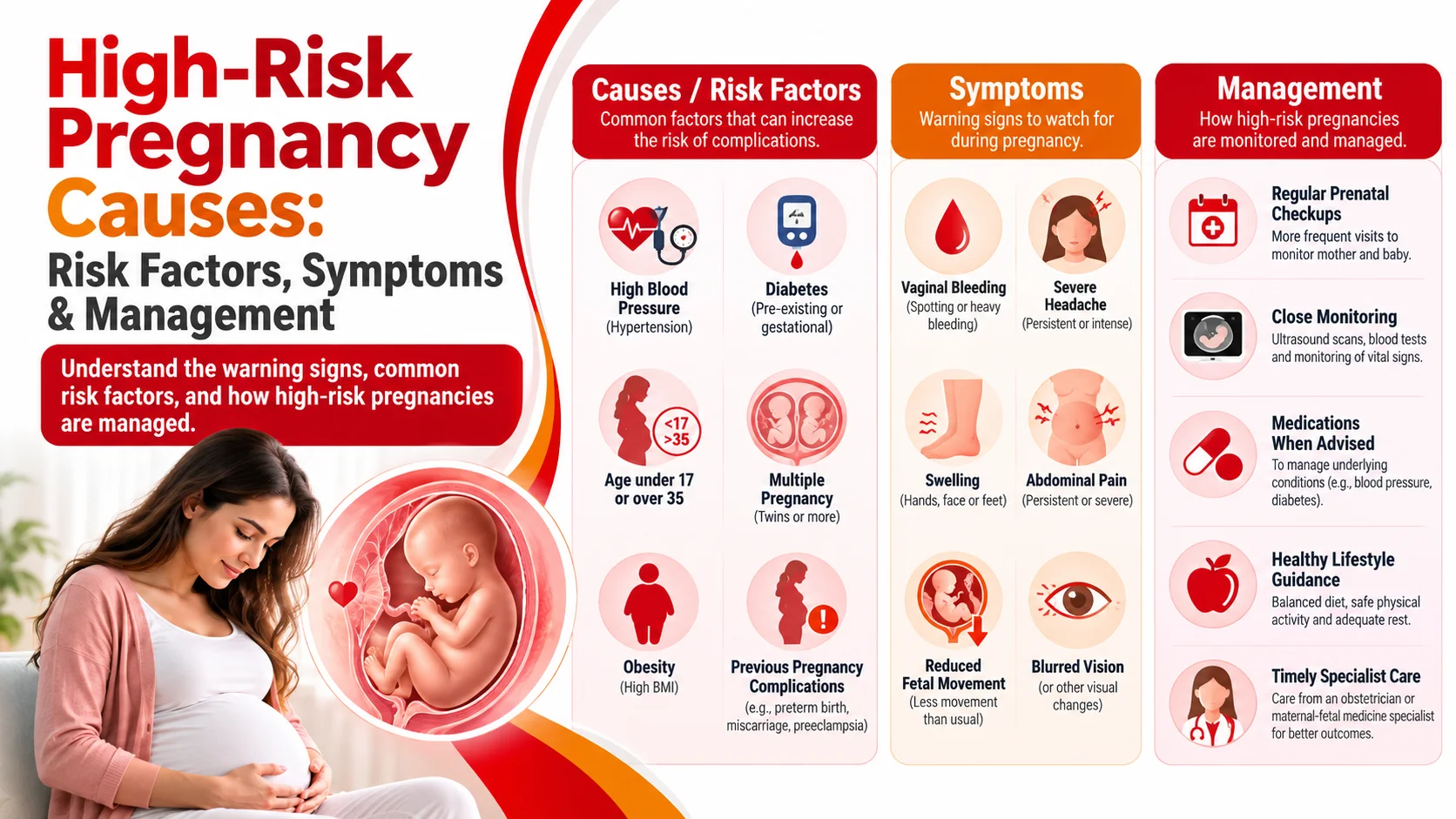
Some common high-risk pregnancy causes and risk factors include the following.
1. Health Conditions Before Pregnancy
Certain medical conditions that exist before pregnancy may require closer monitoring during pregnancy.
These can include:
- Diabetes
- High blood pressure
- Thyroid disorders
- Heart disease
- Kidney disease
- Autoimmune conditions
- Severe anaemia
- Certain blood-clotting disorders
Having one of these conditions does not automatically mean that a pregnancy will have complications. However, your obstetrician may recommend additional monitoring, medication adjustments, blood tests, or other investigations depending on your health.
2. Maternal Age
Maternal age can influence pregnancy care.
Pregnancy at 35 years or older may be associated with an increased likelihood of certain pregnancy complications, including gestational diabetes, high blood pressure, chromosomal conditions, and other concerns. However, age alone does not determine whether a pregnancy will be high risk.
The overall assessment also considers your medical history, pregnancy history, test results, and the health of the baby.
Younger mothers can also experience pregnancy complications, which is why regular antenatal care is important regardless of age.
3. Diabetes or High Blood Pressure During Pregnancy
Some women develop health conditions during pregnancy even when they did not have them before becoming pregnant.
For example, gestational diabetes develops during pregnancy and may require dietary changes, blood glucose monitoring, medication, or closer fetal monitoring.
Similarly, high blood pressure during pregnancy can sometimes develop into more serious conditions, including pre-eclampsia, and therefore requires medical assessment and monitoring.
Your doctor may recommend additional prenatal visits, blood tests, urine tests, blood pressure monitoring, or fetal assessments depending on your condition.
4. Twin or Multiple Pregnancy
A pregnancy involving twins or more than one baby generally requires closer monitoring than a singleton pregnancy.
Multiple pregnancies have a higher likelihood of certain complications, including:
- Preterm birth
- High blood pressure and pre-eclampsia
- Growth-related concerns
- Placental complications
- Problems related to the babies' positions
Your obstetrician may therefore recommend additional ultrasound scans and other monitoring throughout pregnancy.
5. Placental Problems
The placenta supplies oxygen and nutrients to the developing baby and plays an important role throughout pregnancy.
Certain placental conditions can increase pregnancy risk. For example, placenta previa or a low-lying placenta may require additional monitoring because of the potential for bleeding.
Another serious condition is placental abruption, in which the placenta separates from the uterus before delivery.
Vaginal bleeding during pregnancy should always be discussed with your maternity team. Heavy bleeding, severe abdominal pain, dizziness, or other concerning symptoms require prompt medical evaluation.
6. Baby Not Growing as Expected
Fetal growth is monitored throughout pregnancy through clinical assessments and, when required, ultrasound examinations.
Sometimes a baby may measure smaller than expected for the stage of pregnancy. This can be associated with factors involving the placenta, the mother's health, or other pregnancy-related conditions.
If your doctor has concerns about fetal growth, they may recommend additional ultrasounds, fetal monitoring, or other tests to assess the baby's well-being and determine whether further care is required.
7. Previous Pregnancy Complications
Your previous pregnancy history can influence how your current pregnancy is monitored.
Closer monitoring may be recommended if you have previously experienced:
- Preterm birth
- Stillbirth
- Recurrent miscarriage
- Gestational diabetes
- High blood pressure or pre-eclampsia
- Placental complications
- Significant pregnancy complications
- Previous complications involving the baby
A previous complication does not automatically mean that the same problem will happen again. Your obstetrician uses your previous history as part of the overall assessment of your current pregnancy.
8. Weight, Nutrition and Lifestyle Factors
Pre-pregnancy weight, excessive or inadequate weight gain during pregnancy, nutritional deficiencies, smoking, alcohol use, and certain other lifestyle factors can influence pregnancy health.
Your doctor may provide personalised advice about:
- Healthy pregnancy weight gain
- Nutrition
- Physical activity
- Medicines and supplements
- Smoking cessation
- Alcohol avoidance
- Management of existing medical conditions
Do not stop prescribed medication without discussing it with your doctor.
For nutritional guidance, see our related resource on an Indian diet plan during pregnancy.
9. Infections and Other Medical Conditions
Certain infections and medical conditions can affect pregnancy and may require additional monitoring or treatment.
The potential effect depends on the specific condition, when it occurs, its severity, and how well it is managed.
This is why your obstetrician considers your complete medical history rather than assessing pregnancy risk based on a single factor.
Can a Pregnancy Become High Risk Later?
Yes. A pregnancy can become high risk at any stage if a new medical condition or pregnancy-related complication develops.
For example, a pregnancy that initially appears uncomplicated may later require closer monitoring because of:
- Gestational diabetes
- High blood pressure
- Pre-eclampsia
- Vaginal bleeding
- Placental problems
- Concerns about fetal growth
- Reduced fetal movements
- Other maternal or fetal complications
This is one reason why regular antenatal appointments are important even when you feel well.
SCI Hospital's maternity services include regular antenatal care as well as specialised care for pregnancies that require closer monitoring.
Is an IVF Pregnancy Always High Risk?
No. IVF alone does not mean that every pregnancy will be classified as high risk. The overall pregnancy assessment depends on factors such as maternal age, medical history, pregnancy history, the number of babies, and complications that may develop during pregnancy.
Some pregnancies conceived through IVF may require closer monitoring because of associated factors such as advanced maternal age or multiple pregnancy.
If you are pregnant after fertility treatment, your obstetrician can assess your individual circumstances and recommend the appropriate level of monitoring.
SCI Hospital also provides IVF treatment in Delhi as part of its fertility services.
Does a High-Risk Pregnancy Mean You Need a C-Section?
Not necessarily. Being classified as high risk does not automatically mean that a Caesarean delivery will be required.
The mode of delivery depends on several factors, including:
- The mother's health
- The baby's health
- Baby's position
- Placental location
- Gestational age
- Progress of labour
- Previous Caesarean delivery
- Other pregnancy complications
Some women with high-risk pregnancies can have a vaginal delivery when it is medically appropriate, while others may require a Caesarean delivery. For more information, read Normal Delivery vs C-Section: Benefits, Risks & Recovery.
You can also learn more about C-Section in Delhi and the circumstances in which a Caesarean may be recommended.
How Is a High-Risk Pregnancy Managed?
Management depends on the specific risk factor and the health of the mother and baby.
Your obstetrician may recommend:
- More frequent antenatal appointments
- Regular blood pressure monitoring
- Blood sugar testing
- Blood and urine tests
- Additional ultrasound scans
- Fetal growth monitoring
- Fetal heart-rate monitoring when required
- Medication or treatment for specific conditions
- Dietary or lifestyle modifications
- Closer monitoring as delivery approaches
- Specialised delivery planning when necessary
There is no single monitoring schedule that applies to every high-risk pregnancy. Your care plan should be based on your individual medical needs.
SCI Hospital provides maternity care and high-risk pregnancy management in Delhi, including antenatal care, fetal monitoring, high-risk pregnancy care, normal delivery and Caesarean delivery services.
What Symptoms Should You Not Ignore During Pregnancy?
Some symptoms during pregnancy require prompt medical attention.
Contact your doctor or maternity team if you experience:
- Heavy vaginal bleeding
- Severe or persistent abdominal pain
- Severe headache or changes in vision
- Sudden swelling of the face or hands
- Fluid leaking from the vagina
- Regular painful contractions before your expected due date
- Noticeably reduced fetal movements
- High fever or significant weakness
- Other sudden or severe symptoms that concern you
Do not wait until your next routine appointment if you experience a severe or unusual symptom. Seek appropriate medical evaluation promptly.
Can High-Risk Pregnancy Be Prevented?
Not all high-risk pregnancies can be prevented. Some risk factors, such as maternal age, previous pregnancy complications, or certain existing medical conditions, cannot be changed.
However, preconception counselling and regular antenatal care can help identify and manage some risks early.
Depending on your individual health, your doctor may recommend:
- Managing diabetes or high blood pressure before and during pregnancy
- Reviewing medications before conception
- Taking recommended prenatal supplements
- Maintaining a balanced diet
- Avoiding alcohol and tobacco
- Attending regular prenatal appointments
- Following recommended screening and ultrasound schedules
Early medical care can help your healthcare team identify concerns and decide whether additional monitoring is needed.
Why Is Regular Antenatal Care Important in a High-Risk Pregnancy?
Regular antenatal care allows your obstetrician to monitor changes in your health and the baby's development throughout pregnancy.
Depending on your risk factors, monitoring may include blood pressure checks, blood tests, ultrasound examinations, fetal growth assessment, and other investigations.
SCI Hospital's Obstetrics & Gynaecology department in Delhi provides pregnancy care, high-risk pregnancy management, normal and Caesarean delivery, and other women's healthcare services.
Conclusion
The causes of high-risk pregnancy can include existing medical conditions, maternal age, multiple pregnancy, pregnancy-related complications, previous pregnancy problems, placental conditions, fetal growth concerns, infections, and other individual risk factors.
Being classified as high risk does not necessarily mean that a serious complication will occur. It means that your pregnancy may require closer observation, additional testing, or specialised care based on your individual circumstances.
At SCI International Hospital, experienced obstetricians and gynaecologists provide comprehensive maternity care, including antenatal care and high-risk pregnancy management. The maternity department includes specialists such as Dr. Ruchi Tandon, along with other obstetricians and gynaecologists who provide pregnancy and maternity services.
If you have been told that your pregnancy is high risk, discuss your individual risk factors and monitoring plan with your obstetrician.
FAQs About High-Risk Pregnancy Causes
What is the most common cause of a high-risk pregnancy?
There is no single cause. High blood pressure, diabetes, thyroid disorders, multiple pregnancy, certain maternal age-related factors, previous pregnancy complications, and other medical conditions can increase pregnancy risk.
Can a high-risk pregnancy have a normal delivery?
Yes. Some women with high-risk pregnancies can have a vaginal delivery. The appropriate mode of delivery depends on the health of the mother and baby and how the pregnancy progresses.
Can a normal pregnancy become high risk later?
Yes. A pregnancy can become high risk later if a new condition or complication develops, such as gestational diabetes, high blood pressure, bleeding, placental problems, or concerns about fetal growth.
Is an IVF pregnancy always high risk?
No. IVF alone does not mean that every pregnancy is high risk. The overall assessment depends on maternal health, age, pregnancy history, number of babies, and other clinical factors.
When should I see a doctor during a high-risk pregnancy?
Regular antenatal appointments are important. You should also seek prompt medical attention for symptoms such as heavy bleeding, severe abdominal pain, severe headache or vision changes, fluid leakage, or noticeably reduced fetal movements.
Does high-risk pregnancy always require a C-section?
No. A high-risk pregnancy does not automatically require a C-section. The delivery method is decided according to the mother's condition, baby's condition, pregnancy progress, and other clinical factors.