A lump or bulge in the abdomen, around the belly button, or near the groin may sometimes be a sign of a hernia. Although hernias can affect anyone, women can experience certain types of hernias and may sometimes have symptoms that are less obvious than a visible bulge.
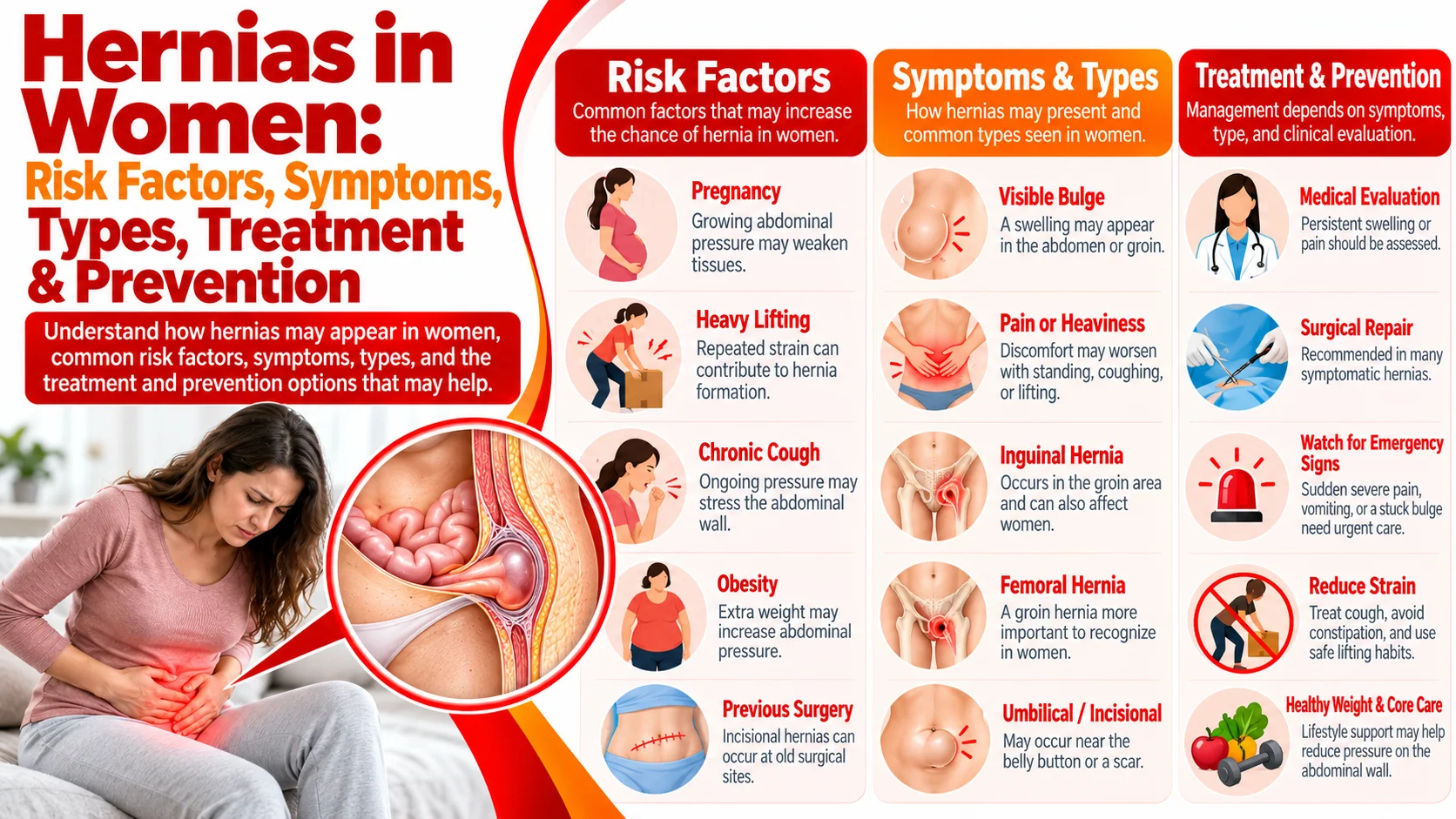
Pregnancy, previous abdominal or pelvic surgery, chronic coughing, constipation, increased abdominal pressure, aging, and certain weaknesses in connective tissue can contribute to hernia development. Femoral hernias are also particularly important in women because they can have a higher risk of complications if the hernia becomes trapped.
Some hernias cause only mild discomfort, while an incarcerated or strangulated hernia can become an emergency if the blood supply to trapped tissue is compromised.
This guide explains what a hernia is, the types of hernias that can affect women, symptoms and risk factors, hernia during pregnancy, prevention, diagnosis, treatment options, and when urgent medical attention is needed.
What Is a Hernia?
A hernia occurs when tissue, such as fat or part of an organ or intestine, pushes through a weak area in the surrounding muscle or connective tissue.
A hernia may appear as a bulge or lump that becomes more noticeable when standing, coughing, bending, lifting, or straining. Some hernias may cause pain, pressure, aching, or burning, while others may have few or no noticeable symptoms.
In women, a hernia may sometimes be difficult to recognize because there may be no obvious external bulge. Groin or pelvic discomfort can occasionally be the main symptom.
What Types of Hernias Can Affect Women?
Women can develop several types of abdominal and groin hernias. The location and symptoms can vary depending on the type.
1. Femoral Hernia
A femoral hernia develops in the upper inner thigh or groin, below the inguinal region.
Femoral hernias are more common in women than men and can be associated with a higher risk of incarceration and strangulation. Some women may notice a small lump, while others may mainly experience groin or upper-thigh pain.
Because of this higher complication risk, a femoral hernia should be evaluated by a healthcare professional even when symptoms are mild.
2. Inguinal Hernia
An inguinal hernia develops in the groin when tissue pushes through a weak area of the abdominal wall.
In women, inguinal hernias may cause:
-
A groin bulge or swelling
-
Aching or burning
-
Groin pressure
-
Pain that increases with coughing, lifting, or straining
-
Discomfort during physical activity
In some women, a groin hernia may not produce an obvious lump and can be more difficult to diagnose.
3. Umbilical Hernia
An umbilical hernia occurs around the belly button. It can develop when increased pressure in the abdomen causes tissue to push through a weak area around the navel.
Pregnancy and multiple pregnancies can increase the risk of an adult umbilical hernia. Obesity and previous abdominal surgery may also contribute.
4. Incisional Hernia
An incisional hernia can develop at or near the site of a previous abdominal surgical incision.
If the abdominal wall does not regain adequate strength after surgery, tissue may push through the weakened area. The bulge may become more noticeable when standing, coughing, or straining.
5. Other Abdominal Wall Hernias
Other less common hernias can also occur in the abdominal wall or pelvic region. If a woman has persistent groin, abdominal, or pelvic pain without an obvious cause, a hernia may sometimes need to be considered as part of the diagnostic evaluation.
What Causes Hernias in Women?
A hernia usually develops because of a combination of weakness in the abdominal wall and increased pressure inside the abdomen.
Possible contributing factors include:
-
Pregnancy
-
Childbirth
-
Previous abdominal or pelvic surgery
-
Chronic coughing
-
Chronic constipation and straining
-
Increased abdominal pressure
-
Aging and weakening of tissues
-
Obesity or increased abdominal pressure associated with excess weight
-
Family history or inherited connective-tissue weakness
-
Certain strenuous activities or heavy lifting
Having one of these risk factors does not necessarily mean that a woman will develop a hernia. Hernias can result from several factors occurring together.
Hernia Risk Factors in Women
Pregnancy
Pregnancy increases pressure on the abdominal wall as the uterus grows. The abdominal muscles and connective tissues also stretch during pregnancy, which can make an existing weak area more noticeable.
Umbilical hernias may become more visible as the abdomen expands.
Previous Abdominal Surgery
A previous surgical incision can leave a weaker area in the abdominal wall. An incisional hernia may develop months or even years after surgery.
Chronic Cough
Repeated coughing increases pressure inside the abdomen and may contribute to the development or worsening of a hernia.
Constipation and Straining
Repeated straining during bowel movements increases intra-abdominal pressure. Managing chronic constipation may therefore help reduce abdominal strain.
Age
Abdominal muscles and connective tissues can become weaker with age, increasing susceptibility to some types of hernias.
Family History and Connective-Tissue Weakness
Some people may have an inherited tendency toward weaker connective tissues or abdominal-wall structures. A family history of hernia can therefore be relevant when evaluating symptoms.
What Are the Symptoms of Hernia in Women?
Hernia symptoms can vary according to the location and type of hernia.
Common symptoms include:
-
A visible bulge or lump in the abdomen or groin
-
Groin or abdominal pain
-
Aching or discomfort
-
A feeling of pressure or heaviness
-
Burning or pulling sensation
-
Tenderness around the bulge
-
Symptoms that become worse with coughing, bending, lifting, standing, or straining
Some women may have pain or pelvic pressure without an obvious bulge. This is particularly important because groin or pelvic symptoms can overlap with other conditions, potentially making a hernia more difficult to identify.
Can a Hernia Occur Without a Visible Bulge?
Yes. Although a bulge is a common sign of a hernia, it is not always present or easy to see. A deeper groin hernia may cause discomfort, aching, or pelvic pressure without producing an obvious lump.
Women with persistent unexplained groin or pelvic symptoms should discuss them with a healthcare professional rather than assuming that the symptoms are unrelated to the abdominal wall.
Can Hernias Be Prevented?
Not every hernia can be prevented, particularly when there is an underlying structural or inherited weakness.
However, certain measures may help reduce abdominal strain and some modifiable risk factors:
-
Maintain a healthy weight appropriate for your individual health needs.
-
Eat enough fiber to help prevent constipation.
-
Drink adequate fluids.
-
Seek treatment for a persistent cough.
-
Avoid repeated unnecessary straining.
-
Use appropriate lifting techniques.
-
Follow postoperative instructions after abdominal surgery.
-
Discuss appropriate exercise with your healthcare professional, particularly during pregnancy or after surgery.
These steps may reduce certain risk factors, but they cannot guarantee that a hernia will not develop.
Hernia During Pregnancy: What Should Women Know?
Pregnancy can make an existing hernia more noticeable because the growing uterus increases pressure within the abdomen and stretches the abdominal wall. An umbilical hernia may appear or become more prominent during pregnancy. A small, painless hernia may sometimes be monitored, while treatment decisions depend on the type of hernia, symptoms, pregnancy status, and whether complications develop.
If a pregnant woman develops a new or rapidly changing abdominal or groin bulge, persistent pain, vomiting, or other concerning symptoms, she should contact her healthcare professional promptly.
Hernia surgery during pregnancy is not a one-size-fits-all decision. Emergency repair may be required if incarceration or strangulation occurs, while uncomplicated cases may sometimes be managed conservatively depending on the individual situation.
When Does a Hernia Need Immediate Medical Attention?
A hernia can become trapped, known as incarceration, and in some cases the blood supply to the trapped tissue can become compromised, known as strangulation.
Seek urgent medical attention if you develop:
-
Sudden or severe pain
-
A bulge that becomes hard, very tender, or rapidly enlarges
-
A bulge that cannot be pushed back when it previously could be
-
Red, purple, or dark discoloration over the hernia
-
Nausea or vomiting
-
Severe abdominal swelling or bloating
-
Difficulty passing stool or gas
-
Fever associated with a painful hernia
These symptoms can indicate incarceration, bowel obstruction, or strangulation and should not be ignored.
How Are Hernias in Women Diagnosed?
Diagnosis generally begins with a detailed medical history and physical examination.
A doctor may examine the abdomen or groin while the patient is:
-
Standing
-
Coughing
-
Straining
-
Changing position
These movements can make a hernia more noticeable.
If the hernia is difficult to detect, particularly when a woman has pain without an obvious bulge, imaging may be recommended. Depending on the suspected location and clinical situation, this can include ultrasound, CT, or MRI.
What Is the Treatment for Hernia in Women?
Treatment depends on several factors, including:
-
Type and location of the hernia
-
Size of the hernia
-
Severity of symptoms
-
Whether the hernia is increasing in size
-
Whether it can be reduced
-
Risk of complications
-
Pregnancy status
-
Overall health
Some small or minimally symptomatic hernias may be monitored in selected circumstances. However, a hernia does not generally repair itself simply through exercise or lifestyle changes.
When surgical repair is recommended, the approach may include open surgery or minimally invasive laparoscopic surgery, depending on the type of hernia and the patient's individual circumstances.
At SCI International Hospital, the hernia surgery in Delhi team provides evaluation and surgical treatment, including open and laparoscopic approaches where appropriate.
For patients who require broader surgical evaluation, SCI's general surgery hospital in Delhi provides care for hernias and other abdominal and surgical conditions using conventional, laparoscopic, and minimally invasive techniques.
Open vs. Laparoscopic Hernia Surgery
The two broad surgical approaches include:
Open Hernia Repair
In open repair, the surgeon accesses the hernia through an incision and repairs the weakened abdominal wall. Mesh may be used depending on the type and size of the hernia and the surgical plan.
Laparoscopic Hernia Repair
Laparoscopic repair uses smaller incisions and a camera-assisted approach. It may be appropriate for certain types of hernias and selected patients.
The choice between open and laparoscopic repair should be based on the type and location of the hernia, previous operations, patient health, surgeon expertise, and other individual factors.
Can a Hernia Go Away Without Treatment?
Most true abdominal-wall hernias do not simply disappear because the underlying structural weakness remains. Some small or minimally symptomatic hernias may be monitored under medical guidance. However, symptoms can change over time, and certain types of hernias—particularly femoral hernias in women can have a greater risk of complications.
If you notice a persistent abdominal or groin bulge, recurrent pain, or unexplained groin or pelvic pressure, an evaluation can help determine whether a hernia is present.
Why Early Evaluation of Hernia Symptoms Matters
A hernia does not always cause severe symptoms in the beginning. In women, the condition may sometimes present with subtle groin or pelvic discomfort rather than a clearly visible bulge. Early evaluation can help identify the type and location of the hernia and determine whether monitoring or surgical treatment is appropriate.
For patients looking for comprehensive care, a multispeciality hospital in Delhi can provide access to surgical evaluation along with other medical specialties when required.
Conclusion
Hernias in women can develop in the groin, upper thigh, belly button, abdominal wall, or previous surgical sites. Pregnancy, previous surgery, chronic coughing, constipation, aging, increased abdominal pressure, and certain tissue weaknesses can contribute to their development.
Common symptoms include a bulge, pain, pressure, aching, burning, or discomfort that becomes more noticeable with activity or straining. However, some women may experience groin or pelvic pain without an obvious bulge, making proper medical evaluation particularly important.
Most hernias do not heal themselves, and treatment depends on the type, symptoms, pregnancy status, and risk of complications. A sudden painful, hard, discolored, or irreducible bulge accompanied by vomiting, fever, or difficulty passing stool or gas requires urgent medical attention.
If you have noticed a persistent abdominal or groin bulge, unexplained groin pain, or symptoms that worsen with activity, consult a qualified healthcare professional for an appropriate evaluation.
Frequently Asked Questions About Hernias in Women
1. What are the most common symptoms of hernia in women?
Common symptoms include a bulge or lump, groin or abdominal pain, pressure, aching, burning, or discomfort that may worsen with coughing, lifting, standing, or straining. Some women may have symptoms without an obvious bulge.
2. Can pregnancy cause a hernia?
Pregnancy can increase pressure on the abdominal wall and may contribute to the development or enlargement of certain hernias, particularly umbilical hernias.
3. Are women more likely to get femoral hernias?
Femoral hernias are more common in women than men. They can also have a higher risk of incarceration and strangulation, so medical evaluation is important.
4. Can a hernia go away without treatment?
Most true hernias do not heal on their own because the underlying weakness in the abdominal wall remains. Some small or minimally symptomatic hernias may be monitored under medical guidance.
5. Can a woman have a hernia without a visible lump?
Yes. Some hernias, particularly deeper groin hernias, may cause pain, pressure, or discomfort without an obvious external bulge.
6. When does a hernia become an emergency?
Severe or rapidly worsening pain, a hard or irreducible bulge, discoloration, vomiting, fever, or inability to pass stool or gas may indicate incarceration or strangulation and requires urgent medical evaluation.
7. Can constipation increase the risk of hernia?
Chronic constipation can lead to repeated straining, which increases pressure inside the abdomen and may contribute to hernia formation or symptoms.
8. Is hernia surgery always necessary?
Not every hernia requires immediate surgery. Management depends on the type of hernia, symptoms, size, pregnancy status, and risk of complications. Some selected minimally symptomatic hernias may be monitored, while symptomatic or complicated hernias may require repair.
9. What are the treatment options for hernia in women?
Treatment may include observation in selected cases or surgical repair when indicated. Hernia repair can be performed using open or minimally invasive laparoscopic techniques depending on the patient's condition and the type of hernia.
10. Can exercise prevent a hernia?
Exercise cannot guarantee prevention because some hernias are related to underlying structural weaknesses. Appropriate physical activity may support overall abdominal and core strength, but women who are pregnant, recovering from surgery, or already have a hernia should discuss suitable exercises with their healthcare professional.
11. Which doctor treats hernias in women?
A general surgeon commonly evaluates and treats abdominal-wall, groin, umbilical, incisional, and femoral hernias. The appropriate specialist and treatment approach depend on the type and complexity of the hernia.