The pain of passing stool, a little bit of bleeding on toilet paper, the sensation of itching, or a lump in the anus may be enough to make you uncomfortable. Most people assume it's piles. An anal fissure could be the cause of similar symptoms.
Anal fissures and hemorrhoids are distinct situations. Hemorrhoids can be described as swollen veins within or near the anus, and a fissure is a tiny tear in the anus's lining. The symptoms can be similar, but the pain will be distinct. Examining when pain begins, how long it continues to last, and whether it is accompanied by bleeding or a lump could provide some helpful clues.
Hemorrhoids vs. Anal Fissures: What Is the Difference?
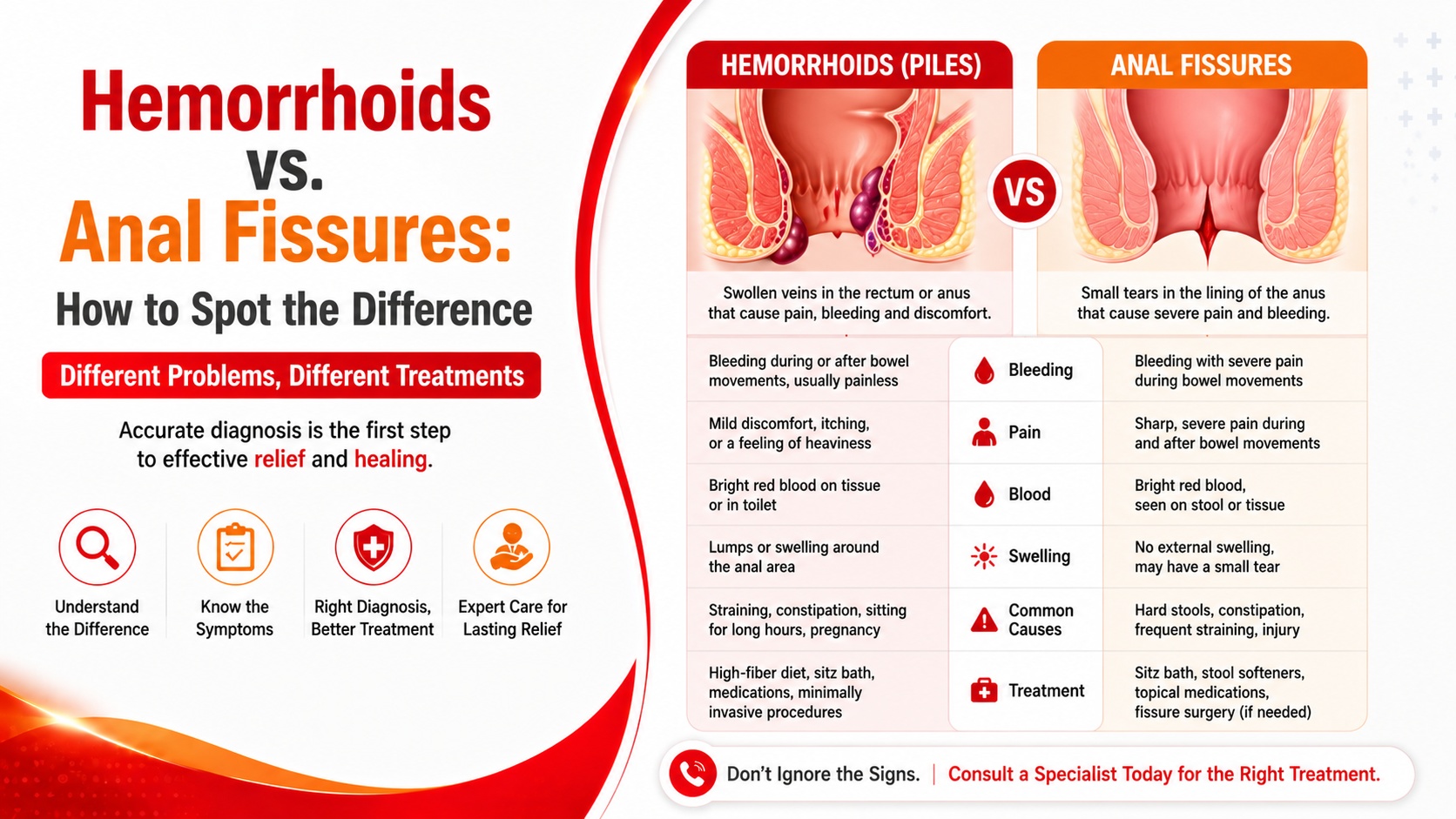
Hemorrhoids, often referred to as piles, are the result of swollen veins within the lower rectum or in the area around the anus. They can be either internal or external. In the case of internal hemorrhoids, they can cause bleeding that is not painful, and external hemorrhoids can cause swelling, itching, lumps, or tenderness.
An anal fissure can be described as tiny cuts or tears in the anus's lining. It may occur after having a hard stool or straining during bowel movements. Since the area is stretched when you go through stool, the pain is often quite intense.
Both issues can be connected to constipation and straining that's why many confuse the two.
Hemorrhoids vs. Anal Fissures: Key Differences
This is a general comparison, not a way to diagnose yourself. For example, a thrombosed external hemorrhoid can be very painful, even though many internal hemorrhoids cause little or no pain.
What Does an Anal Fissure Feel Like?
Pain is usually the first thing people see.
The process of passing stool can trigger a sharp, burning, or cutting pain. The discomfort might not go away when the stool movement has ended. There are some who feel burning or pain for some time following the incident.
A fissure could also result in some small amounts of bright red blood. You might notice it either on your toilet paper or on the exterior of the stool.
Constipation is one of the main reasons for an opening. A large or hard stool may stretch the anal lining and trigger the lining to tear. SCI Hospital also describes anal fissures as tiny tears that could cause bloody and painful bowel movements. Find out more about the symptoms of an anal fissure and the diagnosis.
What Do Hemorrhoids Feel Like?
Hemorrhoids do not always cause pain.
Internal hemorrhoids may simply cause bright-red bleeding during or after a bowel movement. Some people do not feel anything else. External hemorrhoids are more likely to cause itching, swelling, tenderness, or a lump around the anus.
If a blood clot forms inside an external hemorrhoid, it becomes a thrombosed hemorrhoid. This can cause sudden pain and a firm lump. SCI Hospital explains the difference between internal, external, and thrombosed hemorrhoids in its guide on what hemorrhoids look like.
So, saying that “hemorrhoids are painless” would not be correct. It depends on the type.
How Is Bleeding Different?
Anal fissures as well as hemorrhoids can result in bright-red blood.
In the case of hemorrhoids in the internal area, bleeding can occur without any pain. It is possible to see bleeding on toilet paper, on the surface of the stool, or inside your toilet bowl.
In the case of an anal fissure, the bleeding is typically small, and it is usually felt along with pain when passing a stool.
The mere fact that you have bleeding doesn't tell what condition you are suffering from. If the bleeding is persistent and is a lot heavier or doesn't appear to be connected to bowel movements, it's best to get it examined instead of thinking it's a result of pimples.
Why Do Hemorrhoids and Anal Fissures Happen?
Constipation and strain can cause both of them; however, the way they impact the body is different.
In the case of hemorrhoids, constant straining creates extra pressure on veins surrounding the anus and lower rectum. The habit of sitting on the toilet for long periods of time or during pregnancy, as well as ongoing constipation, can increase pressure on this region.
Anal fissures are a common occurrence. The issue is typically an injury to the lining of the anal. A hard stool may make the area stretch and trigger tears. Diarrhoea that is frequent can cause irritation to the lining.
This is the reason that making sure your stool is smooth and not straining your bowels will help lower the chance of both issues.
Can You Have Hemorrhoids and an Anal Fissure Together?
Yes, you can be both.
Constipation, for instance, can cause hemorrhoids, whereas passing an uneasy stool at the same time may result in fissures. If that happens, bleeding and discomfort may not stem from the same issue.
If the symptoms persist and persist, it's best to get the area checked instead of trying to determine the condition that you are suffering from because of one symptom.
How Are Hemorrhoids and Anal Fissures Diagnosed?
A doctor will typically inquire about the symptoms first. The duration of your pain, the quantity and the appearance of bleeding, the way you eat, and the length of time you've suffered from the issue may all be helpful.
The affected area is then checked for hemorrhoids, a fissure, swelling, or a different reason for the symptoms. Additional tests or examinations could be necessary in certain instances.
It is not a good idea to believe that every instance of bleeding from the rectum is the result of piles. There are many other causes, especially if bleeding persists or is not explained.
How Are Hemorrhoids Treated?
Treatment depends on the type of hemorrhoid and how severe it is.
Mild hemorrhoids may improve when constipation and straining are controlled. Eating more fibre, drinking enough water, and keeping bowel movements soft can help. Medicines or local treatments may also be used when needed.
If hemorrhoids continue to bleed, prolapse, or cause significant discomfort, a procedure may be recommended. The treatment can range from medicines and lifestyle changes to minimally invasive procedures or surgery, depending on the case.
You can read more about piles treatment at SCI Hospital and the different options used according to the condition.
How Are Anal Fissures Treated?
The first aim is to give the tear a chance to heal and prevent it from opening again.
Keeping stools soft is important. This may involve more fibre, enough fluids, and treatment for constipation. Warm baths can also help with discomfort.
Some fissures need prescription medicines that help relax the anal muscle and allow healing. If a fissure becomes chronic or does not improve with medical treatment, a procedure or surgery may be considered.
SCI Hospital provides anal fissure treatment based on the severity and symptoms.
When Should You See a Doctor?
You do not need to panic over every small episode of bright-red bleeding. But if the problem keeps coming back, it should not simply be ignored.
See a doctor if:
- Bleeding happens repeatedly
- Pain during bowel movements is severe
- Pain continues after passing stool
- You notice a new lump or swelling
- Constipation or diarrhoea keeps returning
- Symptoms are not getting better
- You have changes in your usual bowel habits
- You have unexplained weight loss
- Bleeding is heavy
- Your stool is black or tar-like
A general surgeon can check whether the symptoms are due to hemorrhoids, an anal fissure or another condition.
Can Hemorrhoids and Fissures Be Prevented?
Not every case can be prevented, but healthy bowel habits can help.
Try to:
- Eat enough fibre
- Drink enough water
- Avoid straining while passing stool
- Do not ignore the urge to use the toilet
- Avoid sitting on the toilet for a long time
- Stay physically active
- Treat constipation or diarrhoea if it keeps happening
These simple changes can make bowel movements easier and reduce pressure on the anal area.
Conclusion
Anal fissures and hemorrhoids can both trigger bleeding that is bright red. However, the way in which it occurs tends to be different. The burning or sharp pain that occurs when passing stool is more common with an anal fissure. On the other hand, hemorrhoids inside can cause bleeding with no discomfort. Hemorrhoids that are thrombosed or external may also cause pain, and the symptoms may not always provide a clear explanation. If pain or bleeding keeps coming back, having the root cause investigated is far better than trying to treat yourself. At the SCI International Hospital, which is a multispecialist hospital, Dr. Nabanita Chatterjee, a general surgeon with more than thirty years of experience, is able to treat issues such as fissures and urinary issues.
FAQs
Q- What can I do to determine whether I have hemorrhoids as well as an internal fissure?
Ans- The nature of the pain could provide a clue. An anal fissure typically causes intense or burning pain when passing stool, and the pain could persist for a while. Hemorrhoids can cause swelling, bleeding, itching, or a lump. Internal hemorrhoids could bleed, but without too much discomfort.
Q- Do hemorrhoids cause pain?
Ans- No. Internal hemorrhoids can cause bleeding that is not painful. External hemorrhoids can trigger itching, swelling, or pain, and a thrombosed external hemorrhoid may be extremely painful.
Q- Is an anal fissure worse than hemorrhoids?
Ans- Anal fissures typically cause intense pain and discomfort during and after stool movements. But a thrombosed external hemorrhoid may also trigger extreme pain, and therefore, pain by itself cannot be a conclusive indicator of the reason.
Q- Does an anal fissure allow blood to flow without any pain?
Ans- The condition can be painful, but it is a fairly frequent manifestation. A tiny amount of bright red blood and pain in stool movements is a typical pattern.
Q- Do I need hemorrhoids as well as an anal fissure at the same time?
Ans- Yes. Strain and constipation can be contributing factors; therefore, having both problems together is possible.