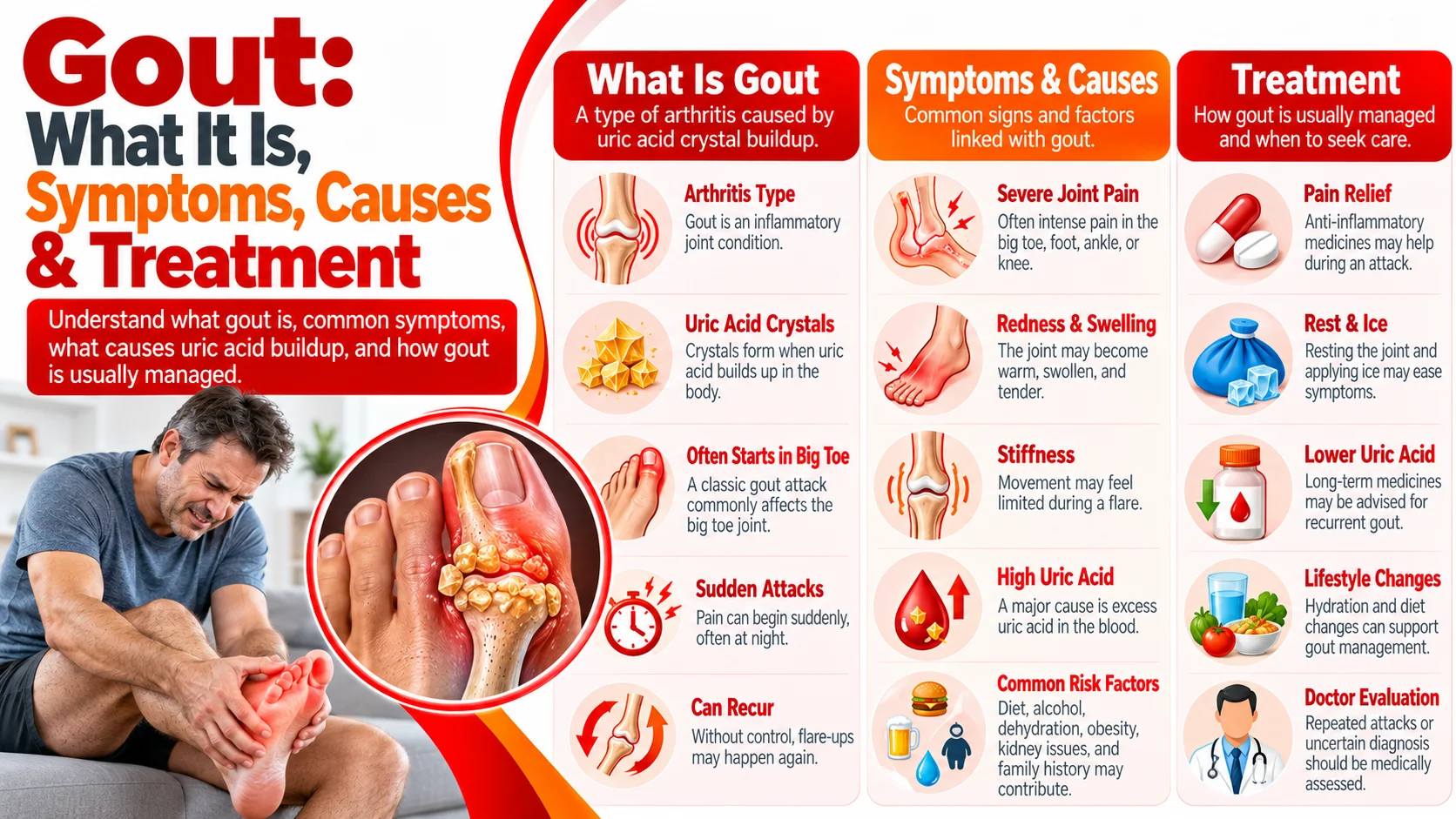
A sudden attack of severe joint pain, swelling, redness and warmth, especially in the big toe, can be extremely painful. One possible cause is gout, a type of inflammatory arthritis that occurs when urate crystals build up in and around a joint.
Gout attacks, also called gout flares, can start suddenly and may become recurrent if the underlying condition is not properly managed.
Although gout can cause severe pain, it is a treatable condition. Early diagnosis and appropriate treatment can help control symptoms, reduce future flares and lower the risk of long-term joint damage.
In this guide, we explain what gout is, what causes gout, common gout symptoms, how gout is diagnosed, gout treatment options, foods that may trigger attacks, and when you should see a doctor.
What Is Gout?
Gout is a type of inflammatory arthritis caused by the buildup of urate crystals in and around the joints.
Urate is produced when the body breaks down substances called purines. Normally, urate is removed from the body through the kidneys. When the body produces too much urate or the kidneys do not remove enough, urate levels can rise.
Over time, crystals can form in the joints and trigger inflammation, resulting in a gout flare.
Gout most commonly affects the joint at the base of the big toe, but it can also affect the:
-
Ankles
-
Knees
-
Feet
-
Wrists
-
Fingers
-
Elbows
A gout flare can begin suddenly, sometimes at night, and the affected joint may become extremely painful, swollen, warm and tender.
High Uric Acid Does Not Always Mean Gout
It is important to understand that hyperuricemia (high uric acid in the blood) is not the same as gout.
Some people may have elevated uric acid levels without developing gout. Gout occurs when urate crystals form and cause inflammation and symptoms.
What Causes Gout?
Gout develops when urate builds up in the body and forms crystals in the joints.
Several factors can increase the risk of developing gout, including:
-
Family history of gout
-
High uric acid levels
-
Overweight or obesity
-
Chronic kidney disease
-
High blood pressure
-
Diabetes and metabolic conditions
-
Certain medications, including some diuretics
-
Regular alcohol consumption
-
Sugar-sweetened or high-fructose drinks
-
Diets high in certain purine-rich foods
-
Increasing age
Gout is more common in men, while women's risk generally increases after menopause. However, anyone can develop gout.
Why Does Uric Acid Increase?
Uric acid can increase when:
-
The body produces more urate than it can remove, or
-
The kidneys do not remove enough urate.
Diet is only one factor. Genetics, kidney function, medications, weight and other health conditions can also influence uric acid levels.
What Are the Symptoms of Gout?
Gout symptoms often develop suddenly and may affect one joint at a time.
Common symptoms include:
-
Sudden, intense joint pain
-
Swelling
-
Redness
-
Warmth
-
Severe tenderness
-
Difficulty moving the affected joint
-
Pain that may be worse at night
The big toe is the most commonly affected joint, but gout can also occur in the ankle, knee, foot, wrist, fingers and elbow.
The pain can be severe enough that even light pressure on the affected joint may feel uncomfortable.
What Does a Gout Attack Feel Like?
A gout attack, or flare, can begin suddenly, often during the night.
The affected joint may become:
-
Extremely painful
-
Swollen
-
Warm
-
Red
-
Very sensitive to touch
The worst pain may occur during the first several hours of a flare. Symptoms can then gradually improve over the following days.
Without appropriate management, gout attacks may become more frequent or last longer over time.
Which Joints Can Gout Affect?
Although gout is commonly associated with the big toe, it is not limited to that joint.
Gout can affect:
-
Big toe
-
Other toes
-
Ankles
-
Knees
-
Feet
-
Wrists
-
Fingers
-
Elbows
The location of symptoms can vary from one person to another.
What Are the Stages of Gout?
Gout can develop through different stages.
1. Hyperuricemia
Uric acid levels are elevated, but the person may not have symptoms of gout.
2. Gout Flare
Urate crystals trigger inflammation, resulting in sudden pain, swelling, redness and warmth in a joint.
3. Period Between Flares
Symptoms may disappear between attacks. This period is sometimes called intercritical gout.
4. Chronic or Tophaceous Gout
If gout remains poorly controlled over time, urate crystal deposits called tophi can develop in or around joints and other tissues.
Tophi can contribute to joint damage and reduced movement. Proper treatment can reduce the risk of these complications.
How Is Gout Diagnosed?
Gout symptoms can resemble other joint conditions, so an accurate diagnosis is important.
Your doctor may consider:
-
Your symptoms and medical history
-
Physical examination
-
Serum uric acid testing
-
Joint-fluid testing
-
X-rays or other imaging when required
-
Ultrasound or specialised imaging in selected cases
Is a Uric Acid Blood Test Enough to Diagnose Gout?
No. A high uric acid level does not automatically mean that a person has gout. When the diagnosis is uncertain, a doctor may take a sample of fluid from the affected joint and examine it for urate crystals. This can help confirm gout.
This distinction is important because other conditions can also cause a suddenly painful, swollen joint.
What Is the Treatment for Gout?
Gout treatment generally has two important goals:
-
Treat the current gout flare
-
Prevent future attacks and complications
Treatment is individualised according to the frequency and severity of flares, uric acid levels, kidney function, other medical conditions and other medicines being taken.
Treatment During a Gout Attack
During an acute flare, doctors may use medicines that reduce inflammation and pain.
Depending on the patient's medical history, treatment may include:
-
NSAIDs
-
Colchicine
-
Corticosteroids
The appropriate medication depends on factors such as kidney function, stomach health, cardiovascular conditions, other medicines and the severity of the attack.
You should not start or change these medicines without medical advice, particularly if you have kidney disease or take other medications.
Long-Term Treatment for Gout
People with recurrent flares, tophi, gout-related joint damage or certain other indications may need urate-lowering therapy (ULT).
The American College of Rheumatology recommends allopurinol as the preferred first-line urate-lowering medicine for appropriate patients and recommends a treat-to-target approach using serial serum urate measurements. A commonly recommended serum urate target is below 6 mg/dL.
Other medicines may be appropriate in selected patients.
The choice of treatment should be made by a healthcare professional based on your individual medical history and response to therapy.
Can Diet and Lifestyle Help Manage Gout?
Yes. Lifestyle changes can support medical treatment and may help reduce the risk of future gout attacks.
Helpful measures may include:
-
Maintaining a healthy body weight
-
Drinking adequate fluids
-
Limiting alcohol, especially beer
-
Limiting sugar-sweetened and high-fructose drinks
-
Moderating intake of red meat and certain seafood
-
Following a balanced diet
-
Staying physically active when symptoms allow
-
Managing associated conditions such as high blood pressure, diabetes and kidney disease
Diet alone may not be enough for everyone with gout. People who need urate-lowering medication should continue treatment as advised by their doctor.
What Foods Should You Limit With Gout?
Foods and drinks that may increase urate levels or trigger gout attacks in some people include:
-
Organ meats such as liver
-
Large amounts of red meat
-
Certain seafood and shellfish
-
Beer and other alcoholic beverages
-
Sugar-sweetened beverages
-
High-fructose drinks and foods
Individual dietary triggers can vary, so your doctor or dietitian can help you develop a suitable eating plan.
What Happens If Gout Is Left Untreated?
Repeated or poorly controlled gout can cause more than temporary pain.
Possible complications include:
-
More frequent gout attacks
-
Longer-lasting flares
-
Tophi
-
Joint damage
-
Reduced joint movement
-
Difficulty with daily activities
-
Kidney stones in some people
Long-term urate control can help reduce the formation of crystals and the risk of complications.
Can Gout Cause Joint Damage?
Yes. When gout remains poorly controlled over a long period, urate crystals can accumulate and form tophi. These deposits can contribute to damage of the bone and soft tissues around affected joints.
This is one reason why recurrent gout should not simply be treated as occasional pain. Long-term management may be needed to control urate levels and prevent further crystal formation.
Can Gout Be Cured?
Gout can often be very effectively controlled, but it requires appropriate long-term management in people who have recurrent or chronic disease.
Urate-lowering treatment can reduce urate levels and gradually reduce the amount of urate crystal in the body. Lifestyle measures can also help reduce risk factors.
The goal is not simply to make one gout attack go away. Long-term management aims to:
-
Control acute flares
-
Prevent future attacks
-
Reduce urate crystal deposits
-
Prevent joint damage
-
Reduce complications
When Should You See a Doctor?
You should seek medical evaluation if you experience:
-
A first episode of sudden severe joint pain
-
Recurrent joint swelling
-
A hot, red or swollen joint
-
Repeated pain in the big toe, ankle or knee
-
Joint symptoms that interfere with walking or daily activities
-
Gout attacks that are becoming more frequent
When Is a Painful Swollen Joint an Emergency?
Seek urgent medical attention if you have severe joint pain and swelling accompanied by:
-
Fever
-
Chills
-
Feeling significantly unwell
-
Rapidly worsening symptoms
A hot, swollen joint with fever can also be caused by a joint infection (septic arthritis), which requires urgent medical assessment.
Gout vs. High Uric Acid: What Is the Difference?
This is an important distinction. High uric acid (hyperuricemia) means that the amount of urate in the blood is elevated. Gout occurs when urate crystals form and cause inflammation and symptoms.
Therefore, someone can have high uric acid without having gout, while a person with gout may require treatment aimed at reducing urate levels and preventing future crystal formation.
Why Is Early Gout Treatment Important?
Early evaluation can help determine whether the symptoms are actually caused by gout and whether long-term treatment is appropriate. Without proper management, recurrent gout attacks can become more frequent and may eventually lead to tophi and joint damage.
A personalised treatment plan can address both the immediate flare and the underlying risk of future attacks.
Conclusion
Gout is a treatable form of inflammatory arthritis caused by the formation of urate crystals in and around the joints. It commonly causes sudden and severe pain, swelling, redness, warmth and tenderness, often affecting the big toe.
High uric acid alone does not confirm gout. An accurate diagnosis may involve medical history, physical examination, blood tests, imaging and, when necessary, examination of joint fluid for urate crystals.
Treatment may include medicines to control an acute gout flare and, for appropriate patients, long-term urate-lowering therapy to reduce future attacks and complications. Diet, healthy weight, adequate hydration and limiting alcohol and high-fructose drinks can support medical management.
At SCI International Hospital, a multispeciality hospital in Delhi, patients can receive orthopedic care in Delhi for joint pain and other musculoskeletal conditions. If you experience recurrent or severe joint pain, an appropriate specialist evaluation can help identify whether gout or another joint condition is responsible and guide the next steps in treatment.
Frequently Asked Questions About Gout
How does gout present?
Gout commonly presents as sudden, severe pain in one joint, often the big toe. The affected joint may become swollen, warm, red and extremely tender.
What causes gout?
Gout occurs when urate builds up and forms crystals in or around a joint. Risk factors include genetics, kidney disease, obesity, certain medications, alcohol, high-fructose drinks and diets high in certain purine-rich foods.
Is high uric acid the same as gout?
No. High uric acid is called hyperuricemia. Some people have high uric acid without developing gout. Gout occurs when urate crystals cause inflammation and symptoms.
How is gout confirmed?
Doctors may use your symptoms, medical history, physical examination, blood tests and imaging. When the diagnosis is uncertain, testing joint fluid for urate crystals can help confirm gout.
Can gout be cured permanently?
Gout can be effectively controlled with appropriate treatment. Long-term urate-lowering therapy can reduce urate levels and help prevent future flares and complications in patients who need it.
What foods should I avoid with gout?
People with gout are generally advised to limit alcohol, especially beer, sugar-sweetened or high-fructose drinks, organ meats, and large amounts of red meat and certain seafood. Dietary advice should be individualised.
Can gout damage joints?
Yes. Repeated or poorly controlled gout can lead to tophi and damage to joints and surrounding tissues.
Is gout treatment lifelong?
Not everyone needs lifelong medication, but people with recurrent or chronic gout may require long-term urate-lowering therapy. The need for treatment depends on the individual's disease pattern, complications and risk factors.
Can gout affect the knee?
Yes. Although gout is commonly associated with the big toe, it can also affect the knees, ankles, feet, wrists, fingers and elbows.
Should I see a doctor for my first gout attack?
Yes. A first episode of sudden severe joint pain and swelling should be evaluated because several conditions, including joint infection, can produce similar symptoms.
Can gout go away without treatment?
A gout flare may settle temporarily, but untreated gout can return and may become more frequent or lead to complications over time. Appropriate evaluation and management can help prevent future problems.