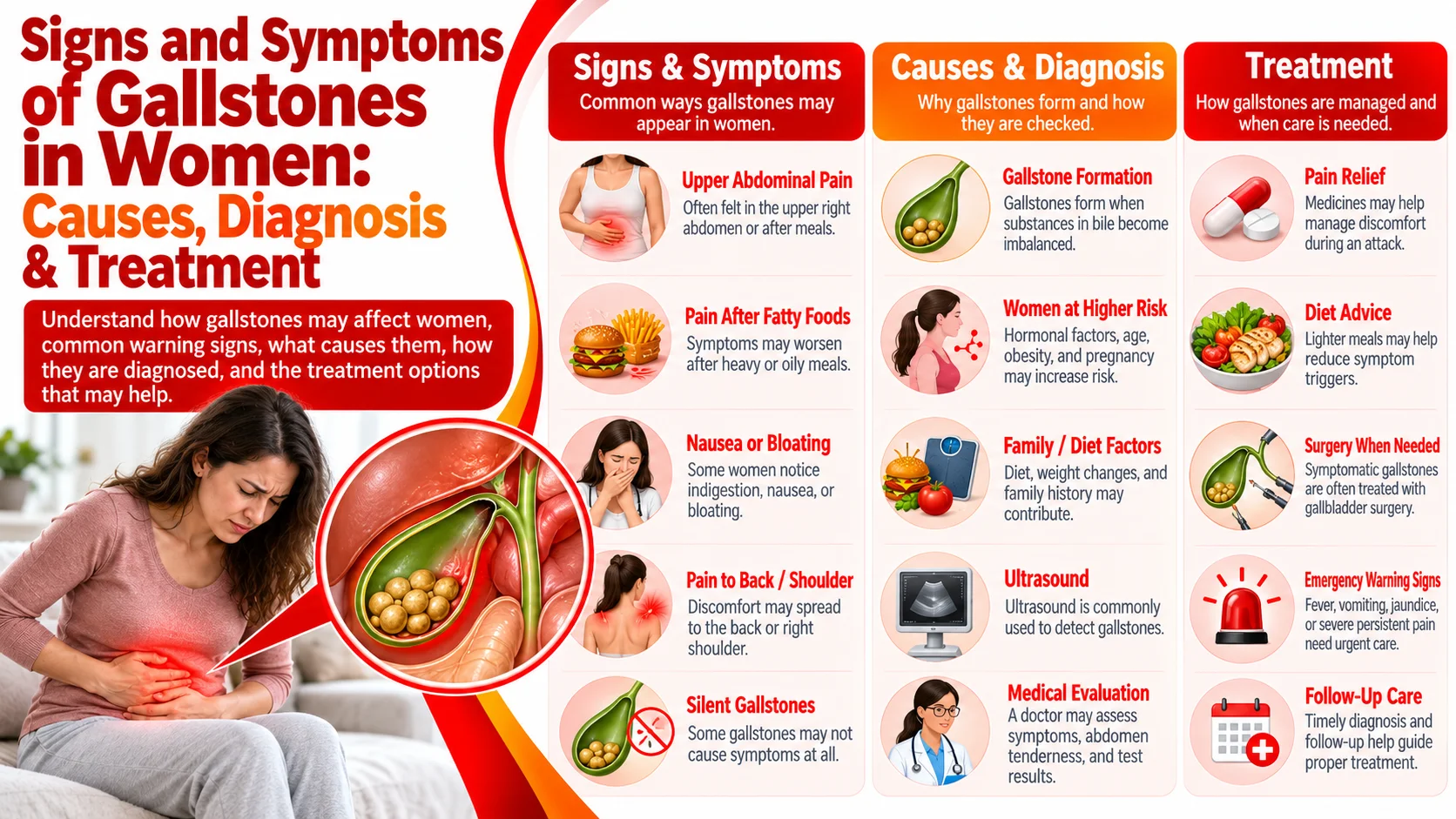
Abdominal pain is often mistaken for indigestion, acidity, or other digestive problems. However, recurring pain in the upper abdomen—especially after meals can sometimes be related to gallstones.
Gallstones are hardened deposits that form inside the gallbladder. Many people have gallstones without experiencing any symptoms. However, when a stone blocks the flow of bile, it can cause a gallbladder attack, resulting in sudden abdominal pain, nausea, or vomiting.
Women have several risk factors for gallstones, including pregnancy, exposure to estrogen, obesity, rapid weight loss, family history, and increasing age.
This guide explains the signs and symptoms of gallstones in women, what gallstone pain feels like, risk factors, diagnosis, treatment options, prevention, and warning signs that require urgent medical attention.
What Are Gallstones?
Gallstones are hardened deposits that develop inside the gallbladder. They can vary in size, from very small particles to larger stones, and a person may have one gallstone or many.
The gallbladder is a small organ located beneath the liver. It stores bile, a digestive fluid produced by the liver, and releases it into the digestive tract.
Gallstones can be made primarily of cholesterol or other substances such as bilirubin.
Many gallstones are asymptomatic, meaning they do not cause noticeable problems. These are sometimes called "silent" gallstones and may not require treatment. However, symptoms can develop when a stone blocks the gallbladder or bile ducts.
Why Are Gallstones More Common in Women?
Gallstones are more common in women than men, and several factors can increase the risk.
Important risk factors include:
-
Pregnancy
-
Higher estrogen exposure
-
Estrogen-containing contraceptives or hormone therapy
-
Overweight or obesity
-
Rapid weight loss
-
Family history of gallstones
-
Increasing age
-
Diabetes
-
Certain gastrointestinal or liver conditions
-
Certain dietary and metabolic factors
Pregnancy can affect bile composition and gallbladder function, while estrogen can contribute to changes that increase the risk of cholesterol gallstones.
Having one or more of these risk factors does not mean that a woman will definitely develop gallstones.
What Are the Symptoms of Gallstones in Women?
Gallstones may not cause symptoms until they interfere with the normal flow of bile.
When symptoms occur, they may include:
-
Sudden or intense pain in the upper right abdomen
-
Pain in the upper middle abdomen
-
Pain below the right ribs
-
Pain that may spread to the back or right shoulder
-
Nausea
-
Vomiting
-
Abdominal discomfort after eating
Gallstone pain can sometimes be mistaken for indigestion or other digestive problems, particularly when it occurs after meals.
The symptoms depend on whether the stone is temporarily or persistently blocking a bile duct and whether complications such as inflammation or infection have developed.
What Does Gallstone Pain Feel Like?
Gallstone pain is often described as sudden, severe, or steady pain in the upper abdomen.
The most common locations include:
-
Upper right side of the abdomen
-
Upper middle abdomen
-
Area beneath the right ribs
The pain may also radiate toward the:
-
Back
-
Right shoulder
-
Area between the shoulder blades
A gallbladder attack may last from several minutes to several hours. It can occur after eating and may be accompanied by nausea or vomiting.
If abdominal pain repeatedly occurs after meals, it should not automatically be assumed to be indigestion. A medical evaluation can help determine whether gallstones or another condition is responsible.
Can Gallstones Cause Nausea and Vomiting?
Yes. Nausea and vomiting can occur during a gallbladder attack, particularly when a gallstone blocks the normal flow of bile. However, nausea or vomiting alone does not confirm gallstones because many other digestive and abdominal conditions can cause similar symptoms.
When nausea or vomiting occurs together with severe abdominal pain, fever, chills, or jaundice, urgent medical evaluation may be necessary.
Signs of Gallstones That Should Not Be Ignored
Most gallstones do not cause serious complications, but a blocked bile duct or inflamed gallbladder can require prompt treatment.
Seek urgent medical attention if you develop:
-
Severe or persistent upper abdominal pain
-
Fever
-
Chills
-
Yellowing of the skin or eyes
-
Dark or tea-colored urine
-
Pale or clay-colored stools
-
Repeated vomiting
-
Severe pain that makes it difficult to find a comfortable position
-
Abdominal pain that spreads to the back, especially when accompanied by vomiting
These symptoms may indicate complications such as acute cholecystitis, bile duct obstruction, cholangitis, or pancreatitis and should not be ignored.
When Is Gallstone Pain an Emergency?
Severe abdominal pain accompanied by jaundice, high fever, chills, or persistent vomiting requires urgent medical assessment.
A blocked bile duct can interfere with bile flow and may lead to serious complications. Gallstones can also contribute to inflammation of the gallbladder or pancreas.
How Are Gallstones Diagnosed?
Doctors generally begin by reviewing your symptoms and medical history and performing a physical examination.
Diagnostic tests may include:
Abdominal Ultrasound
An abdominal ultrasound is commonly used to detect gallstones and assess the gallbladder. It is generally the first imaging test used when gallstones are suspected.
Blood Tests
Blood tests may help identify signs of infection, inflammation, jaundice, liver abnormalities, or other complications associated with gallstones.
CT Scan
A CT scan may be used when doctors need additional information about the abdomen or suspected complications.
MRCP or Other Specialized Imaging
Magnetic resonance cholangiopancreatography (MRCP) can provide detailed images of the bile ducts and may be used when a bile duct stone or another complication is suspected.
ERCP
Endoscopic retrograde cholangiopancreatography (ERCP) is a specialized procedure that can be used to identify and remove stones from the common bile duct in appropriate cases. It is not routinely used simply to diagnose uncomplicated gallstones in the gallbladder.
What Is the Treatment for Gallstones?
Treatment depends on whether the gallstones are causing symptoms or complications.
Silent Gallstones
If gallstones are discovered incidentally and are not causing symptoms, treatment is generally not required in most people. A doctor may recommend observation and advise the patient to seek evaluation if symptoms develop.
Symptomatic Gallstones
When gallstones cause repeated gallbladder attacks or other symptoms, doctors may recommend surgical removal of the gallbladder, known as a cholecystectomy.
The gallbladder can be removed without preventing normal digestion because bile continues to be produced by the liver and flows directly into the small intestine.
Laparoscopic Gallbladder Surgery
Laparoscopic cholecystectomy is a commonly used minimally invasive approach for gallbladder removal. The surgeon uses small abdominal incisions and a camera-assisted technique to remove the gallbladder. Compared with traditional open surgery, minimally invasive approaches generally involve smaller incisions and may support a faster recovery, although the appropriate approach depends on the patient's condition.
At SCI International Hospital, patients with symptomatic gallstones can be evaluated by the general surgery team, with gallbladder stone surgery in Delhi available using laparoscopic and other appropriate surgical approaches.
ERCP for Common Bile Duct Stones
If a gallstone has moved into and is blocking the common bile duct, an ERCP may be performed to remove the stone. ERCP addresses stones in the bile duct; it does not replace gallbladder removal in every patient with symptomatic gallstones. The treatment plan depends on the location of the stones and the patient's overall condition.
Can Gallstones Be Prevented?
Gallstones cannot always be prevented, particularly when genetic, hormonal, or medical factors contribute to their development.
However, certain lifestyle measures may help reduce some risk factors.
Maintain a Healthy Weight
Maintaining a healthy weight may reduce the risk associated with obesity.
Avoid Rapid Weight Loss
Rapid weight loss can increase the risk of gallstone formation. If weight loss is medically recommended, gradual and sustainable weight management is generally preferable.
Eat a Balanced Diet
A balanced diet that includes adequate fiber and appropriate amounts of healthy fats may support overall digestive and metabolic health.
Stay Physically Active
Regular physical activity can support healthy weight management and overall metabolic health.
Avoid Extreme Dieting
Very restrictive or crash diets can result in rapid weight loss and may increase the risk of gallstones.
There is no single diet that can guarantee prevention of gallstones, so women with specific risk factors should discuss appropriate nutrition and weight-management strategies with a healthcare professional.
Can Pregnancy Increase the Risk of Gallstones?
Yes. Pregnancy is a recognized risk factor for gallstones. Hormonal changes during pregnancy, particularly increased estrogen, can affect the composition of bile. Changes in gallbladder emptying can also contribute to gallstone formation.
Women who experience persistent or severe upper abdominal pain during pregnancy should not assume that it is simply a normal pregnancy symptom. Medical evaluation is important because several conditions can cause abdominal pain during pregnancy.
Do Gallstones Always Require Surgery?
No. People who have gallstones without symptoms generally do not need treatment. However, treatment may be recommended when gallstones cause recurrent symptoms, complications, or stones in the common bile duct.
For symptomatic gallstones, gallbladder removal is a commonly recommended definitive treatment because symptoms can recur. The appropriate treatment should be decided after evaluating the symptoms, imaging results, location of the stones, and overall health.
What Happens If Gallstones Are Left Untreated?
Silent gallstones may remain without causing problems and may never require treatment.
However, symptomatic or complicated gallstones can lead to conditions such as:
-
Acute cholecystitis
-
Bile duct obstruction
-
Jaundice
-
Cholangitis
-
Pancreatitis
A persistent blockage can become serious and requires appropriate medical treatment.
When Should Women See a Doctor?
Women should consider medical evaluation if they experience:
-
Repeated upper abdominal pain
-
Pain after meals that keeps returning
-
Unexplained pain beneath the right ribs
-
Abdominal pain accompanied by nausea or vomiting
-
Pain that spreads toward the back or right shoulder
-
A previous diagnosis of gallstones with new or worsening symptoms
Urgent medical attention is particularly important if abdominal pain is severe or persistent, or if it occurs with fever, chills, jaundice, or repeated vomiting.
Why Early Evaluation of Gallstone Symptoms Matters
Gallstones may remain silent for years, but symptoms can develop when a stone obstructs the normal flow of bile. Recognizing the difference between occasional digestive discomfort and recurring upper abdominal pain can help women seek appropriate evaluation sooner.
At SCI International Hospital, the general surgery team provides evaluation and treatment for gallbladder disorders, including gallstone disease, using diagnostic assessment and minimally invasive surgical techniques where appropriate. The hospital's general surgery hospital in Delhi service covers gallbladder disorders along with other abdominal and surgical conditions.
Conclusion
Gallstones are hardened deposits that form inside the gallbladder and may remain completely symptom-free. However, when a stone blocks the flow of bile, it can cause a gallbladder attack with sudden upper abdominal pain, nausea, and vomiting.
Women have several recognized risk factors for gallstones, including pregnancy, estrogen exposure, obesity, rapid weight loss, family history, diabetes, and increasing age.
Gallstone pain commonly occurs in the upper right or upper middle abdomen and may spread to the back or right shoulder. Repeated pain after meals should not automatically be dismissed as indigestion.
Most silent gallstones do not require treatment. When gallstones become symptomatic or cause complications, gallbladder removal surgery, usually laparoscopic cholecystectomy, is a common treatment option. Stones that have entered the common bile duct may require procedures such as ERCP.
If you experience severe or persistent abdominal pain, jaundice, fever, chills, or repeated vomiting, seek urgent medical attention.
For patients requiring surgical evaluation, SCI International Hospital provides gallbladder and other abdominal surgical care through its general surgery department.
Frequently Asked Questions About Gallstones in Women
1. What are the symptoms of gallstones in women?
Common symptoms include sudden or severe pain in the upper right or upper middle abdomen, nausea, vomiting, and pain that may spread to the back or right shoulder. Gallstones may also remain completely symptom-free.
2. Where is gallstone pain located?
Gallstone pain commonly occurs beneath the right ribs or in the upper middle abdomen. It can sometimes spread to the back, between the shoulder blades, or the right shoulder.
3. Can gallstones cause nausea and vomiting?
Yes. Nausea and vomiting can occur during a gallbladder attack, particularly when a gallstone blocks bile flow.
4. Are gallstones more common in women?
Yes. Women have a higher risk of developing gallstones than men. Pregnancy, estrogen exposure, obesity, rapid weight loss, family history, and increasing age are among the recognized risk factors.
5. Can pregnancy cause gallstones?
Pregnancy can increase the risk of gallstones because hormonal changes can affect bile composition and gallbladder function.
6. Do all gallstones require surgery?
No. Silent gallstones that do not cause symptoms generally do not require treatment. Surgery is commonly considered when gallstones cause recurrent symptoms or complications.
7. Is laparoscopic surgery used to remove gallstones?
Yes. Laparoscopic cholecystectomy is a commonly used minimally invasive procedure to remove the gallbladder in patients who require surgery for symptomatic gallstones.
8. What is ERCP for gallstones?
ERCP is an endoscopic procedure that can be used to remove stones from the common bile duct. It is particularly relevant when a gallstone has moved from the gallbladder into the bile duct.
9. Can gallstones cause jaundice?
Yes. A gallstone that blocks bile flow can cause jaundice, which may appear as yellowing of the skin or whites of the eyes. Dark urine and pale stools can also occur. Jaundice with abdominal pain requires prompt medical assessment.
10. What foods should women avoid if they have gallstones?
Food triggers vary between individuals. Some people find that fatty or heavy meals worsen symptoms. A healthcare professional or dietitian can help develop an appropriate diet based on symptoms and overall health.
11. Can gallstones go away on their own?
Gallstones generally do not simply disappear. People without symptoms often do not need treatment, while symptomatic gallstones may require medical or surgical management depending on the situation.
12. When is gallstone pain an emergency?
Severe or persistent abdominal pain, particularly when accompanied by fever, chills, jaundice, or repeated vomiting, can indicate a complication and requires urgent medical evaluation.