Though kidney stones and gallbladder stones share the common symptom of pain, they are completely different conditions.
Gallbladder stones are created inside the gallbladder, as you would expect, and kidney stones are created in the gallbladder, as you would expect. Conditions affect different organs; the pain caused by each condition will be felt in different places. Because of this, the type of treatment required for each condition will be different. Determining the reason for the pain will depend on a number of things, including the location of the pain and the other symptoms experienced.
Gallstones vs. Kidney stones: What Is the Difference?
The biggest difference is where the stones are formed.
The gallbladder is a tiny organ located below the liver. It stores bile that helps the body digest fat. Gallstones form when the substances present in bile solidify and turn into stones. You can read more about common gallbladder problems and their symptoms to understand how gallstones can affect the body.
The kidneys do the opposite, filter and remove waste from the bloodstream to form urine. The process may result in kidney stones when some minerals and salts in urine crystallize.
With both conditions having stones, they do affect different areas of the body.
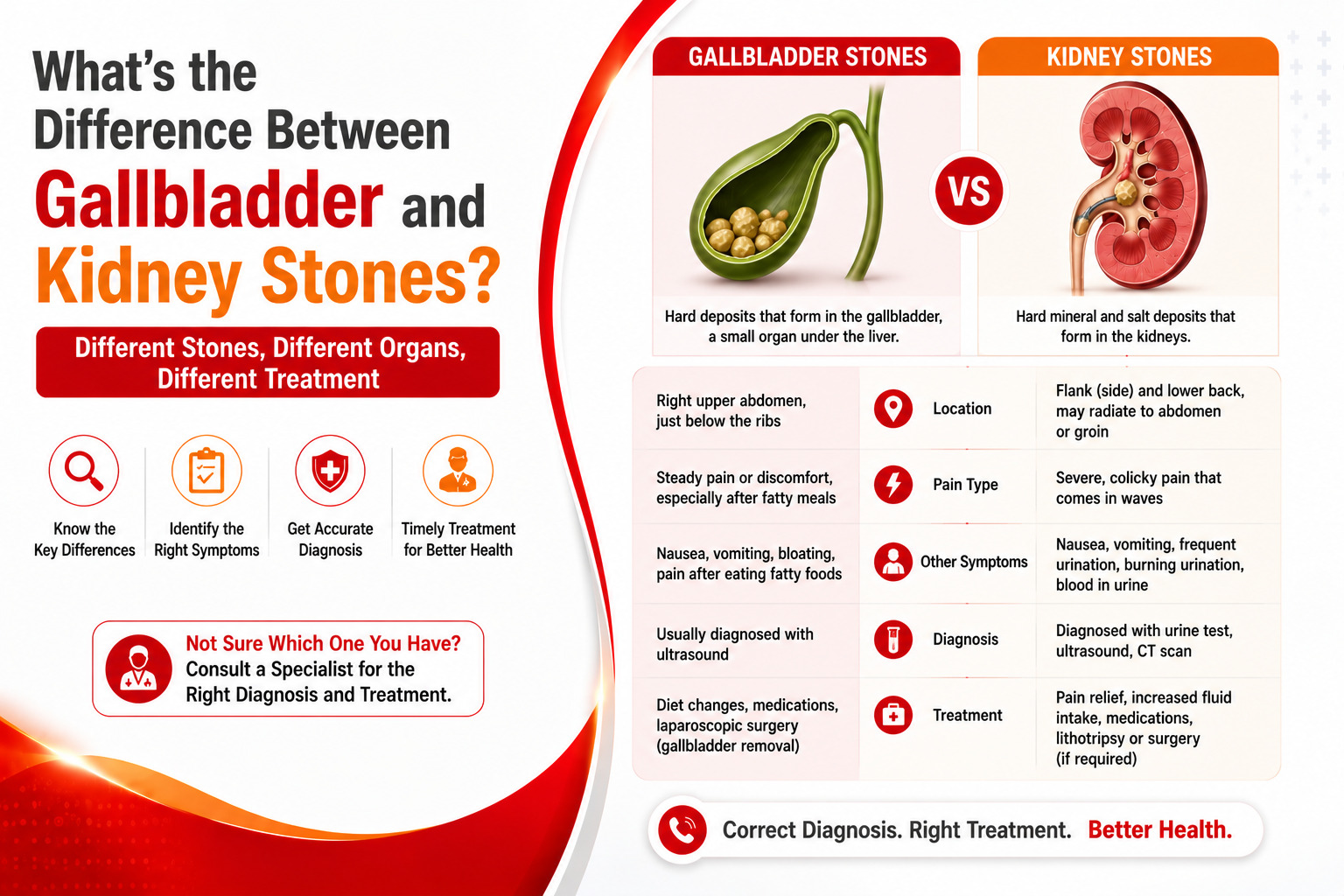
Gallbladder Stones vs. Kidney Stones
This is a useful way to understand the difference, but symptoms can overlap. A proper examination is needed to know what is actually causing the pain.
Where Does Gallbladder Stone Pain Occur?
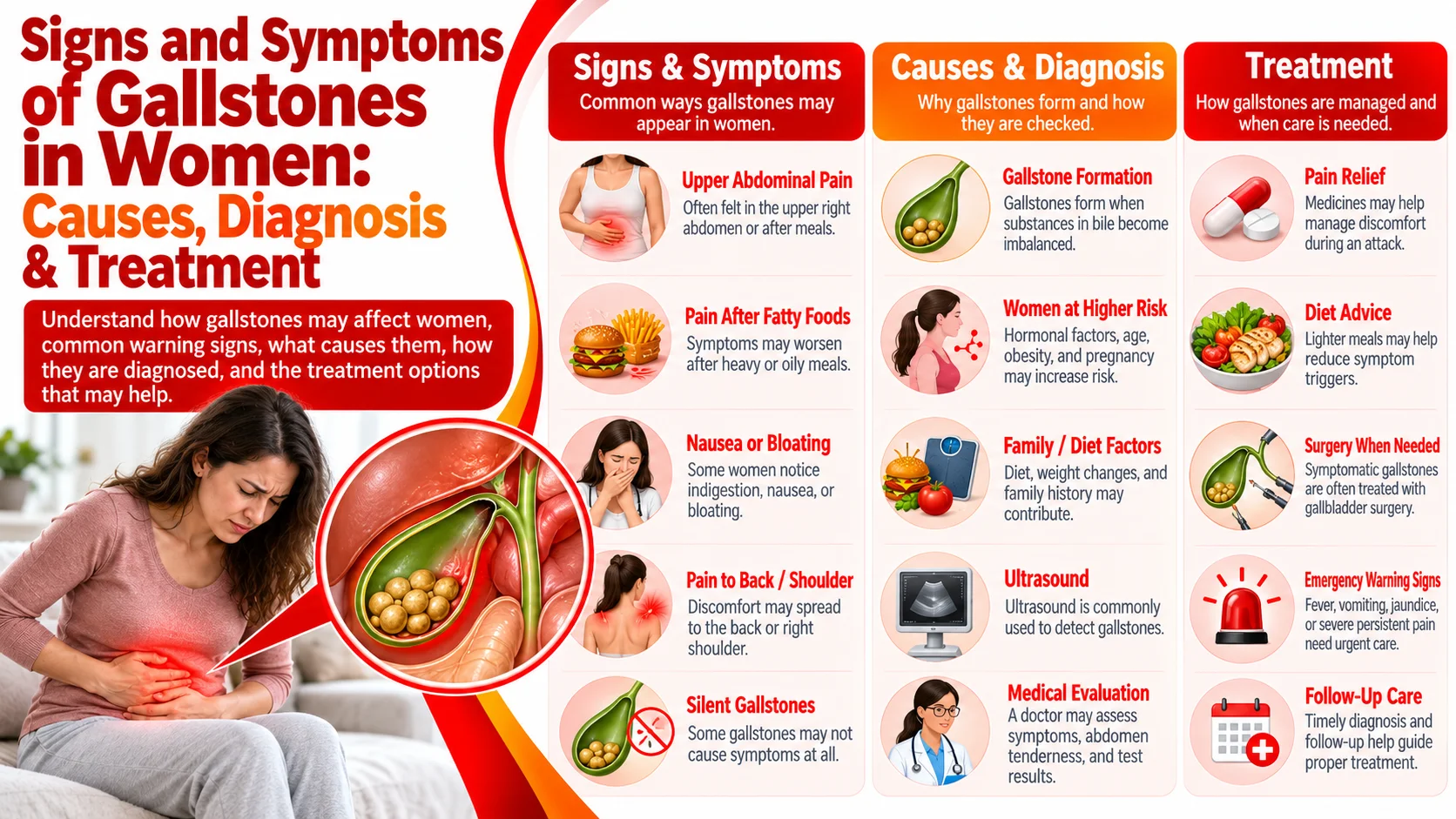
Pain from gallstones is felt in the upper-right portion of the abdomen, below the ribs, by a majority of patients. There are a small number of patients who feel the pain more in the upper-middle and even at the center of their abdomen.
The pain can often be felt to radiate down the right side of the back and shoulder. It can occur after eating a large, fatty meal and is often accompanied by nausea and vomiting.
There are a significant number of patients who have no symptoms related to gallstones; they will be found incidentally on ultrasounds performed for other reasons.
More serious symptoms can occur when stones lodge and block a bile duct. These stones can lead to a fever, chills and jaundice. Blockage of the bile duct can also occur.
The size of a gallbladder stone and whether it can become dangerous are also worth considering, because the size is not the only factor that matters. Its location and whether it blocks the bile ducts are important too.
What Does Kidney Stone Pain Feel Like?
Kidney stone pain can be experienced in the back or side, typically beneath the ribs. When the stone is moving through the ureter, pain may radiate to the lower abdomen or groin.
The pain could appear and disappear, instead of maintaining the same intensity. In certain instances, it can be so severe that the person is unable to sit comfortably.
Kidney stones may also trigger urinary symptoms, for example:
- Urine blood is stained with blood
- Burning while you urinate
- Frequent urination
- A sudden urge to pee
- Urine that is cloudy or strongly scented
- Trouble passing urine
These can be some of the early warning signs of kidney stones, especially when they occur along with side or back pain.
Why Do Gallstones Form?
Gallstones happen when parts of bile accumulate and harden. Cholesterol stones are the more common variety, but some people may have gallstones that are pigment stones.
Increasing your risk for gallstones may include becoming obese, rapid weight loss, certain dietary changes, as well as some hormonal changes. Having a family history may also increase your risk, but not everyone in your family may be susceptible.
Gallstones aren't always painful. For some people, they remain undetected for many years. In some people, they cause no bothersome symptoms and thus remain undetected.
Why Do Kidney Stones Form?
Kidney stones form when minerals and salts in the urine become too concentrated. These substances can form crystals, which may slowly grow into a stone.
Not drinking enough water is one of the common risk factors. A diet high in salt or certain types of animal protein can also increase the risk. Family history and some medical conditions may play a role as well.
There are different types of kidney stones. Calcium, uric acid, struvite, and cystine stones are some of the main types. Knowing the type can also help with prevention.
The different types of kidney stones and how they are treated are explained separately, since treatment and prevention can vary depending on the type.
Can Gallstones and Kidney Stones Cause Similar Symptoms?
Yes. This is likely the reason why people frequently confuse them.
Both of them can trigger intense and sudden pain. Both may cause nausea or vomiting. In some instances, discomfort from either of these conditions could be felt in the back.
The site of the pain can provide an additional clue. A pain in the upper abdomen, particularly following a meal, can often be associated with gallstones. Kidney stones usually cause pain in the back or on the side and could progress towards the stomach or groin.
Urinary symptoms are an additional distinction. Urine that is bloody, burning when you urinate, or having to go for a urination every few minutes are all signs of kidney stones. But the symptoms alone can't confirm the diagnosis.
How Are Gallbladder Stones Diagnosed?
An ultrasound can help confirm the presence of gallstones. Blood tests can help diagnose infection, inflammation, or a blockage of the bile duct.
If gallstones are present but are not causing any symptoms, then treatment may not be necessary.
Repeated episodes of pain caused by stones can lead to the recommendation of surgery. The most common surgery of this kind is the removal of the gallbladder through several very small incisions on the abdomen. This is known as a laparoscopic cholecystectomy.
Patients who need surgical treatment can learn more about gallbladder stone surgery and laparoscopic treatment.
How Are Kidney Stones Diagnosed?
The combination of urine and blood tests and imaging is used to identify kidney stones.
The size and location of the stone can be determined by a CT scan or an ultrasound. If a stone is determined to be small, it may not require treatment, as the stone may have the ability to pass on its own. The size and treatment required for larger stones will depend on if the stone is stuck.
The treatment for the stone will be based on the stone. In some cases, an observation and medication approach will be taken for smaller stones. Larger stones will require a ureteroscopy, ESWL, or PCNL.
If you want to know more about managing a smaller stone, ways to pass a kidney stone, and prevent another one can also be helpful.
Are Gallstones and Kidney Stones Treated the Same Way?
No.
Kidney stones and gallstones require special treatment since they are located in different organs. If gallstones are causing frequent discomfort or complications, the removal of the gallbladder could be suggested. Drinking more fluids will not cause a gallstone to move throughout the body.
Kidney stones vary. Certain small stones are able to pass through the body naturally. If a stone becomes too large, becomes stuck, or blocks the urinary tract, a urologist might need to break it or remove the stone
Therefore, the method of treatment is based on the area where the stone is and how large it is, and whether it's creating a blockage or another issue.
Can You Prevent Gallstones and Kidney Stones?
The prevention advice is different for both.
Water consumption is important for the prevention and treatment of kidney stones. Depending on the type of stone, your doctor may also advise you to lower your salt intake or follow other diet changes.
For gallstones, a healthy weight and steady weight loss are advised. It is best to avoid crash diets as they increase the risk of gallstones.
Once you get a stone, the prevention steps are easier to pick. Understanding the reason for stone formation is advised.
When Should You See a Doctor?
The pain that is severe in the abdomen, back, side, or stomach is not something to be ignored.
It is recommended to seek medical attention if you suffer from:
- Pain that is severe or frequent
- The chills, fever, or fever are accompanied by discomfort
- Repeated vomiting
- Eyes or skin that are yellow
- Urine blood is stained with blood
- Trouble passing urine
- It is difficult to settle a painful situation.
- The symptoms keep coming back
A kidney stone in conjunction with obstruction or infection can be serious. Gallstones may also cause complications when they block the bile or cause infections.
Conclusion
Gallbladder stones and kidney stones may both cause severe pain, but they are two different conditions. Gallstones usually cause pain in the upper right or upper middle abdomen, while kidney stones more often cause pain in the side or back that can move towards the groin. Urinary symptoms such as blood in the urine or burning while urinating are more suggestive of kidney stones. At SCI International, a multispecialist hospital, Dr. Nabanita Chatterjee, a general surgeon with 30 years of experience, provides gallstone general surgical care. Kidney stone patients can also be evaluated by the hospital's urology team.
FAQs
Q- Are kidney stones and gallbladder stones the same thing?
Ans- The HTML code is not available. Gallbladder stones originate in the gallbladder kidney stones are formed within the kidneys. They affect different organs and require different treatment.
Q- How do I know the presence of a kidney stone or gallstone?
Ans- The place of pain may provide a clue. Gallstone pain is most often experienced in the lower right or middle abdomen. Kidney stone pain is usually felt on the back or on the side, and may extend to either the lower abdomen or the groin.
Q- Are kidney stones a cause of lower abdominal pain?
Ans- Absolutely. Kidney stone pain can be felt in the lower abdomen, and it could feel like stomach discomfort.
Q- Can gallstones cause back pain?
Ans- No. Gallstone pain can radiate to the right shoulder or back.
Q- Can kidney stones cause urine to become bloody?
Ans- They could. A kidney stone may cause irritation to the urinary tract, causing blood to leak into the urine.