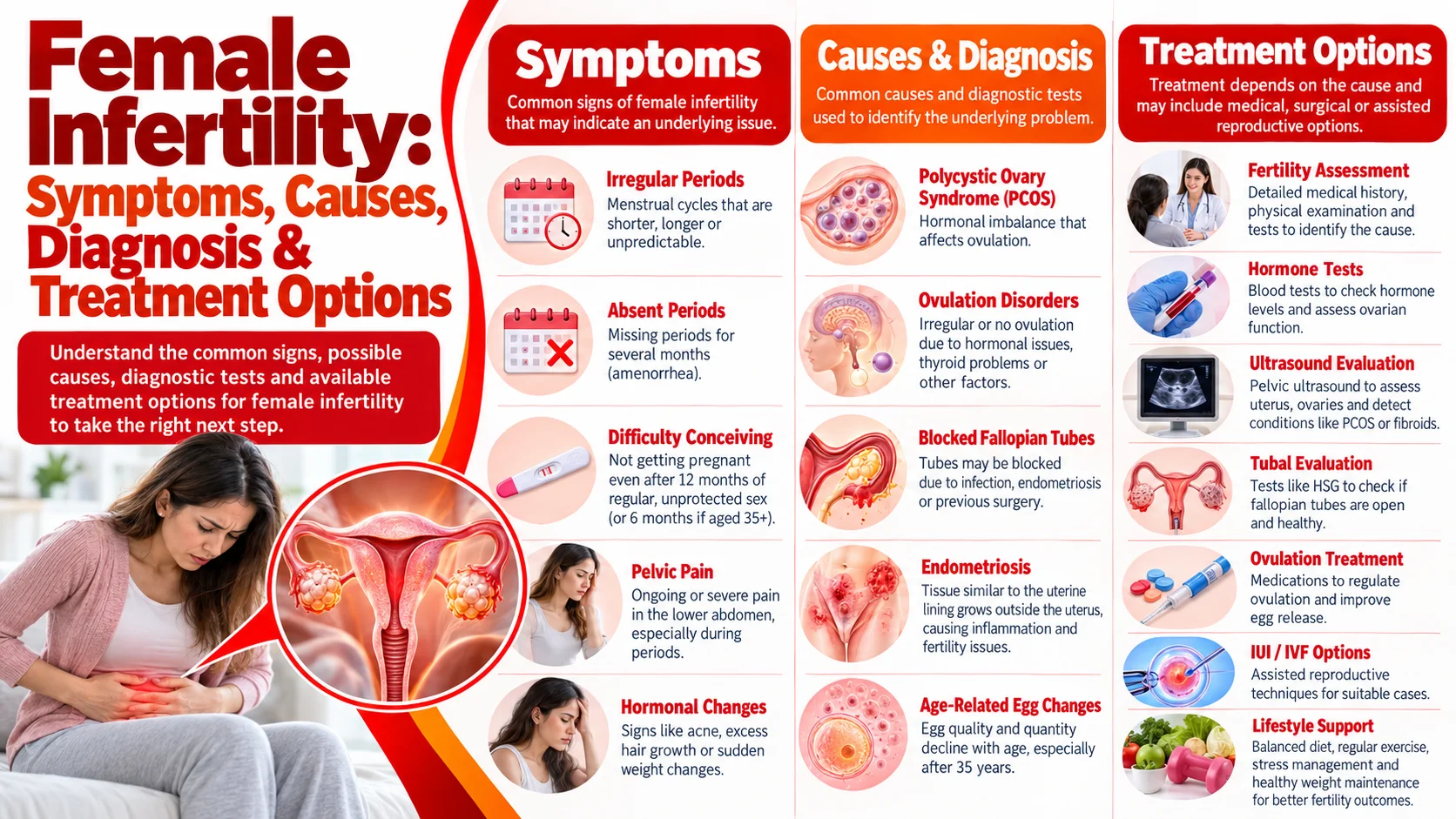
Female infertility is a reproductive health condition that can make it difficult for a woman to become pregnant. It may be associated with problems with ovulation, fallopian tubes, the uterus, hormonal balance, or age-related changes in egg quantity and quality. In some cases, the exact cause cannot be identified even after a complete fertility evaluation.
Some women experience signs such as irregular periods, absent menstruation, or persistent pelvic pain. Others have regular menstrual cycles and no obvious symptoms but still experience difficulty conceiving.
Recognizing possible fertility concerns and seeking medical advice at the appropriate time can help identify potential causes and guide treatment. This guide explains the symptoms of female infertility, common causes and risk factors, diagnostic tests, available treatment options, and when to consult a fertility specialist.
What Is Female Infertility?
Female infertility refers to difficulty achieving pregnancy because of factors affecting the female reproductive system. In general, infertility is evaluated when pregnancy has not occurred after 12 months of regular, unprotected sexual intercourse in women younger than 35, or after 6 months in women aged 35 or older.
However, women with known fertility-related conditions or certain risk factors may benefit from earlier evaluation. Women over 40 may need more immediate assessment.
Female infertility can be classified into two categories:
-
Primary infertility: A woman has never achieved a pregnancy and is experiencing difficulty conceiving.
-
Secondary infertility: A woman has previously been pregnant but is now experiencing difficulty conceiving again.
Infertility can result from one or more reproductive factors. In some cases, a fertility evaluation identifies a specific cause; in others, the cause remains unexplained.
What Are the Common Symptoms of Female Infertility?
Female infertility does not always cause noticeable physical symptoms. For many women, difficulty conceiving is the main indication that a fertility evaluation may be needed. However, certain symptoms can suggest an underlying reproductive or hormonal condition.
1. Irregular or Absent Periods
Irregular menstrual cycles, infrequent periods, or absent menstruation can indicate that ovulation is not occurring regularly.
Conditions such as polycystic ovary syndrome (PCOS), thyroid disorders, and other hormonal imbalances may affect the menstrual cycle and fertility.
2. Painful or Heavy Periods
Severe menstrual cramps, persistent pelvic pain, or unusually heavy menstrual bleeding may sometimes be associated with conditions such as endometriosis or uterine fibroids.
These symptoms do not automatically mean that a woman is infertile, but they may warrant a medical evaluation.
3. Hormonal Changes
Certain symptoms may indicate a hormonal imbalance, including:
-
Persistent acne
-
Excessive facial or body hair growth
-
Unexplained changes in menstrual patterns
-
Milky nipple discharge when not breastfeeding
-
Changes that may be associated with thyroid dysfunction
The significance of these symptoms depends on the individual's medical history and examination.
4. Pain During Sexual Intercourse
Pain during sexual intercourse, particularly when it is persistent or associated with pelvic pain, may be linked to endometriosis or other gynecological conditions. A healthcare professional can help determine whether further investigation is appropriate.
5. Difficulty Conceiving
The most important sign of infertility is difficulty achieving pregnancy after an appropriate period of trying. Women may experience fertility problems even when they have regular periods, no pelvic pain, and no other obvious symptoms.
Important: These symptoms do not confirm infertility. A fertility assessment is needed to identify whether an underlying condition is affecting the ability to conceive.
What Are the Main Causes of Female Infertility?
Female infertility can have several causes. Identifying the underlying factor helps a fertility specialist recommend an appropriate treatment plan.
1. Ovulation Disorders and PCOS
Ovulation is the process in which an ovary releases an egg. If ovulation occurs irregularly or does not occur, the chances of conception may decrease.
Polycystic ovary syndrome (PCOS) is a common hormonal condition that can interfere with regular ovulation.
Women with PCOS may experience irregular periods, acne, excessive facial hair growth, or difficulty conceiving. However, symptoms vary, and many women with PCOS can conceive naturally or with appropriate treatment.
Read more about polycystic ovary syndrome (PCOS) to understand its symptoms and potential effects on reproductive health.
2. Blocked Fallopian Tubes
The fallopian tubes carry the egg from the ovary toward the uterus. Fertilization commonly occurs within a fallopian tube. If the tubes are blocked or damaged, the egg and sperm may not meet. Tubal damage can be associated with previous pelvic infections, certain sexually transmitted infections, endometriosis, or pelvic surgery.
A fertility specialist may recommend a test such as hysterosalpingography (HSG) to assess whether the fallopian tubes are open.
3. Endometriosis
Endometriosis occurs when tissue similar to the lining of the uterus grows outside the uterus. It may cause painful periods, chronic pelvic pain, pain during sexual intercourse, and difficulty conceiving. Depending on its severity and location, endometriosis can affect the ovaries, fallopian tubes, or surrounding pelvic structures.
Treatment depends on the symptoms, extent of the condition, age, and pregnancy goals.
4. Uterine Fibroids and Polyps
Uterine fibroids are growths that develop in or around the uterus, while endometrial polyps are growths in the uterine lining. Their effect on fertility depends on factors such as size, number, and location. Some fibroids and polyps may interfere with implantation or increase certain pregnancy risks, while others may not affect fertility.
A fertility specialist can assess whether treatment is appropriate before attempting pregnancy.
5. Hormonal Imbalances and Thyroid Disorders
Hormones help regulate ovulation, menstrual cycles, and other reproductive functions. Thyroid disorders and certain other hormonal conditions can interfere with ovulation or menstrual regularity. Appropriate testing can help identify whether a hormonal problem is contributing to fertility difficulties.
6. Age and Reduced Ovarian Reserve
Female fertility generally declines with age. As women get older, both the number of available eggs and their average quality decrease. This decline becomes more significant during the later reproductive years, particularly after age 35.
Reduced ovarian reserve means that fewer eggs may be available or that the ovaries may respond less strongly to stimulation during fertility treatment. However, reduced ovarian reserve does not automatically mean that pregnancy is impossible. Results must be interpreted alongside age, medical history, and other fertility findings.
7. Unexplained Infertility
Sometimes, standard fertility investigations do not identify a clear reason for difficulty conceiving. This is known as unexplained infertility.
It does not mean that the symptoms are imaginary or that pregnancy cannot occur. A fertility specialist can review the evaluation results and discuss appropriate next steps based on the woman's age, duration of infertility, and reproductive history.
Risk Factors That May Affect Female Fertility
Several factors may increase the likelihood of fertility difficulties.
Common risk factors include:
-
Increasing age
-
PCOS or other ovulation disorders
-
Endometriosis
-
Previous pelvic infections
-
Blocked or damaged fallopian tubes
-
Certain uterine conditions
-
Smoking
-
Being significantly underweight or overweight
-
Certain hormonal or metabolic disorders
-
Previous chemotherapy or radiation treatment
-
A family history of early menopause or certain reproductive conditions
Having one or more risk factors does not necessarily mean that a woman will experience infertility. Women who have a known condition that may affect fertility should discuss their reproductive plans with a healthcare professional rather than waiting until they have tried to conceive for a prolonged period.
How Is Female Infertility Diagnosed?
A fertility evaluation is tailored to the woman's age, menstrual history, medical background, symptoms, and how long she has been trying to conceive.
When a male partner is contributing sperm, evaluation of both partners should generally begin together because fertility difficulties can involve either partner or both.
Common components of female fertility testing include the following.
1. Medical and Menstrual History
The fertility specialist may ask about:
-
Menstrual cycle length and regularity
-
Previous pregnancies and pregnancy outcomes
-
Previous fertility treatments
-
Pelvic pain or painful periods
-
Previous pelvic infections or surgery
-
Medical conditions and medications
-
Family history of reproductive conditions
This information helps determine which investigations are appropriate.
2. Hormonal Blood Tests
Blood tests may be recommended to assess specific reproductive or hormonal concerns. Depending on the clinical situation, these may include tests related to thyroid function, ovulation, or ovarian reserve.
Not every woman needs every hormone test. The selection and timing of tests depend on the medical history and the question the specialist is trying to answer.
3. Pelvic Ultrasound
A pelvic ultrasound can help assess the uterus, ovaries, and certain structural abnormalities.
It may identify findings such as ovarian cysts, fibroids, or other conditions that could influence fertility evaluation or treatment planning.
4. Ovarian Reserve Assessment
Ovarian reserve assessment may include blood tests such as anti-Müllerian hormone (AMH) and an ultrasound assessment of antral follicle count.
These tests can help estimate how the ovaries may respond to fertility medication. However, they cannot independently determine whether a woman will conceive naturally or predict her individual chance of pregnancy. Results must be interpreted alongside age and other clinical findings.
5. Ovulation Assessment
A menstrual history may provide useful information about whether ovulation is likely to be occurring regularly. If further assessment is needed, the specialist may recommend appropriately timed blood tests, ovulation predictor kits, or ultrasound monitoring.
6. Fallopian Tube Testing
A hysterosalpingography (HSG) test uses imaging and contrast material to assess the uterine cavity and whether the fallopian tubes are open.
Other tests may be considered depending on the clinical situation.
7. Assessment of the Male Partner
When applicable, the male partner's reproductive history and semen analysis are important parts of the evaluation. Assessing both partners helps avoid overlooking a contributing factor and supports a more complete treatment plan.
When Should You See a Fertility Specialist?
The appropriate time to seek a fertility evaluation depends on age, medical history, and how long you have been trying to conceive.
Consider arranging a consultation in the following circumstances:
-
You are younger than 35: Seek evaluation after 12 months of regular, unprotected intercourse without pregnancy.
-
You are 35 or older: Seek evaluation after 6 months of trying.
-
You are over 40: Consider a more immediate fertility assessment.
-
You have irregular or absent periods: Discuss evaluation without waiting for the usual time period.
-
You have known or suspected endometriosis or tubal disease: Earlier assessment may be appropriate.
-
You have previously received chemotherapy or radiation: Discuss how treatment may affect reproductive health.
-
You have another known condition affecting fertility: A fertility specialist can advise on appropriate testing and timing.
These time frames are general guidance, not a requirement to delay care when a fertility concern is already known.
What Are the Treatment Options for Female Infertility?
Treatment depends on the underlying cause, age, ovarian reserve, reproductive history, the male partner's fertility where applicable, and the individual's pregnancy goals.
Not every woman with fertility difficulties needs IVF. Some may benefit from medication or treatment of a specific condition, while others may require assisted reproductive techniques.
1. Medications for Ovulation Induction
Women who do not ovulate regularly may benefit from medication to help stimulate ovulation. The type of medication and monitoring depend on the underlying condition. Women with PCOS, for example, may be offered an ovulation-induction treatment after appropriate assessment.
Medication should be prescribed and monitored by a qualified fertility specialist because treatment needs vary and some medications can increase the risk of multiple pregnancy.
2. Intrauterine Insemination (IUI)
Intrauterine insemination, or IUI, involves placing prepared sperm directly into the uterus around the time of ovulation.
IUI may be suitable in selected situations depending on the fertility diagnosis, the condition of the fallopian tubes, sperm-related factors, and other clinical considerations. Learn more about IUI treatment in India and the circumstances in which a fertility specialist may consider this option.
3. In Vitro Fertilization (IVF)
In vitro fertilization (IVF) involves collecting eggs from the ovaries, fertilizing them with sperm in a laboratory, and transferring an embryo into the uterus.
IVF may be considered for several reasons, including certain tubal problems, some cases of endometriosis, selected cases of unexplained infertility, or when other treatments have not been successful.
The most appropriate treatment depends on the individual's diagnosis and circumstances. IVF is not necessary for every woman experiencing difficulty conceiving.
Explore IVF treatment in India to learn more about the process and the role of assisted reproductive technology in fertility care.
4. Treatment of Underlying Medical Conditions
When an identifiable medical condition is affecting fertility, treatment may focus on that condition. Depending on the diagnosis, this may include managing thyroid disorders, addressing hormonal imbalances, or treating selected uterine or pelvic conditions.
5. Fertility-Related Surgery
Certain uterine abnormalities or other structural problems may require surgical evaluation. Surgery is not appropriate for every fertility condition. The decision depends on the type and severity of the abnormality, the potential benefits and risks, and whether the procedure is likely to improve the individual's reproductive outlook.
6. Lifestyle and Preconception Care
Healthy lifestyle habits can support general and reproductive health.
Helpful measures may include:
-
Maintaining a suitable weight
-
Eating a balanced, nutritious diet
-
Avoiding smoking
-
Limiting or avoiding alcohol when trying to conceive
-
Managing existing medical conditions
-
Reviewing medications with a healthcare professional
-
Taking recommended preconception supplements, such as folic acid, according to medical advice
Lifestyle changes cannot correct every cause of infertility and should not replace appropriate medical evaluation when needed.
Can Female Infertility Be Treated Successfully?
Many causes of female infertility can be treated or managed, but the outcome depends on the underlying diagnosis and individual circumstances. Some women may conceive after treatment for an ovulation disorder, while others may benefit from IUI or IVF. In certain situations, treatment can improve the chance of pregnancy even when the cause cannot be completely reversed.
Age, ovarian reserve, fallopian tube function, uterine health, sperm factors, and previous treatment history can all influence the recommended approach. A fertility specialist can explain the available options, their potential benefits and limitations, and the next steps most appropriate for each individual.
Why Early Fertility Evaluation Matters
Fertility concerns can be influenced by several factors, and symptoms alone cannot establish the cause. Early evaluation may help identify irregular ovulation, tubal problems, uterine conditions, or other issues that require specific treatment. It can also help women make informed decisions about the timing and type of fertility care.
At SCI IVF Hospital, women and couples can explore fertility evaluation and treatment options, including IVF and IUI, according to their individual needs. For patients considering a consultation, information about Dr. Shivani Sachdev Gour is available on the hospital's website.
Conclusion
Female infertility can be associated with ovulation disorders, PCOS, blocked fallopian tubes, endometriosis, uterine conditions, hormonal imbalances, and age-related changes in egg quantity and quality. Some women experience irregular periods, painful menstruation, pelvic pain, or other symptoms. Others have regular periods and no obvious signs apart from difficulty conceiving.
A fertility evaluation may include a review of medical and menstrual history, selected blood tests, pelvic ultrasound, assessment of ovarian reserve, fallopian tube testing, and evaluation of the male partner where applicable. Treatment depends on the cause and may include ovulation-induction medication, IUI, IVF, treatment of an underlying condition, or selected surgical procedures. Not every woman needs IVF, and the most suitable approach should be based on an individual assessment.
If you are having difficulty conceiving, have irregular or absent periods, or know that you have a condition that may affect fertility, consider speaking with a fertility specialist about the appropriate next steps.
Frequently Asked Questions About Female Infertility
1. What are the early symptoms of female infertility?
Female infertility does not always cause noticeable symptoms. Difficulty conceiving is often the main sign. Irregular periods, absent menstruation, severe menstrual pain, or persistent pelvic pain may indicate an underlying condition that warrants evaluation.
2. Can a woman be infertile if she has regular periods?
Yes. Regular periods can suggest that ovulation is occurring, but they do not confirm that all aspects of fertility are normal. Tubal problems, uterine conditions, age-related changes, and other factors can affect the ability to conceive.
3. Can PCOS cause female infertility?
Yes. PCOS can interfere with regular ovulation and make conception more difficult. However, many women with PCOS conceive naturally or with appropriate fertility treatment.
4. Can female infertility be treated?
Many causes of female infertility can be treated or managed. Options may include ovulation-induction medication, treatment of underlying medical conditions, surgery in selected cases, IUI, or IVF. The appropriate treatment depends on the individual diagnosis.
5. When should I see a fertility specialist?
Generally, women younger than 35 should seek evaluation after 12 months of trying to conceive, while women aged 35 or older should seek evaluation after 6 months. Women over 40 or those with known fertility-related conditions may benefit from earlier assessment.
6. Does irregular menstruation mean infertility?
No. Irregular periods do not automatically mean infertility, but they can indicate irregular ovulation or an underlying hormonal condition. A medical evaluation can help identify the cause.
7. What tests are used to diagnose female infertility?
Depending on the individual's history, testing may include selected hormonal blood tests, pelvic ultrasound, ovarian reserve assessment, ovulation assessment, and a hysterosalpingography (HSG) test to evaluate the fallopian tubes. The male partner may also need a semen analysis.
8. Does low ovarian reserve mean I cannot get pregnant?
No. Reduced ovarian reserve can indicate that fewer eggs are available or that the ovaries may respond less strongly to stimulation. It does not, by itself, prove that natural pregnancy is impossible. Results should be interpreted in the context of age, medical history, and other fertility findings.
9. Is IVF the only treatment for female infertility?
No. Depending on the cause, treatment may involve ovulation-induction medication, IUI, management of an underlying medical condition, or selected surgery. IVF is one of several available treatment options.
10. Can lifestyle changes improve female fertility?
Healthy habits can support reproductive and general health, but they cannot correct every cause of infertility. Women who have been trying to conceive for the recommended period—or who have known fertility concerns—should not rely on lifestyle changes alone instead of seeking appropriate evaluation.
11. Can a woman with blocked fallopian tubes get pregnant?
The possibility depends on whether one or both tubes are affected, the extent of the damage, and other fertility factors. A specialist can assess the available treatment options, which may include selected procedures or IVF.
12. Can I have fertility problems without any symptoms?
Yes. Some women have no obvious symptoms and discover a fertility concern only after experiencing difficulty conceiving. A fertility evaluation can help identify possible causes and guide the next steps.