Pregnancy causes many changes in your body and one of the most common, but unexpected, changes is the increase of vaginal discharge. Many women during their first trimester often have concerns about the amount of discharge and whether it's a normal pregnancy symptom.
The good news is that the majority of discharge during pregnancy is normal and aids the prevention of infection during pregnancy. However, if there are changes in the discharge's color, smell, or consistency, pregnancy discharge may become abnormal and could indicate a problem that requires medical attention.
In this blog, we are going to help you recognize the normal pregnancy discharge, the problems that may be caused by the different types of discharge, the concerns that may be caused by the different types of discharge, and the appropriate timing to seek medical help.
What Is Vaginal Discharge During Pregnancy?
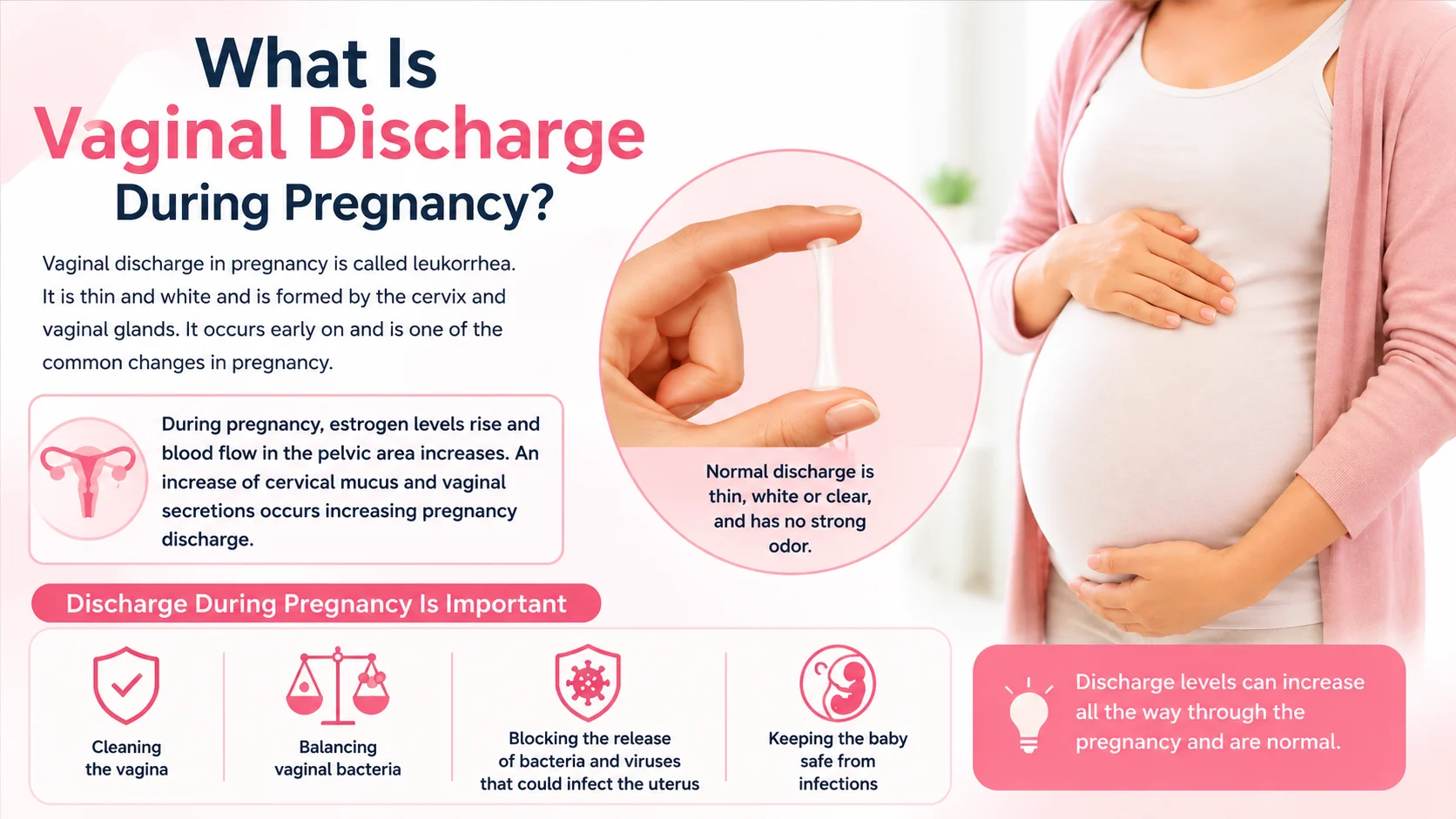
Vaginal discharge in pregnancy is called leukorrhea. It is thin and white and is formed by the cervix and vaginal glands. It occurs early on and is one of the common changes in pregnancy.
During pregnancy, estrogen levels rise and blood flow in the pelvic area increases. An increase of cervical mucus and vaginal secretions occurs increasing pregnancy discharge.
Discharge during pregnancy is important. It contributes to:
- Cleaning the vagina
- Balancing vaginal bacteria
- Blocking the release of bacteria and viruses that could infect the uterus
- Keeping the baby safe from infections
Discharge levels can increase all the way through the pregnancy and are normal.
Is White Discharge During Pregnancy Normal?
Yes, you should be fine. For the most part, white discharge is completely normal.
Normal white discharge during pregnancy is:
- Thin
- Milky white or clear
- Light or no scent
- Non-irritating
- Not painful or itchy
Normal discharge actually helps your body in the prevention of infection while also keeping your vaginal tissue healthy.
Most women notice that discharge gets more abundant as the pregnancy gets more advanced. Many women wear panty liners while this discharge is occurring. This discharge is healthy as long as it remains white, clear, and has a pleasant odor or no odor along with no discomfort.
Abnormal discharge during pregnancy is thick, clumpy, and changes color to yellow, gray or green. If this type of discharge occurs along with an irritating odor, this also requires medical attention.
White Discharge During Early Pregnancy: What Does It Mean?
White discharge is one of the early symptoms of pregnancy that women may notice. After conception, hormone levels increase. This causes the cervix and vaginal glands to produce mucus.
During the first week of pregnancy, other women experience white discharge. Although it is a pregnancy sign, it is not an indicator of pregnancy. There are many discharge-causing hormone changes before a missed period.
During the first trimester of pregnancy, the body adapts to a state of pregnancy. This causes an increase in blood flow to the reproductive system and an increase in cervical mucus. During pregnancy, vaginal discharge is thin, white and has no smell.
Discharge does not equal pregnancy. The most accurate indicator of pregnancy is a missed period. Taking a home pregnancy test or visiting a gynecologist is recommended.
Different Types of Pregnancy Discharge and What They May Mean
Different colors and textures of pregnancy discharge can provide clues about your health.
Any discharge associated with fever, abdominal pain, or severe discomfort should be assessed promptly.
What Causes Increased Discharge During Pregnancy?
Pregnancy causes a lot of changes that increase vaginal discharge. These changes include:
- Increased estrogen levels
- Increased blood flow to the pelvic organs
- Increased cervical mucus
- A softer cervix
- An immune response
During your pregnancy, the mucus your cervix produces seals the cervical opening to keep bacteria from entering the uterus.
This is a natural response of your body during the preparation for a healthy pregnancy.
When Is Pregnancy Discharge Not Normal?
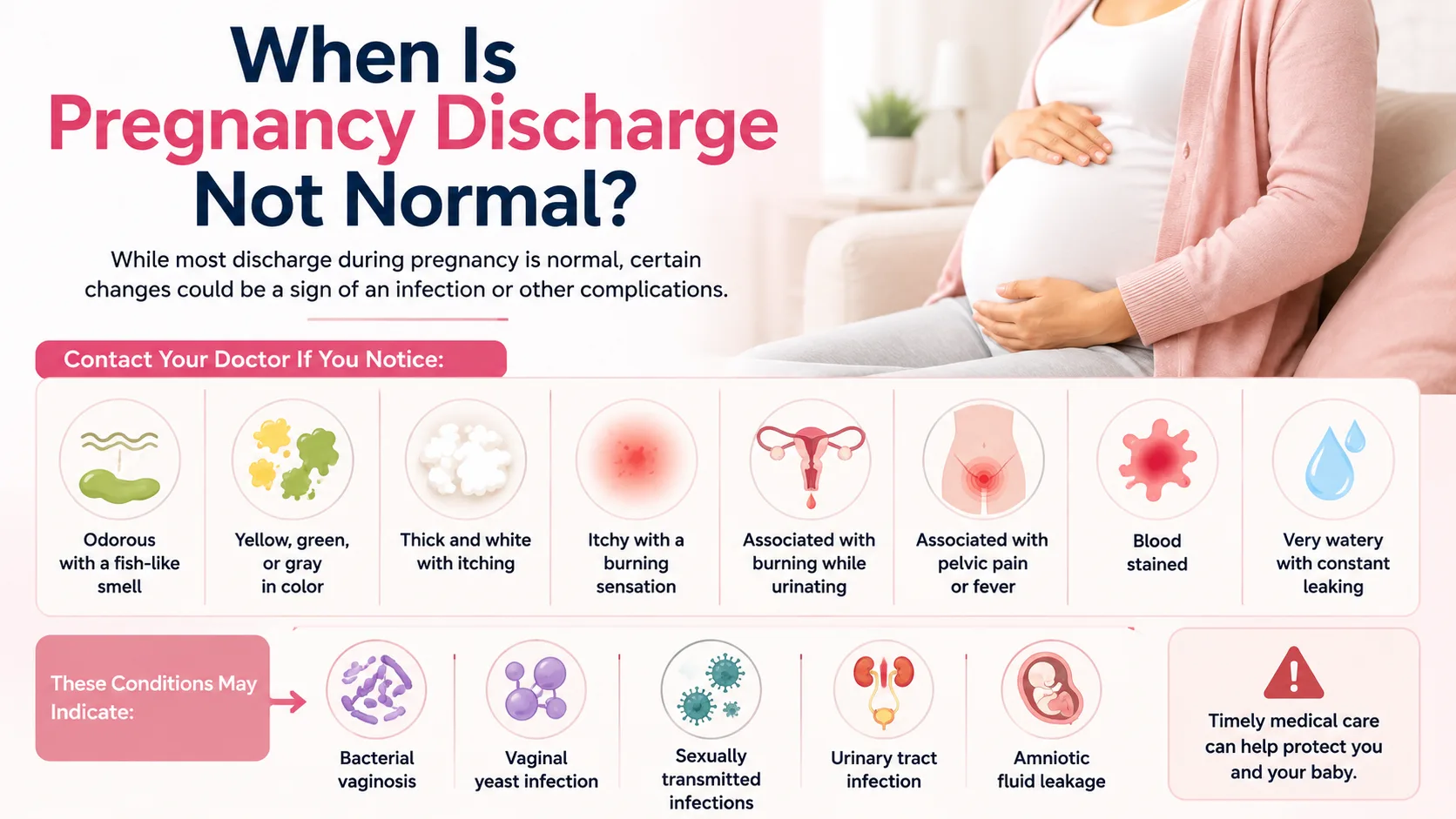
While most discharges during pregnancy are not serious, there are some conditions that cannot be overlooked at all.
Contact your doctor if you have any of the following discharge conditions:
- Odorous with a fish-like smell
- Yellow, green, or gray in color
- Thick and white with itching
- Itchy with a burning sensation
- Associated with burning while urinating
- Associated with pelvic pain or fever
- Blood stained
- Very watery with constant leaking
All of the above conditions may point to one of the following:
- Bacterial vaginosis
- Vaginal yeast infection
- Sexually transmitted infections
- Urinary tract infection
- Amniotic fluid leakage
Timely treatment will be very helpful.
Tips to Maintain Healthy Vaginal Hygiene During Pregnancy
There are simple ways through which one can keep the vagina healthy throughout the whole period of pregnancy.
- Wear breathable cotton underwear
- Change your underwear whenever it gets damp
- Do not use douches as it destroys the vaginal bacteria
- Use gentle fragrance-free soap on your external genitalia only
- Do not use fragranced feminine hygiene products
- Wipe front to back after using the toilet
- Drink plenty of fluids
- Engage in safe sex as suggested by your doctor
- Go to all your prenatal visits
Such practices will help prevent any infections and discomfort during pregnancy.
When Should You See a Doctor?
You should contact your doctor immediately if:
- Your discharge suddenly changes in color or smell.
- You experience severe itching or burning.
- The discharge is green, yellow, gray, or blood-stained.
- You notice continuous watery leakage that may be amniotic fluid.
- You develop fever, chills, or pelvic pain.
- You experience heavy bleeding at any stage of pregnancy.
- You notice reduced fetal movements in the later stages of pregnancy.
Never self-medicate or use over-the-counter vaginal treatments without consulting your healthcare provider, as some medications may not be suitable during pregnancy.
Conclusion
Discharge is common during pregnancy. For many, it's a sign of a healthy pregnancy. Discharge shows your body is protecting you and your developing child.
Healthy white discharge in pregnancy is thin and milky. It's usually odorless. The presence of color, bad smells, or other changes in consistency might warrant concern. These may indicate an infection or some other medical condition. The benefit to you and your baby with pregnancy discharge changes is to notice them and seek medical care as soon as possible.
The obstetricians and gynecologists at SCI International Hospital are available for your concerns with pregnancy discharge and other unusual symptoms. With their care, you are encouraged to enjoy your pregnancy with easy-to-attain peace of mind.