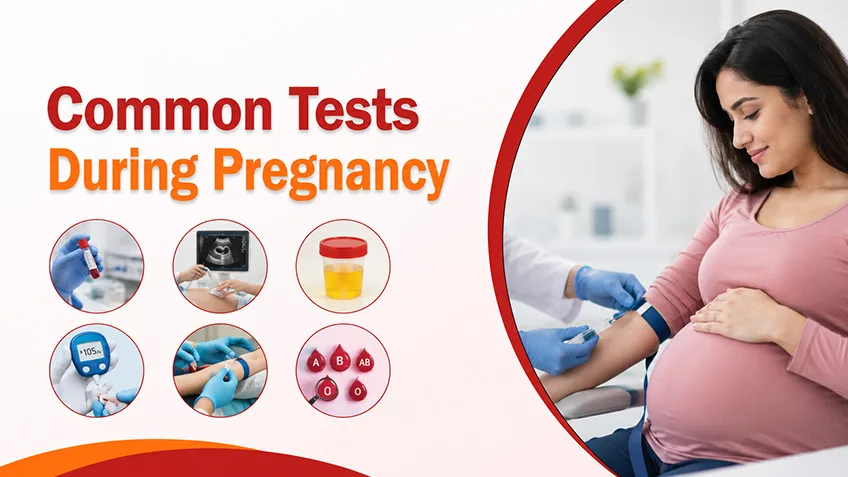
Pregnancy brings some excitement but requires essential health check-ups. Regular check-ups ensure the mother and baby are safe and healthy. Your doctor will recommend several tests throughout your pregnancy. These tests check your health, track your baby, and help your doctor find concerns early.
Most of the tests done during pregnancy are the same for every mother. Some tests are prescribed based on age, health history, or even the risk factors of the pregnancy. Knowing why these tests are done can help your confidence and understanding throughout your pregnancy.
In this blog, we will help you understand the tests done during pregnancy, their timings, and their importance.
Why Are Prenatal Tests Important?
Prenatal tests are an important component of pregnancy care. They will assist your doctor in monitoring both your health and the health of your developing baby through pregnancy.
Some of the things you should be able to test through prenatal tests include:
- The existence of a healthy pregnancy
- Monitoring the development and growth of your baby
- Detection of infection that may interfere with your pregnancy
- Conditions like anemia, diabetes or other thyroid disorders
- Genetic and chromosomal problems
- Detecting any pregnancy complication early
- Enabling the right treatment and pregnancy care
Most prenatal tests are preventive and not necessarily because something is wrong.
Blood Test for Pregnancy: The First Important Test
Your doctor may recommend a blood test for pregnancy early on. Pregnancy blood tests are a more accurate detection of the hormone human chorionic gonadotropin (hCG) which is produced shortly after implantation, than home pregnancy tests which are conducted using urine.
There are two types of blood pregnancy tests.
Qualitative hCG Test
This test is a positive or negative test for the presence of hCG in blood and therefore, a pregnancy test.
Quantitative (Beta hCG) Test
This test, which may be called the beta hCG test, measures the concentration of hCG in blood and is used for the following.
- Confirm a very early pregnancy
- Monitor the progression of early pregnancy
- Assess the risk of miscarriage or ectopic pregnancy
- Assess the concentration of hCG following fertility treatment
Compared with urine tests, a blood test can detect pregnancy slightly earlier and offers more information when necessary.
Routine Blood Tests During Pregnancy
Once pregnancy is confirmed, several blood tests are performed to assess your health condition and potential diseases that can harm both you and your child.
Blood Type and Rh Status
Your blood type and Rh factor are required if you may face the issue of Rh incompatibility.
Complete Blood Test
The complete blood test will analyze your red cells, white cells and platelets, thus checking for anemia and possible infections.
Blood Glucose Level
Your blood glucose level is determined to check for the presence of diabetes and its level.
Thyroid Function Tests
These tests are suggested if you suffer from thyroid disorders or for other reasons.
Infection Screening
Routine blood tests may include the following infection screenings:
- HIV
- Hepatitis B
- Hepatitis C (if applicable)
- Syphilis
- Rubella immunity
Early screening and diagnosis of infection can prevent further complications and allow the initiation of therapy.
Iron and Vitamin Levels
If you have any signs of a deficiency in nutrition or your medical history suggests a deficiency, your doctor may test your levels of Iron or vitamins D and B12.
Urine Tests During Pregnancy
Urine tests during pregnancy help you obtain information about your health, and that is why healthcare professionals carry them out during pregnancy check-ups.
They help identify:
- urinary tract infection (UTI)
- preeclampsia due to protein in the sample
- diabetes due to high glucose
- kidney problems
- dehydration
Some urinary tract infections do not cause noticeable symptoms therefore, testing urine during pregnancy helps in identifying such infections and helps in treating them.
Ultrasound Scans During Pregnancy
Ultrasound scans help assess the status of the developing fetus throughout the pregnancy.
Dating Scan
The Dating Scan usually occurs in the first trimester. This scan confirms if the pregnancy is viable, estimates the due date, and assesses the fetal heartbeat.
Nuchal Translucency (NT) Scan
The NT Scan occurs between 11 and 14 weeks. This scan assesses the amount of fluid that is present behind the baby's neck as one of the many screening methods for the evaluation of some of the chromosomal conditions.
Anomaly Scan
The Anomaly Scan occurs between 18 and 22 weeks. This detailed scan assesses the anatomy of the fetus and all of the organs, the heart and the limbs.
Growth Scan
Growth Scans assess the health of the fetus, amniotic fluid, and placenta in later pregnancy.
Third Trimester Scan
The baby's position and other high-risk factors may prompt the need for additional scans throughout the pregnancy.
Genetic and Prenatal Screening Tests
Some prenatal tests can help gauge the risk of some genetic or chromosomal disorders. They are often suggested based on the maternal age, family history, ultrasound results or other risk factors.
Some of the common screening tests are:
- Double marker test
- Triple marker test
- Quadruple marker test
- Non-Invasive Prenatal Testing
- Carrier screening for inherited conditions
If the results of the screening tests show a strongly positive risk, the doctor may suggest some of the following diagnostic tests:
- Chorionic Villus Sampling
- Amniocentesis
These tests may be performed only when medically necessary after the discussion on the possible benefits and the possible risks of the diagnostic test.
Glucose Screening Test for Gestational Diabetes
Most expectant mothers are screened for gestational diabetes between the 24th and 28th week.
A blood sample is drawn after you consume a glucose solution.
Detecting gestational diabetes early is necessary because the dangers of high blood sugar are numerous, and uncontrolled blood sugar would include the following:
- The baby is too large at birth
- Delivering before the due date
- The mother has high blood pressure
- Complications during delivery
- The baby has low blood sugar
With a proper diet, exercise, and the necessary monitoring and treatment, the majority of women with gestational diabetes still have a healthy pregnancy.
How Should You Prepare for Pregnancy Tests?
Routine pregnancy tests are easy to prepare for.
Consider these few pointers:
- You should always come to every scheduled obstetric appointment.
- You should always fast if recommended by your doctor.
- You should be hydrated before a sample collection unless you are instructed otherwise.
- You should bring your past samples to every appointment.
- You should inform your doctor about all your medications and supplements.
- You should always ask your doctor if you have any concerns about the test or have a question.
The optimal well-being for you and the baby is the goal of having prenatal care with you as the focus.
When Are Pregnancy Tests Scheduled?
Your doctor may recommend additional tests depending on your health, age, or pregnancy-related concerns.
Conclusion
Routine prenatal tests are significant to a healthy pregnancy. Beginning with initial pregnancy blood tests and continuing with ultrasounds and blood investigations, these tests give important information about maternal health and fetal development.
These tests are designed to identify complications and allow for early interventions and improved pregnancy outcomes. Keep in mind the majority of tests are preventative and designed to provide peace of mind, not anxiety.
Whether planning to conceive or already pregnant, the skilled obstetricians and gynecologists at SCI International Hospital provide complete prenatal care during the entire pregnancy. They offer sophisticated and advanced diagnostic testing during pregnancy and are designed to provide comfort.
Frequently Asked Questions
1. Are there required prenatal tests I must take during my pregnancy?
Most prenatal tests, such as blood and urine tests and ultrasound scans, are called routine tests. Recommended routine tests are based on the health of the mother and baby. Some of the specialized genetic tests are optional and are taken at the advice of the medical practitioner based on the risk factors.
2. Is a blood pregnancy test more reliable than a urine pregnancy test?
Yes, blood pregnancy tests are more sensitive and can detect a pregnancy sooner than the urine pregnancy test which relies on the level of hCG.
3. How many ultrasound scans can I expect during my pregnancy?
A typical pregnancy can expect at least 2-3 routine ultrasound scans. Many other ultrasound scans can be deemed medically necessary.
4. Should I expect to fast for each pregnancy blood test?
No, while some blood tests will require fasting, many routine pregnancy blood tests do not require fasting. Check with your medical provider for any necessary preparation.
5. Are prenatal tests done on my baby?
Yes. Routine prenatal tests done during one’s pregnancy are safe and done to monitor one’s baby during that time.