
If you have severe lower back pain, burning when you pee, or sharp pain in your stomach, you might have kidney stones. These pains should not be ignored. If stones are not treated, they can result in infections, blockages, or even damage to your kidneys.
In SCI Hospital, we use the latest Urology technology and provide advanced, bloodless and non-invasive kidney stones treatment in Gurgaon. Our specialised urologists review the symptoms, history, images, and the health of the kidneys to determine the best method of treatment.
Our primary goal is the safe removal of stones and long-term prevention of stones with a quick recovery. We guide our patients to resume their normal activities in a short time and with the greatest ease.

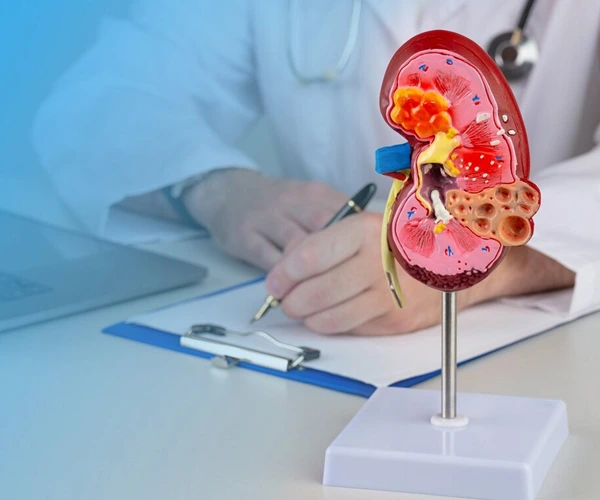
SCI International Hospital has been one of the best places in Gurgaon for urology treatment. We are urology specialists who have the capability of dealing with kidney stones of all kinds. Among other things, we have the best and newest imaging technology and the most sophisticated techniques and procedures, like laser lithotripsy and ureteroscopy, as well as shock-wave lithotripsy. With all of our procedures, you can expect to get the best result with the least amount of discomfort and the fastest recovery time.
Here at SCI Hospital, we are very proud of our ability to work as a team. Because many of our patients have complex conditions, we can provide exceptional care to them in collaboration with our nephrology, anesthesiology, and critical care teams. Our Kidney treatment specialists in Gurgaon are extremely dedicated and very positive in their approach. They work individually to create the best care plans for patients according to their needs, type of stones, and overall health.
You might want to see a kidney stone doctor if you experience symptoms that indicate the presence of stones or related complications. Early treatment helps relieve pain and prevents further issues.
Intense lower back pain that spreads to the stomach or groin.
Sudden back pain that comes in waves.
Blood in urine.
Need to urinate a lot, but not much urine comes out.
Burning pain while urinating.
Nausea or vomiting with stomach pain.
A fever, combined with chills, could mean an infection.
Not being able to pee suddenly (this is an emergency!
Kidney stones form when the particles that get filtered in the kidneys become stuck together. There are lots of different reasons for the filtering process to become stuck - it could be dehydration, or it could be more serious, like an infection. Understanding how the filtering process gets stuck can guide your specialist in creating a workable plan to deal with your problem.

Calcium stones are the most commonly found type of stones, as they are typically found with calcium oxalates and phosphates, and are found with a higher intake of sodium, and a lower intake of food, as well as a higher-than-normal amount of calcium in your urine.
Read More
These stones are found when there is a higher-than-average amount of protein in the body due to a lack of water in the body. Obesity and diabetes, especially a fatty diet, can cause these stones as well.
Read More
Recurrent Urinary tract infections do take a toll on the body, and struvite stones are one of the stones that can form due to constant infections. The stones can get extremely large and can cause problems with your kidneys.
Read More
Cystine stones are stones that are genetically inherited. Cystinuria is a rare Genetic disorder that creates a higher probability of the formation of stones. From a young age, Individuals with Cystinuria are susceptible to having Cystine stones.
Read MoreThe method to treat kidney stones depends on the size, location, symptoms, and function of the kidney. At SCI Hospital, Urologists consider all of the above to suggest the safest and most effective method.
Treating kidney stones in Gurgaon can cost anywhere between 21,000 rupees and more than 2,00,000 rupees. This is dependent on what type of procedure is needed and which hospital or clinic is providing the service.
Let’s consider some of the more common procedures. Costs of ESWL can be between 21 to 60,000 rupees, and for URSL, between 40,000 and 1,18,000 rupees. Costs associated with the procedure of PCNL can be between 60,000 and 1.1 lakh rupees.
There can be additional costs associated with these procedures and services, depending on the size and position of the stones present in the patient’s kidney.
The urology team at SCI Hospital has many years of experience treating patients with kidney stones. Our surgeons excel at using minimally invasive stone removal strategies and focus on safety and patient comfort.
In a personalised approach, each kidney stone specialist in Gurgaon prepares a detailed treatment plan for each patient, ensuring total stone clearance. This will, in great part, depend on the quality of the above and the assisting care that will be provided to speed the patient's recovery.
At SCI Hospital in Gurgaon, we utilise high-end laser lithotripsy systems, high-definition endoscopes, and cutting-edge imaging technology for accurate and precise kidney stone removal. Our minimally invasive systems ensure accurate stone localisation, fragmentation and cause little to no damage to surrounding tissues.
Using advanced technology allows us to decrease blood loss, pain after surgery, length of hospital stay, time needed to recuperate and all while increasing the success of treatment.
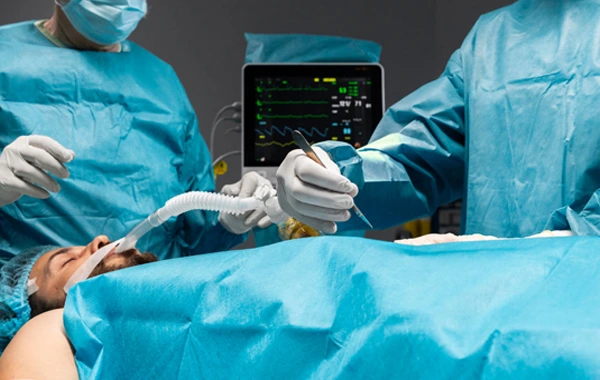

It depends on both the patient's overall health and their chosen procedure to treat their kidney stones, and on how long recovery will be. Most non-invasive surgeries only last 1-2 days in the hospital.
A patient may feel slight temporary pain, which will be handled with meds. Most people get back to their daily routine within a few days. To keep your kidneys healthy and to prevent stones from recurring, stay hydrated, follow the diet, and you will likely have more stones, and stay on schedule with your follow-ups.

In Gurgaon, SCI International Hospital stands as a model hospital for kidney stone care. They ensure patient care, along with their surgical center and advanced technology, to provide safe and effective stone removal with long-term and faster recovery through minimally invasive techniques.
With the help of a kidney stone doctor in Gurgaon, some small stones can be treated using medications, and with enough hydration, the stones may pass on their own.
With a high chance of success and fast recovery, laser lithotripsy is a safe, minimally invasive procedure.
The average time is 30 to 90 minutes and that depends on the number of stones, their size, and how complex the surgery is going to be.
Because these are done under anesthesia, patients will not feel anything. Any pain that happens after will be temporary and is manageable.
Not always. However, control of your diet and medical appointments can help reduce the chances of getting them.
